


Jun 16, 2020 1:00 AM
Updated Feb 10, 2022 10:10 PM
Frank Fear: Why speak out/stand up now? One reason is that recent public events lay bare America’s predisposing conditions, and many Americans have found that to be a jolting experience.
Some years ago, I became fascinated with how lyrics in love songs can teach lessons well beyond the domain in which they were intended. Over the years, I’ve incorporated that understanding in my work as a sociologist. The World War II-era ballad, ‘What’s New? is an example. The protagonist runs into a lost love for whom s/he still has strong feelings. The chance meeting begins with the question, ‘What’s new?”
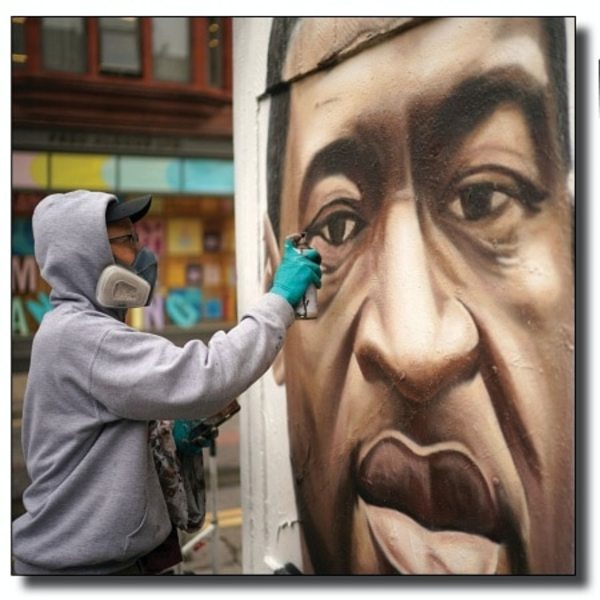
‘What’s new?’ is an important question in life writ large, too. Time and time, again, what’s new to some is old hat to others. Consider what has taken place in America over the past few months. Covid-19 has had a differential sociodemographic impact as the disease spread across the country, and America has witnessed the recurrence of brutality leveled against African American men.
Neither circumstance is new. The record shows that poor and diverse people are hit harder than others during times of crisis, brutal treatment of diverse Americans is a historical reality, and both circumstances are examples of systemic racism. And while activists have been working on addressing those problems (and more) for a very long time, many other Americans are just now coming forward and expressing high levels of concern. The numbers are telling.
Last week, Nate Cone and Kevin Quealy reported that “American voters’ support for the ‘Black Lives Matter’ movement increased almost as much in the last two weeks as it had in the preceding two years.” And Pew Research reported that 70% of Americans said that they engaged in conversations about race and racial equality at some point over the last thirty days—an extraordinary number.
Related stories
Why speak out/stand up now? One reason is that recent public events lay bare America’s predisposing conditions, and many Americans have found that to be a jolting experience.
Why speak out/stand up now? One reason is that recent public events lay bare America’s predisposing conditions, and many Americans have found that to be a jolting experience. And while expanded public attention is a good thing, the big question is—Where will the road likely lead?
Calling what’s happening today ‘a movement’ may be apt in some ways, but it may be too early to give it such attribution. Why? It’s because of how change happens. The prospect of transformative social change begins with awareness, which we have today, and awareness for some evolves into elevated social consciousness. There’s evidence of that happening, too. But if significant change is to come about, social consciousness needs to be acted on—first by taking a stand and, then, by translating that stand into action that perseveres over time. Sustained effort makes the difference.
Furthermore, citizen action only goes so far. Institutions must change, too, and that’s no easy feat. Institutions are notorious for clinging tightly to the status quo, and meaningful change requires changing the status quo in governance, administration, and professional behavior. Legislative oversight is needed, as well, to ensure that institutions comply with a new reality. The first step is the authentic desire to change—something that’s often missing. Instead, lip service and laying low (until the winds of change die down) prevail.
And change is especially hard when circumstances have become acculturated—that is, hardened and embedded, both socio-culturally and institutionally. Consider the case of Buffalo, NY, where longstanding demographics and police lethargy have come into play.
Demographically, the city’s African American community is worse off than it was 40+ years ago. The Buffalo News reported recently that the “black poverty rate in Buffalo now sits at 33.4%, compared with 28% in 1970…. The gap between the median income in black households, versus the income in Buffalo households overall, ballooned from 21.4% in 1970 to 35% in 1980, and sits at 32% now.” In addition, “of Buffalo’s twenty-six majority-black census tracts, 18 have higher poverty rates now than they did in 1980,” and “Buffalo is one of only ten cities in the country that has no ‘turnaround’ neighborhoods.”
There are issues on the institutional side, as well. As Buffalo police stepped in to manage a public protest, two policemen knocked an activist to the pavement, causing serious injury. When those officers were suspended from service, fifty-seven other police officers resigned from the department’s emergency response team.
Is there hope in Buffalo? Yes. Citizens are demanding action. “It was never just about Floyd,” is the way one Buffalo activist put it, and a Buffalo News headline read in part, “Protests reflect anger over inequality, neglect.” Institutional changes were proposed by Buffalo mayor, Byron Brown, saying that “a critical first step … is to make Buffalo more just, inclusive, and equitable for black people," including reforming the police department. Legislatively, NYS Governor Andrew Cuomo issued an Executive Order (The New York State Police Reform and Reinvention Collaborative), designed to connect police reforms to state funding. The Order requires “…local governments and police agencies…to develop plans to ‘reinvent and modernize’ police strategies and programs in their community.”
Big steps are being taken in Minneapolis, as well. Johns Hopkins prof Hahrie Han lays them out. “Minneapolis public schools and the University of Minnesota ended their security contracts with the police department. A veto-proof majority of City Council members pledged to ‘dismantle’ it.” And as those proclamations went public, a democratically-infused initiative took place.”
“A network of community defenders quickly emerged to protect residents,” Han writes. “Their goals? Protect people’s ability to safely protest and tamp down on the chaos. These community defenders sought to enable democracy, not squelch it, so that organizers could advance the struggle for reforms.”
Put simply, rather than demand that the police department become more ‘community-engaged,’ citizens self-organized to protect and advance public safety. Han elaborates: “(community) leaders put out calls on social media and through their own networks, and more than 1,000 residents showed up for a public meeting…. They created a plan for community defense that got shared on Facebook almost 8,000 times and crashed the website of the organization that hosted it.”
The big question, of course, is how could this have happened so quickly? Han has an answer consistent with what I wrote earlier about persistence: “This work was possible only because organizers could build on years of organizing that connected people and built the skills they needed to mobilize a rapid response.”
Buffalo and Minneapolis are pursuing different change paths. Buffalo hopes to reform the system, making it more responsive and just. Minneapolis wants to evolve the system into something new and different. But rather than judge one approach as better than the other, here is what I think matters more—seeing change through to success. Real, meaningful, and sustainable change is what matters. And that’s both an opportunity and a challenge, especially now.
Why? How many newcomers—aware, outraged, and engaged as they are today—will stick with it over time, keeping the pressure on and doing what it takes to make America address/redress systemic racism in their communities, institutions, and social networks?
If history is a judge, the answer is dicey. And that uncertainty is scary. It’s unlikely that America will achieve a tipping point in racial understanding and approach unless newcomers remain energized and engaged.
Doing so takes courage because engaging carries risk. Trouble lurks anytime you confront the system, declare it’s not working, and become an activist for change. But ‘trouble’ is the very stuff of change.
Rep. John Lewis put it well in a commencement speech that he gave at Emory University in 2014: “You must find a way to get in the way. You must find a way to get in trouble — good trouble, necessary trouble.”
For America’s sake, let’s hope ‘trouble’ wins out.
You can listen to the spoken version of this article on Anchor.FMat Under the Radar with Host Frank Fear. UTR is also available at Apple, Spotify, Google Podcasts, Breaker, RadioPublic, Pocket Casts, and Overcast.
Frank Fear
Did you find this article useful? Please consider supporting our work by donating or subscribing.
Comments

Powered by RoundtableAn AI/DeFi-powered Enterprise Media Operating System. Learn more at Roundtable.io.© Roundtable 2026. By using this site you agree to the Terms of Use and Privacy Policy