


Jun 8, 2020 9:00 PM
Updated Feb 10, 2022 10:25 PM
Yale Mangass: King was convinced that violence was the tool of the racist capitalistic militaristic state and turning to violence would put the revolutionaries on the turf of the other side, where they were likely to lose.
The murder of George Floyd, an unarmed Black man, by a police officer in Minneapolis inspired multi-racial protests throughout the country against police brutality and continuing racism. For many, this was reminiscent of the New Left demonstrations of the 1960/70s. At that time, often peaceful protests were met with billy clubs, tear gas and even machine guns from the police, the national guard and the military. In response to demonstrations on the University of California-Berkeley campus, then Governor Ronald Reagan declared: If it takes a bloodbath, let’s get it over with. No more appeasement.
Fast forward 50 years and we hear President Donald Trump preparing to use the American military against the American people:
Right now, I think the nation needs law and order…get the job done right…These THUGS are dishonoring the memory of George Floyd, and I won’t let that happen. Just spoke to Governor Tim Walz (of Minnesota) and told him that the Military is with him all the way. Any difficulty and we will assume control but, when the looting starts, the shooting starts.
Trump could justify his assault upon the American people and his ignoring the root causes of the anger because of the actions of a few who turned to turned to violence, arson and looting. To quell the vandalism Atlanta Mayor Keisha Lance Bottoms invoked the legacy of Martin Luther King.
Related stories
This is not a protest.…This is chaos…You’re not honoring the legacy of Martin Luther King Jr. and the Civil Rights movement. You’re not protesting anything running out with brown liquor in your hands and breaking windows in this city …You’re drawing knives at our police officers. You are burning cars…. This won’t change anything...Go home!
However, there seems to a difference between Martin Luther King and Keisha Lance Bottoms. King was clear the real source of violence was the very army Reagan, Nixon and later Trump were using to squash the domestic protestors and anyone who dared challenge American domination anywhere in the world-Vietnam, Iraq, Afghanistan, Iran.
I could never again raise my voice against the violence of the oppressed in the ghettos without having first spoken clearly to the greatest purveyor of violence in the world today -- my own government.
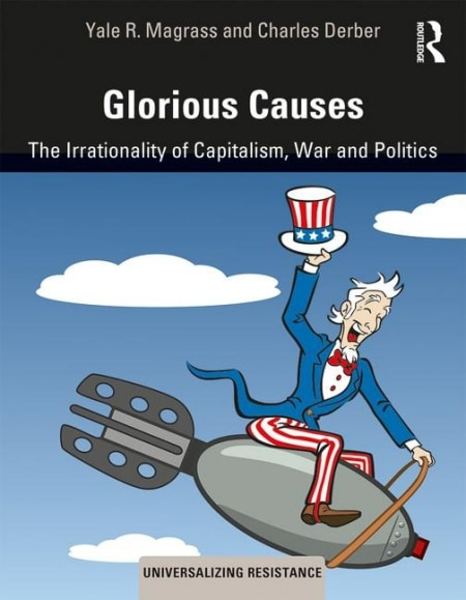
What follows is an edited excerpt from my recent book Glorious Causes (co-authored with Charles Derber):
King was convinced that violence was the tool of the racist capitalistic militaristic state and turning to violence would put the revolutionaries on the turf of the other side, where they were likely to lose.
At first most 1960s New Leftists leaned toward pacifism, but later, many endorsed violence. There was a parallel debate within the Black liberation movement which overflowed onto the young White Left, with Martin Luther King-a Marxist, a pacifist, but not a communist- the leading voice of one side and Malcolm X and later the Black Panther Party, the dominant spokespeople for the other. King was convinced that violence was the tool of the racist capitalistic militaristic state and turning to violence would put the revolutionaries on the turf of the other side, where they were likely to lose. He worried that a violent revolution, if successful, would create a violent society, little different from the one it was trying to transform.
Violence as a way of achieving racial justice is both impractical and immoral. I am not unmindful of the fact that violence often brings about momentary results. Nations have frequently won their independence in battle. But in spite of temporary victories, violence never brings permanent peace. …The limitation of riots, moral questions aside, is that they cannot win and their participants know it. Hence, rioting is not revolutionary but reactionary because it invites defeat. It involves an emotional catharsis, but it must be followed by a sense of futility.
King was clear: pacifism did not mean passivity.
Freedom is never voluntarily given by the oppressor; it must be demanded by the oppressed.
With his commitment to non-violence, he was jailed, beaten, continually harassed by the FBI and other state security agencies, and finally assassinated. Despite this many on the left- both black and white - attacked King, just before his assassination as an “Uncle Tom,” a weak counterrevolutionary patsy for Whites. Malcolm X charged
The White man pays Reverend Martin Luther King so that Martin Luther King can keep the Negro defenseless.
For Malcolm X, violence was a sign of manhood, an intrinsic good, whether or not it served a utilitarian purpose, a glorious defense of honor. To be worthy of freedom and equality, you must be willing to fight for it, maybe kill and die for it. We can ask how different is this embracing of violence from state militarists craving for glory and war for war’s sake.
Nobody can give you freedom. Nobody can give you equality or justice or anything. If you're a man, you take it. … If you're not ready to die for it, put the word 'freedom' out of your vocabulary… It's hard for anyone intelligent to be nonviolent. Everything in the universe does something when you start playing with his life, except the American Negro. He lays down and says, 'Beat me, daddy ‘… Be peaceful, be courteous, obey the law, respect everyone; but if someone puts his hand on you, send him to the cemetery.
Soon after Malcolm X’s assassination by fellow Black Muslims, the Black Panthers became the model of revolutionary sheik, for White students as well as ghetto Blacks. Non-violence, embodied in Martin Luther King, had lost its hipness. It took too long and was too frustrating. There was a need for immediate action and results. One violent white group, the Weatherman, declared the Panthers the vanguard of the revolution and all white leftists were expected to follow their lead and accept their pronouncements as the “correct line.” You had to show the Panthers you were revolutionaries. One Panther declared when he visited Brandeis University: “When I come back here next year, I don’t want to see a beautiful campus. I want to see rubble.” At rallies, former pacifists cheered when they heard “You White students have shown you can march, but can you kill? I want to see if you can kill.” “Go left! Go Right! Go pick up the gun.” Only a tiny number actually did pick up guns, but they were acclaimed as heroes by some former pacifists who were intimidated in accepting that pausing to think, consider consequences and sticking to non-violence showed a lack of revolutionary discipline and more important, a lack of machismo, honor and glory.
I [Magrass] knew Susan Saxe, one the few who actually picked up a gun. She participated in a bank robbery in which a policeman was killed. She was then placed on the FBI’s “most wanted list.” Like several of the Weatherman, she would say she had to do something to prove she was not simply playing a game. She had to do something irreversible to force her to commit her life to the revolution. What that act was, what purpose it would serve or consequence it would produce was less important that it was something dramatic- violence for violence sake.
The fear of being labeled counter-revolutionary squelched debate and pressured leftists into either sprouting slogans they felt uncomfortable with or leaving the movement altogether and becoming apolitical, some seeking mainstream careers or some taking a more hippyish personal psychological approach to liberation through transforming yoga, meditation or drugs into a “touchy feely” lifestyle. Many sought jobs in the school system or in social services.
Violence is glorious and cathartic. It creates a sense that you that you are not out for fun; you are committed revolutionary, even if it is self-destructive. Once you turn to it, it is irreversible. There is no turning back. It is also a way separating those who blindly follow from those who will insist upon thinking for themselves. Violence requires discipline. It entails military-like hierarchies, even among tiny factions. It destroys visions of egalitarianism or open debate.
The whole left became deeply divided as more splinter groups and parties, black and white, like Progressive Labor, the Weatherman, the Spartacus and the October League,-each claiming to be the vanguard- emerged. Different parties accused each other of being wimpy or counter-revolutionary. Nixon, the FBI, the CIA, the military, Ronald Reagan and today Donald Trump could not has asked for better allies for discrediting, in fact destroying, the Left. Very likely, many who tried to provoke random violence were government agents. In a Santa Barbara California commune where Magrass lived in the 1970s, someone showed up and offered karate lessons so his students would be capable of fighting for the revolution. A year later, he led a police raid of the commune.
Even if agents did ignite violence, putting the blame on them is too easy. It exempts the sincere leftists from responsibility for following them and allowing themselves to succumb to their enticement. If there is to be a new New Left, we must consider why violence is so attractive. Otherwise, this risks becoming a history that might repeat itself.
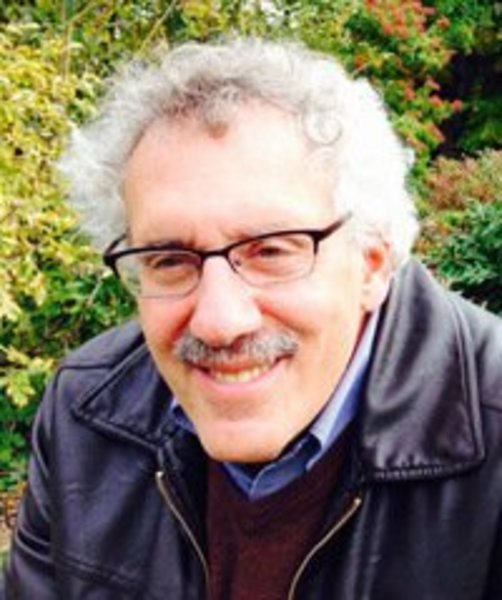
Yale Magrass
Yale R Magrass is a Chancellor Professor of Sociology/Anthropology at the University of Massachusetts-Dartmouth and the co-author with Charles Derber of Bully Nation: How the American Establishment Creates a Bullying Society.
Comments

Powered by RoundtableAn AI/DeFi-powered Enterprise Media Operating System. Learn more at Roundtable.io.© Roundtable 2026. By using this site you agree to the Terms of Use and Privacy Policy