


Valuable Philanthropy
Mar 19, 2024 12:55 AM
Not only does Carr seem to have good values, but his choice of heroes also seems to be first rate, at least if we can judge by the one he mentions—South Africa’s Nelson Mandela.
Sen. Bernie Sanders and President Joe Biden (and Warren Buffet) are right: We should tax the very rich more, and the amount of economic inequality in the USA is obscene. But once in a while, someone who has made a lot of money spends it in an uplifting way, and we should not hesitate to praise such behavior.
An early March (2024) episode of “60 Minutes” featured just such a man in Greg Carr. As host Scott Pelley stated, in the 1980’s he “was a tech entrepreneur who'd made a fortune perfecting voicemail.” Pelley described him as “an entrepreneur with the empathy to see, the humility to listen, and the optimism to act.” Empathy, humility, and optimism, these are three values that we too infrequently witness. And as U.S. neuropsychologist and Nobel laureate Roger Sperry once stated, “Human value priorities... stand out as the most strategically powerful causal control now shaping world events. More than any other causal system with which science now concerns itself, it is variables in human value systems that will determine the future.”
Not only does Carr seem to have good values, but his choice of heroes also seems to be first rate, at least if we can judge by the one he mentions—South Africa’s Nelson Mandela. Perhaps the optimism that Pelley attributes to Carr comes partly from Mandela because, in the midst of his 27 years in prison for opposing apartheid, he gave the name Zaziwe, meaning “Hope,” to one of his granddaughters, and continued to believe that “man’s goodness is a flame that can be hidden but never extinguished.” His hopeful dynamism and wise leadership in the mid- and late 1990s helped create a nonracial democratic system in South Africa without resorting to a bloody revolution or civil war.
Judging by the “60 Minutes” segment on Carr, his optimism seems to be accompanied by the delight he experiences in his philanthropy. As he says to Pelley, “I mean, what are you gonna do, stick it [your money] all in your casket? I mean, why not enjoy the joy of philanthropy? I would say to the billionaire next door, go out and enjoy spending your money to help some people.” (In answer to Pelley’s question about how much of his “personal fortune” he has spent on the park, Carr’s answer was “more than $100 million.”)
Related stories
Which brings us to “Whom and how does he help?” Answer: primarily animals and people in the Gorongosa National Park, located in Mozambique, a country in southeastern Africa, bordering the Indian Ocean. It’s a little less than twice the size of California. Many decades earlier, the park had been a thriving wildlife area; but a war of independence against Portugal and, even more so, a civil war (1977-1992), according to Pelley, “killed an estimated 1 million people and wiped out 95% of the wildlife in Gorongosa for food and profit.”
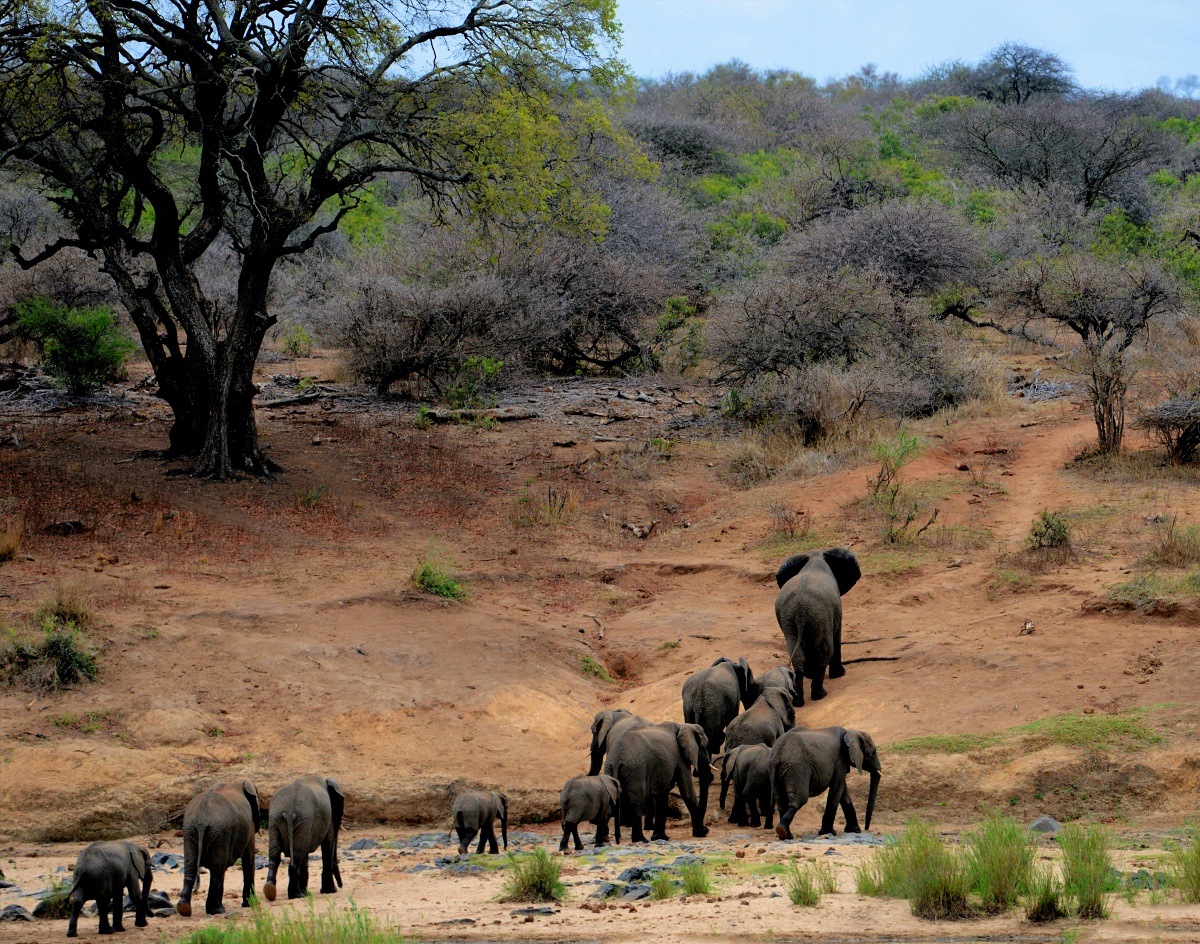
In 2004, Mozambique President Joaquim Chissano, an ex-freedom fighter and one of Africa’s better leaders, asked Carr to restore the national park. Carr told Pelley that when he first came to its million acres that year, he was lucky to see maybe “one baboon, or one warthog, or something. Now we drive around, and it's an ocean of wildlife. Come around the corner, there's a herd of elephants. . . . Go the other direction, there's some lion cubs. Ten thousand waterbuck.”
Carr related that some species “were just gone completely,” so they gradually restored them. They brought in 200 buffalo, 200 wildebeest, and some zebra. Then, after they had enough herbivores, they brought the meat-eaters—leopards, hyenas, lions. Starting with five or six lions, Carr estimated that they now have about 200. By 2018, an aerial survey, “counting only the big animals” revealed about 100,000 large animals.
But it was not just about restoring animals, Carr’s philanthropy also helped many of Mozambique’s people. When he first came to the area, “there were about 200,000 people living around the park, survivors of the wars, living on a dollar a day. People had nothing. I mean, they didn't have clothes. They were wearing rags, or they had made clothes out of tree bark. They were eating insects and trying to catch mice.” Carr concluded that he was “going to have to help the people.”
To him, this meant creating a park that not only cared about animals but also about human beings. As he expressed it, “This land belongs to these people. They've been here forever. It's their animals, it's their land, it's their trees, it's their cultural and spiritual heritage.” Thus, the park hired 1,600 workers, worked in “89 primary schools,” is currently “training 600 schoolteachers,” and began “92 after-school clubs” for girls, some of whom now plan on careers they never envisioned before—a “teacher, a nurse, a conservation park ranger.”
Carr has also helped to improve the health care of many of the people his non-profit foundation has aided, and persuaded U.S. foreign aid to kick in about $6 million a year. His foundation also gave away coffee trees, which family farmers planted (and helped reforest a nearby mountain). His foundation then bought the coffee beans “at above the market rate and built the farmers a roasting plant.”
But progress in the park was not without setbacks and severe hurdles that had to be overcome. When Carr first came to the park in 2004, his team had to “remove 20,000 traps and wire snares that were left in this park, left over from the war.” Most of the small number of lions still existing “had three legs because they had stepped in a trap or something.” Later, beginning in 2013, there was another civil war, which ebbed and flowed for eight years, and “then, in 2019, a cyclone leveled 100,000 homes.”
Asked by Pelley if all these obstacles ever tempted him to give up, Carr’s response was they just made him “more determined, not less determined. And when you've got people suffering in a war that need help or people suffering in a cyclone, they need help, you know, you're more committed. You don't lose commitment at a time like that.” Good advice for progressives, who despite many obstacles, need to—as I wrote in a previous essay—“work, work, work. Persist, persist, persist. Be determined, but also patient.”
Comments

Powered by RoundtableAn AI/DeFi-powered Enterprise Media Operating System. Learn more at Roundtable.io.© Roundtable 2026. By using this site you agree to the Terms of Use and Privacy Policy