


Jun 5, 2026 3:25 PM
Updated Jun 8, 2026 11:35 PM
From Hitler's rejection by art school to Trump's mastery of political branding, small events can sometimes produce world-changing consequences.
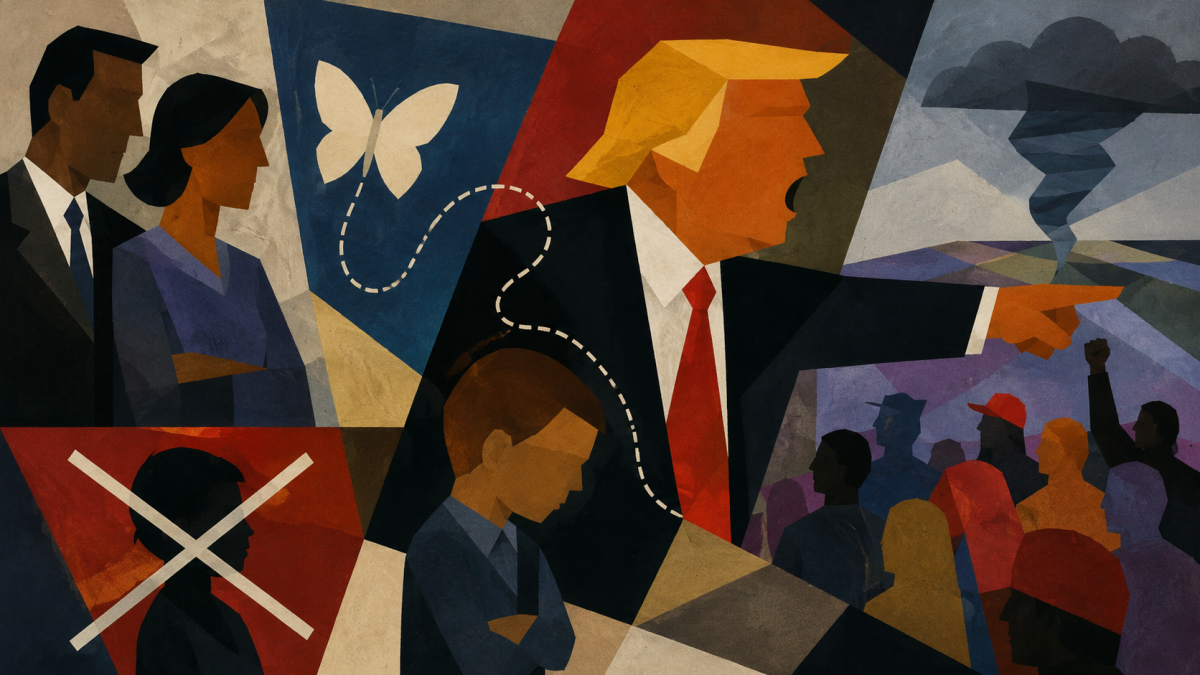
Chaos theory is a branch of mathematics and science that studies how complex, dynamic systems can be highly sensitive to initial conditions. You might naively expect that a very minor change in the starting setup of a system will produce only a minor change in the outcome. But for some dynamic systems, for example like the weather or the stock market, extremely minute differences in even a single variable can lead to long-term radically different outcomes. A metaphor for the potentially enormous effect of a seemingly minuscule factor is the so-called butterfly effect which posits that the mere act of a butterfly flapping its wings in Brazil can lead to a chain of events that produces a tornado in Texas.
Some historians use the rise of Hitler as an illustrative example of the "butterfly effect” to show that a minor event in one confined area can have a massive effect on future outcomes on events well outside that confined area. Hitler in his youth was an aspiring art student. Twice he applied to Vienna Academy of Fine Arts and was rejected. This disappointment profoundly embittered him and is widely considered a critical catalyst in his rise to power. Quite possibly Hitler wouldn’t have developed his hateful Nazi ideology had he not been rejected by art school.
Clearly, Trump rise to power was fueled by his extraordinary ability to devise savage and insulting nicknames for his opponents. This skill helped him rile up his angry base. He kicked off his first run for president with his belligerent remarks about Mexican immigrants. He ominously stated, “When Mexico sends its people, they’re not sending their best. They’re bringing drugs. They’re bringing crime. They’re rapists.” While strictly speaking, he used no nickname for Mexican immigrants, this tirade accomplished what a demeaning nickname does.
Then a bit later in his campaign he refined his insulting nickname technique by actually creating nicknames. Each nickname honed in on a purported undesirable trait in an opponent. Some favorites were: Lying Ted (Cruz), Little Marco (Rubio), Low Energy Jeb (Bush) Crooked Hillary (Clinton), Fake News (most journalists) and the hilarious Meatball Ron (DeSantis).
Related stories
Eventually he perfected his nickname technique by using a derisive variation of the person’s last name. And he outdid himself with Ron Desanctimonious (DeSantis again), Newscum (Newsom), Half-Whitmer (Whitmer) and the pure genius Dumocrats. As he proudly explained on a number of occasions, his inspiration for omitting the letter B in Dumocrats was because most people don’t know that the word dumb ends in a B.
Undoubtedly Trump’s use of insulting nicknames has been a huge factor in gaining the rabid adoration of his base. But where did this incredible ability to devise ingenious nicknames come from? Like Hitler being rejected by art school, maybe there was something in Trump’s early life that could have been a spur to his nicknaming obsession?
Trump’s conservative parents were extremely stern and hard to please in their upbringing of Donald and his four siblings. Two of their strictly enforced rules were that no cursing was allowed and the unusual prohibition that the children were forbidden from making up nicknames for any of their siblings. As children, both Donald and his older brother Fred had especially acrimonious relationships with their father. Fred’s hatred of his father persisted into adulthood and was probably a factor in his brother dying at the age of 42 from complications of chronic alcoholism.
At the age of 13 Donald was such a problem at school and at home, that his father decided to ship him off to The New York Military Academy, in the hope that this strict boarding school might be beneficial. Eventually, Donald’s behavior did improve and as an adult he became his father’s favorite. His father groomed Donald to be a major real estate developer and gave Donald millions of dollars in financial assistance.
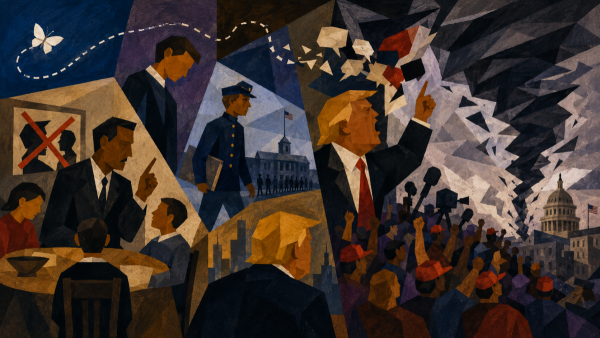
When Donald’s father died in 1999, Donald was well-established as a celebrity, real estate tycoon, and his feelings toward his father must have been complicated: probably a confusing mixture of gratitude and lingering resentment. How could Donald give voice to his unresolved resentment without betraying his gratitude? Perhaps the safest way to express his still-present anger at his father, without openly attacking him, was to defy the childhood prohibition on nicknaming. Quite possibly, Donald’s obsessive need to devise extremely derisive nicknames for people he didn’t like stems from that childhood deprivation.
In conclusion, we must consider whether had this seemingly minor parental prohibition against nicknaming not been in place, the recent course of history might well have been completely different, and our planet, our nation and also the rest of the world might be in a much better state today.
Comments

Powered by RoundtableAn AI/DeFi-powered Enterprise Media Operating System. Learn more at Roundtable.io.© Roundtable 2026. By using this site you agree to the Terms of Use and Privacy Policy