
Susana • Attribution-NonCommercial-NoDerivs (CC BY-NC-ND 2.0) • Flickr


American Dream
Dec 4, 2024 4:44 PM
Updated Dec 4, 2024 5:44 PM
The pursuit of profits, profits before all else, has also wrought environmental destruction and much suffering, including the deaths of many from opioid addiction.
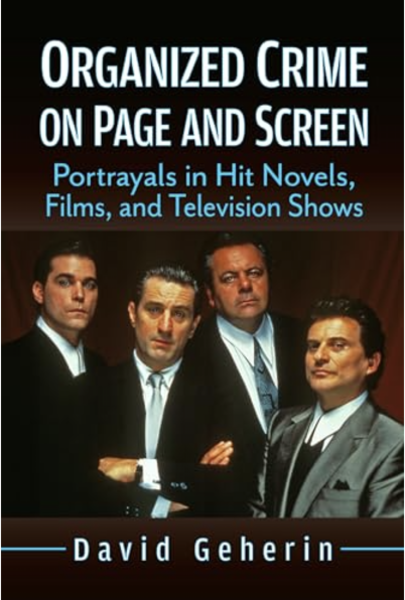
As I was reading David Geherin’s just-published Organized Crime on Page and Screen a few lines jumped out at me. For example, he quotes an author writing of northeast Italy beginning in the 1980s becoming “a territory where the unifying feature is a thirst for money.” Geherin follows this up with “where there is money, there is the Mafia.” And two paragraphs later he again quotes the “thirst” source as writing “capitalism has assumed the typical features of the mafia and, ultimately all the distinctions between the two have been blurred.”
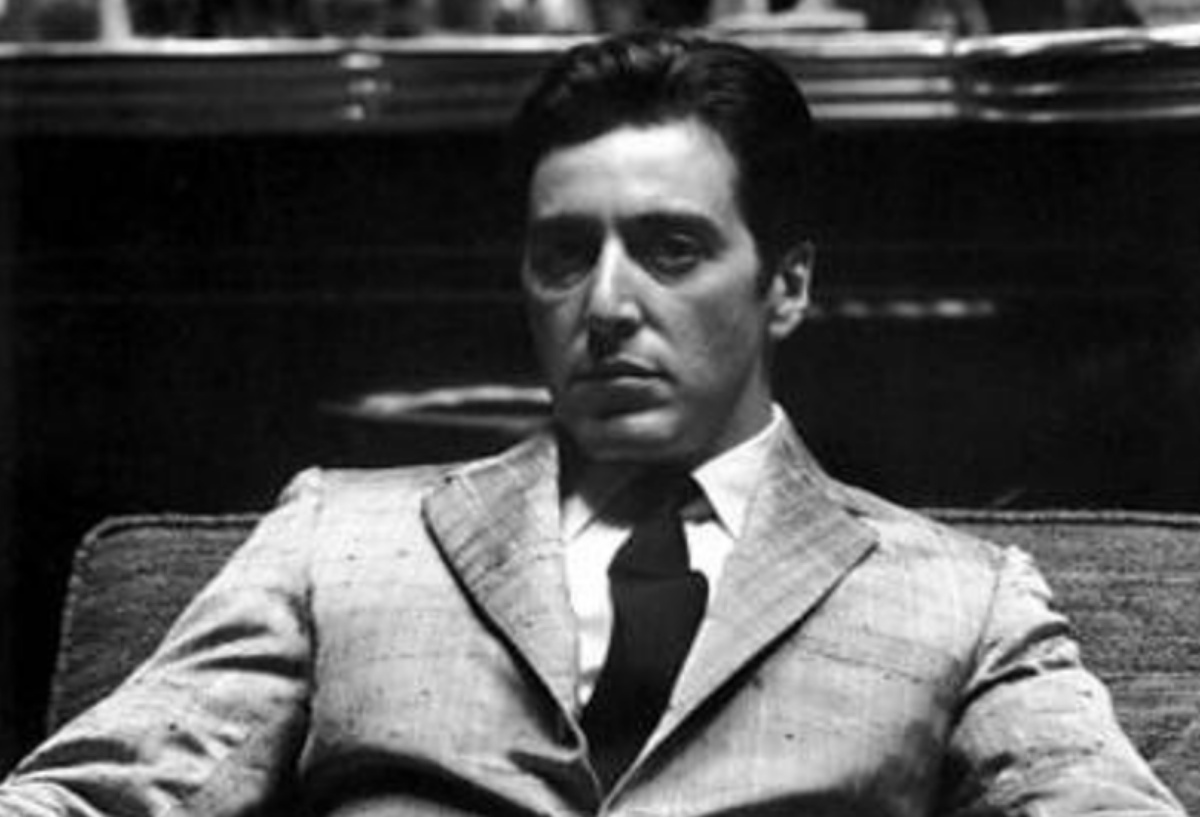
Later on, writing about The Godfather author, Geherin writes, “Puzo’s signature accomplishment was fusing this ‘ethnic tribalism’ with the all-American pursuit of money and power.” And in dealing with one of his favorite writers, Don Winslow, Geherin recognizes that The Power of the Dog tells a complex story. “But the governing principle is very simple: the drugs go north, the money comes south.” Like that old song “Love and Marriage,” which claims that “they go together like a horse and carriage,”so too, it seems do, crime and money.
Geherin also takes up Richard Condon, author of The Manchurian Candidate and his “Prizzi” quartet, starting with Prizzi’s Honor (1982). Writing about Prizzi’s Glory (1988), Geherin relates that two of its characters had achieved “the American Dream. And so has the Mafia.” One of the two Mafia personalities has become U. S. Attorney General, and the other “has been named White House Chief of Staff.”
Right after discussing Condon, Geherin turns to Laurance Shames and mentions his The Hunger for More: Searching for Values in an Age of Greed (1989). Although Shames soon started writing novels about Mafia figures in Florida—a subject more akin to Geherin’s main interest—Shames’ book on values and greed interested me more because it related to topics in which I had long been interested. (See, e.g., here and here.)
Related stories
And in a Preface to a 2012 edition of Shames’ “Hunger” book its author writes, “The 1980s saw a boom that ended in a bust; so did the 2000s . . . During both sets of flush years, business was in fashion, greed was tolerated and even glorified, and success was measured mainly in dollars. When the respective bubbles burst, business was in bad odor, greed was excoriated, and success was measured . . . how? That’s the question, more than any other, that this book seeks to address.” A little later Shames writes, “Why define success in terms of wealth and job title when those things can be taken away?”
Those are sentiments I heartily agree with, at least as far back as buying our three kids the board game Careers instead of Monopoly because in the former instead of just going for wealth, you could instead win by going for happiness. An important lesson Nancy (my now deceased wife) and I wanted to teach Jenny, Tom, and Dan.
While Part I of Geherin’s book deals with “Crime Fiction,” the rest of it (Part II) portrays crime’s treatment in movies and on TV. And one of the directors he writes about is The Godfather creator, Francis Ford Coppola. Geherin quotes him as stating, “Both the Mafia and America. . . . are totally capitalistic phenomena and basically have a profit motive.” Regarding TV series, one of them dealt with is Boardwalk Empire, whose central character is Nucky Thompson (Steve Buscemi). About Nucky, the book says this: “What drives him turns out to be as basic as can be—money.”
But back to the earlier mention of “the American Dream.” It’s a subject I’ve also written about (see, “Can Bernie Sanders Exemplify the American Dream?”; "The American Dream: Trump’s vs the MLK/John Lewis Version"; and “Can Biden Broaden Our American Dream?”). And just last month, my “Trumpism or Progressivism: Competing Visions of U. S. Life dealt with a similar concept.
Borrowing partly from these earlier writings, let’s begin with what “the American Dream” is. The term was popularized in 1931 by James Truslow Adams’s The Epic of America. In a 2012 essay, “Keeping the Dream Alive,” Jon Meacham defined it as the “conviction that those who work hard and play by the rules will be rewarded with a more comfortable present and a stronger future for their children.” Dreams of making more money, he thought, helped make “America possible,” at least for White people.
Contributing to those “dreams” was“Algerism,” which historian Christopher Lasch called “the dominant ideology of American politics” of the late nineteenth-century’s Gilded Age. The term implied the rags-to-riches characteristic of the many popular novels of Horatio Alger. As Lasch adds, “Failure to advance, according to the [Alger] mythology of opportunity, argues moral incapacity on the part of individuals or, in a version even more implausible, on the part of disadvantaged ethnic and racial minorities.”
In 1985 Donald Trump’s father, Fred, received that year’s Horatio Alger Award. And to Fred and his son Donald, the former’s father, Friedrich, a German immigrant, also symbolized the Alger myth, leaving a large estate to his heirs. (That the Trumps did not envision Blacks enjoying Alger opportunities was symbolized by a 1973 Justice Department suit brought against “Fred C. Trump, Donald Trump and Trump Management, Inc.” The department charged the Trumps with “refusing to rent and negotiate rentals with blacks, requiring different rental terms and conditions because of race, and misrepresenting that apartments were not available.”)
Contrasted with the Alger myth, centered on money-making, was another dream, only a more inclusive one. It was epitomized by Martin Luther King Jr. (MLK) and one of his most faithful followers, Congressman John Lewis.
Although MLK’s 1963 “I Have a Dream” speech at Washington D. C.’s Lincoln Memorial is more famous, his July 4, 1965 sermon, “The American Dream,” at the Ebenezer Baptist Church in Atlanta, provided a more detailed vision of his “dream.” In it he maintained “I still have a dream,” followed by words such as “that one day all of God’s children will have food and clothing and material well-being for their bodies, culture and education for their minds, and freedom for their spirits.” Elaborating on the last point, he added that “in seeking to make the dream a reality we must use and adopt a proper method. I’m more convinced than ever before that nonviolence is the way…. Oh yes, love is the way. Love is the only absolute.” He emphasized that people can’t take from you the “right to pursue Happiness.” In doing so, he indicated that happiness was more important than two of Trump’s favorites goals—money and fame.
Also indicating a broader and more inclusive “American Dream” was MLK’s follower Rep. John Lewis. Already in 2011, he put out a press release celebrating the “4th of July and the Power of the American Dream.” In it he stated that “the American dream is more than living large. The American dream is the power to create one out of many and the goodness that flows from the unity of all human kind.”
Shortly after his death in July 2020, an essay appeared entitled “John Lewis Was The Embodiment of the American Dream.” Its author wrote, “Few men have ever been born into such discrimination and deprivation only to overcome it and reshape a country they loved even though it treated them unfairly.”
The two civil rights leaders envisioned a society that offers not hate, but love (a “Beloved Community” of "exuberant gladness”). Not divisiveness, but inclusiveness. Not just “material well-being” for its people, as important as that is, but also, in King’s words, “culture and education for their minds, and freedom for their spirits.” Not a “thing-oriented society,” where “machines and computers, profit motives and property rights, are considered more important than people,” but a “person-oriented society.” And not a society that takes “our air, waters and land for granted” and displays “a simple lack of respect for nature and our environment,” but one that realizes as Lewis did that “humanity is the most important endangered species under threat from climate change.”
Linking the American Dream with overcoming the threat of climate change brings us back to that version of the dream which limited it to earning more money, to achieving monetary success. In his The Earth Transformed: An Untold Story, Peter Frankopan writes that after 1500 “what drove the next cycle in global history was the pursuit of profit.” And dealing with the half century after 1870, he states that “the ecological implications of rapid transformation of landscapes . . . were motivated by the chase for a fast buck."
Thus, much of the colonialism (including that in the Americas) and imperialism, like so much of the organized crime Geherin writes about, has been motivated by money—getting more of it. The pursuit of profits, profits before all else, has also wrought environmental destruction and much suffering, including the deaths of many from opioid addiction. In his 2015 address to the U. S. Congress, Pope Francis indicated that the furthering the “common good"—not more individual or collective money-making—should be the main aim of politics.
As one of the writers Geherin discusses, Laurance Shames, wrote, “A version of success based on personal values, responsible choices, service to others, and creative fulfillment is both a safer and more joyful alternative” than obtaining more wealth. There are different types of capitalism, and as Sen. Bernie Sanders has indicated not all are as immoral as he believes “unfettered capitalism” is. But sometimes, as Geherin has indicated, the distinctions between capitalism and the Mafia have been hard to discern. Sanders is right: such capitalism is not the type we should want.
Comments

Powered by RoundtableAn AI/DeFi-powered Enterprise Media Operating System. Learn more at Roundtable.io.© Roundtable 2026. By using this site you agree to the Terms of Use and Privacy Policy