


May 26, 2018 4:16 PM
Updated Feb 10, 2022 10:52 PM
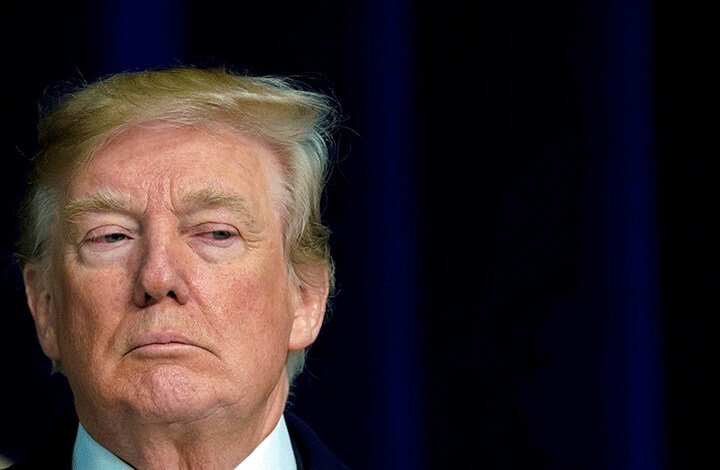
Tom Hall: Less than 48 hours after pulling out of the June 12 summit, the Donald was begging North Korea to put it back on track. The bankrupt dictator of a resource-free, starving nation was leading the dear leader of the U.S. around like a bull with a ring in its nose.
Are you feeling schizophrenic yet? Are you distraught that for decades, U.S. presidents, both liberal and corporate, have used what Teddy Roosevelt called "The Bully Pulpit" to bully the rest of the world? And do you now hate the Donald even though in less than 18 months he has reduced the United States from international bully to ridiculous laughing stock and supplicant to two-bit dictator Kim Jong Un?
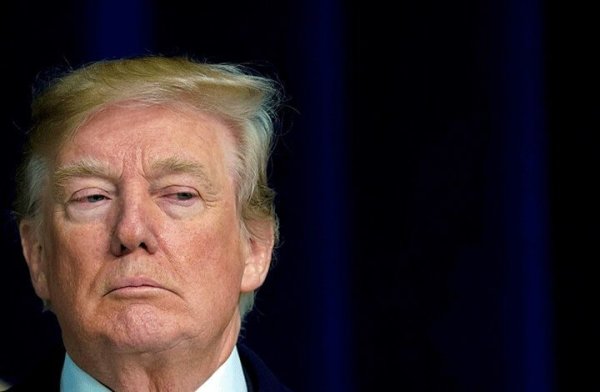
The Donald started Thursday, May 24, 2018 by announcing that he is scared of the mean things North Korea's "Little Rocket Man" will say about him, and so he must back out of the planned June 12 "summit meeting." The Donald didn't identify anything specific that Kim had said—just that he says bad things in advance of the summit, and those things convinced the Donald to be scared.
Let us be clear. What drove the Donald from the diplomatic battlefield was fear. The eviscerated State Department, still trying to do its job, was intent on briefing the Donald and making him aware of history and international issues and diplomatic protocols, and of cultural differences and nuances and competing interpretations and misinterpretations.
The Donald saw the size of the briefing papers, and the lack of pictures in them. He heard men talking about the need to spend hours studying and being corrected. Bad men. Evil men—every bit as terrible as those evil professors at the Wharton School who wanted him to study. And now with no daddy to wave a checkbook to make the bad men leave him alone.
Related stories
Less than 48 hours after pulling out of the June 12 summit, the Donald was begging North Korea to put it back on track. The bankrupt dictator of a resource-free, starving nation was leading the dear leader of the U.S. around like a bull with a ring in its nose.
The bad men telling him that the whole world is watching; Telling him that our ally/client South Korea is feeling independent enough, under his administration, to negotiate on its own—something that happened under no previous administration, even under the hated/feared Obama. They tell him that his breaking the Paris Climate Accord, and the International Nuclear Deal with Iran, and his bragging that he wants to treat Kim the way we treated Khaddafi, are not steps logically calculated to encourage Kim to trust the U.S.
There are good men, though—men who stand by the Donald and tell him that he is not making mistakes. John Bolton and Mike Pompeo remind him that if the North Korea talks break down, or don't happen, we retain the right to go to war with North Korea. They tell him that war can be vastly profitable for those "in-the-loop" from the beginning. More profitable even than the $500 MILLION China paid to have him allow ZTE to keep doing business with Iran, despite U.S. sanctions.
Some may wonder if the whole withdrawal maneuver is simply part of a Bolton/Pompeo war drive. In the days preceding the Donald's withdrawal, Pompeo announced that new U.S. foreign policy expressly demanded regime change in both Iran and North Korea. And both Bolton and Pompeo said that their goal for the Kim-Donald summit was for Kim to agree to accept the Khaddafi treatment.
Convincing the Donald to quit the summit before it began is a logical step, IF war is the real goal. Bolton was there, helping Dick Cheney convince another anti-briefing president that there was no point in allowing international inspectors to look for WMDs. Now he's convincing the Donald to ignore the advice and wishes of South Korea. Pompeo has always derided diplomacy, in favor of a "good fight," although he always wants other people's children to fight those fights.
But times do change. The Donald claims, and may even believe, that the world united against the "communist, Korean menace" once before and will do so again; that the world united against the Iranian nuclear threat once before and will do so again. The Donald may be righter than he knows.
The world may unite against these threats. The world may stay united against the Iranian nuclear threat by refusing to abandon the international agreement that allows Iran to develop a viable economy in exchange for deferring nuclear military development. The world may stay united against the menace of an impoverished North Korea provoking external fires to avoid internal troubles, by cooperating with the two Koreans to normalize relations and lead the North to economic stability.
The Bolton-Pompeo-Donald model of war-diplomacy holds that for the U.S. to "win" both North Korea and Iran must "lose". This is similar to the argument that for the U.S. to "win" material comfort, everyone else must "lose" by resource looting, climate change, rising sea levels, and worse weather events. But there is nothing inherent or logical in this model.
The world could decide that a prosperous Iran and North Korea provide a prospect of "win-win" solutions, rather than the U.S. imposed "win-lose" terms.
There is no certainty in such an idea. The religious dictators of Iran share fundamental convictions with U.S. Southern Baptists. They believe that women are both inferior and inherently evil, and thus require strict controls. As a religious belief, this is not likely to change just because the rest of the world threatens them less. Certainly U.S. Southern Baptists don't exist under any threat. But they remain committed to the goal of depriving others of religious freedom, and of imposing their misogynist bigotry on everyone they can.
Promoting strife with minor, weak regimes doesn't hurt them, and doesn't help us. The trend in the world, despite regular backsliding, is toward greater rights for people, for all genders, and all races. North Korea has made small steps toward engagement with the rest of the world. For all their religious dogma, Iranian leaders deal with the modern world.
Ending the constant threats aimed at these regimes will deprive them of their central rallying argument—that internal oppression is necessary because of threats from the world's only superpower. Removing the threats doesn't guarantee instant change. But Iranians have access to cell phones and the internet. North Koreans consume South Korean K-pop, and the cultural awareness that comes with the music. Repressive governments cannot keep their people completely ignorant of the modern world.
Faux 'News' and the Koch brothers and the rest of Wall Street would like to believe that they can keep people ignorant, and keep their businesses limitlessly profitable. They have worked tirelessly to destroy education in the U.S. and to consolidate mass media in a few corporate hands. But as they try to tighten their grip on what they hold, the rest of the world slips through their fingers.
Beginning with the Cold War "cost-plus" contracting scams, war profiteers have perfected the art of stripping maximum dollars from the Pentagon while delivering minimum weaponry. Our "world's biggest" military hasn't actually "won" a war since WW-II. And our "hi-tech" warriors keep losing to "primitive" insurgencies. The same "hi tech" that brings us "smart bombs" smarter than their operators, puts powerful truth-seeking and truth-sharing tools in the hands of the most impoverished peasant.
Daily we see the rest of the world responding to the U.S. government, now unified under Republican Party control, not with fear of the bully but with ridicule and annoyance. Rather than trying to adjust to the demands of the U.S., nations from Europe and the Middle East to Central America and to Asia increasingly look for ways to circumvent U.S. obstruction.
Maybe South Korea and China will be able to work out a better future for North Korea, particularly with the freedom to use the TPP, without U.S. obstruction. Maybe the rest of the world will be able to help Iran build a viable economy, without the need for U.S. approval or involvement. Maybe Latin America will continue to build self-ruled nations, free from corporate, banana republic domination.
If these things happen; if the rest of the world can agree to, and implement, real environmental protection schemes, without the need to involve an isolationist, declining U.S. bullyism, a large part of the credit must fall to the Donald. With the full support of the Republican Party, the Donald has ceded U.S. leadership and domination.
Less than 48 hours after pulling out of the June 12 summit, the Donald was begging North Korea to put it back on track. The bankrupt dictator of a resource-free, starving nation was leading the dear leader of the U.S. around like a bull with a ring in its nose.
The Donald again showed the world that there are no principles involved, only poll numbers and personal gain. And the U.S. became smaller and less influential—less bullying for it. He pulls down our power and lets the rest of the world stand up taller. Why are progressives not cheering.
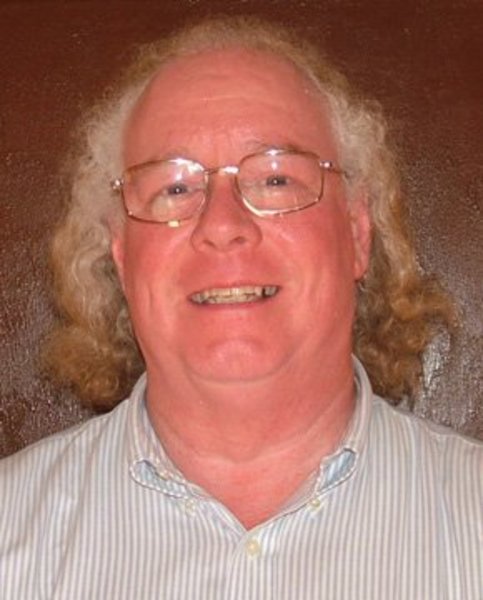
Tom Hall
Comments

Powered by RoundtableAn AI/DeFi-powered Enterprise Media Operating System. Learn more at Roundtable.io.© Roundtable 2026. By using this site you agree to the Terms of Use and Privacy Policy