


Apr 6, 2023 3:22 PM
I felt very weird being a tourist in Saigon at the same time as 450,000 American servicemen were fighting for their country and dying there. So I left..
Earlier, I recounted life in the 1960s to 1966, when I avoided being an Army draftee by becoming a lawyer and a Navy officer just before being drafted and getting my head shot off in Vietnam. I would not have been good soldier, and would have been dead the first week. But I was able to return to my work as the Legislative Assistant to my Congressman, and since his Administrative Assistant was off to Harvard, I ran the office and arranged the Congressman’s schedule. He was also Congressional delegate to the United Nations, and I had to work out his schedule with Minority Leader Gerry Ford, including reaching out to Ford on the floor of the House to determine when the Congressman had to be there for a vote.
I was able to get an extension of the time to late Spring when I had to report for active duty in Navy JAG, and I was able to say goodbye to the two women I was dating, a Smith girl from the oil country of Texas and a Jennifer Connolly lookalike who had to leave Oxford and England because of a looming sex scandal with a British minister. One was a Texas redhead and the other was a black-haired, fair-skinned, pale blue-eyed beauty who every guy wanted to bed. It was an embarrassment of riches, but I was not ready to settle down, and I said goodbye to both of them.
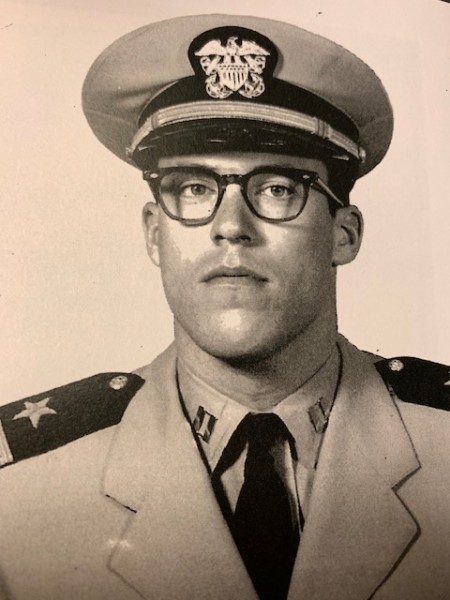
Finally, Navy orders arrived and I was off to Newport, Rhode Island, to learn to be a Navy officer and a gentleman and a Navy JAG lawyer, joining 45 other young men. Seven of us learned the tricks and waited to check in until the barracks were filled, so we had to be issued per diem. This meant that we could live off base, and we pooled our per diem pay and the seven of us rented a huge Newport mansion for the time we spent in Newport. Weekends were spent partying with the Fall River girls invited in to enjoy the mansion with us, as the other trainees lived in their quonset hut quarters. We learned how to salute, and how to prevent a ship from sinking, and how to try a case in a Navy court martial.
Camp Pendleton
Then we got our orders. I was assigned to Camp Pendleton, California, a huge Marine Corps base between Los Angeles and San Diego. I did not even know that the Marine jarheads were part of the Navy, but there I went, stopping in the Tetons on the way to climb a mountain or two. On the freeway south of LA, I saw a VW bus overturned in the center divider with a bloody body hanging though the front windshield, traffic whizzing by. On my first visit to Southern California, I learned that they don’t even bury their dead here!
Related stories
I lived in a beach house in San Clemente with two other JAG lawyers, and we escaped from the rather grim existence on the base, and partied hard on weekends. I met a wonderful young woman, a nationally ranked tennis player whom Billie Jean King had convinced to come out to California, and started dating her. During the week, we would travel to a Marine Corps outpost at Camp Pendleton, where the young men were being trained to be killers before being shipped off to Vietnam, and prepared wills for them. Half of these wills were probably used later on, given the American combat casualty rates that existed then.
We also represented Marines who refused their orders to Vietnam, and many of them decided to accept the plea agreements forced on them rather than get the severe sentences which they would almost certainly receive if they were convicted of refusing orders to go into combat during wartime. I tried to tell them that these plea agreements were not constitutional, requiring them to give up all their rights in order to get a lighter sentence, but with little success. But I found a way to get them acquitted: just after I left Camp Pendleton, I contacted a young lawyer who was in my JAG class at Newport, who was now working at the Navy Appellate Review facility in D.C., and I alerted him to the 100+ cases that were coming his way from Camp Pendleton that had these unconstitutional plea agreements. Ultimately, all of them were reversed.
Another function I had was to be the sole appellate review authority for some of the court-martial cases that came to our office. In effect, I was the Supreme Court for these cases, and I used the “smell test” in my review process. If the facts stank, there probably was something wrong with the case, and I would reverse it, and there was no review of my decision. This did not make me popular with the jarheads.
Vietnam and Guam
After a year at Camp Pendleton, I got my next orders, to the First Marine Air Wing, in DaNang, Vietnam. I would be the chief legal officer to the squadron that was dropping napalm on the Vietcong in the jungles of Vietnam. I had joined Navy JAG, rather than fleeing to Canada to escape the war, because I could spend my time in the Navy defending people opposed to the Vietnam War, not supporting it. The Navy could do nothing about it, because servicemen were entitled to defense counsel to represent them. So I travelled to D.C. to talk to my Navy detailer, and told him that I would not go to Vietnam in this capacity. I had evaluated in great detail the Vietnam War for the Congressman I worked for, and concluded for him that the War was wrong. I told this to my detailer and that I would rather go to jail for refusing these orders than accept them.
I had evaluated in great detail the Vietnam War for the Congressman I worked for, and concluded for him that the War was wrong.
I learned that, under the surface, there was a lot of sympathy for my position in the Navy, but my detailer said that there were a lot of others who wanted to go to Vietnam, and he would find someone who would accept the orders. He did, and assigned me to the staff of the Admiral who was the head of the Navy command on the island of Guam in the South Pacific, as part of a trial team. It was as if I had been Bra’er Rabbit thrown into the briar patch, and the next two years were some the best in my life. I became a real lawyer, and loved it.
Once you get out of law school, you have no idea if you will become a good lawyer. I hated law school, and had no intention of doing it after I graduated. But at the end of law school, I had won the award for being the best in my class for doing legal aid work, which is the closest thing in law school to being a real lawyer. So the next two years showed me that I had what was needed to become a good trial lawyer—the instinct for the jugular. This is not something you are taught; you either have it or you don’t. Can you evaluate the facts of the case and determine what is really important to win the case, and what is insignificant, and focus on what will grab the jury or the judge? I found that I had it.
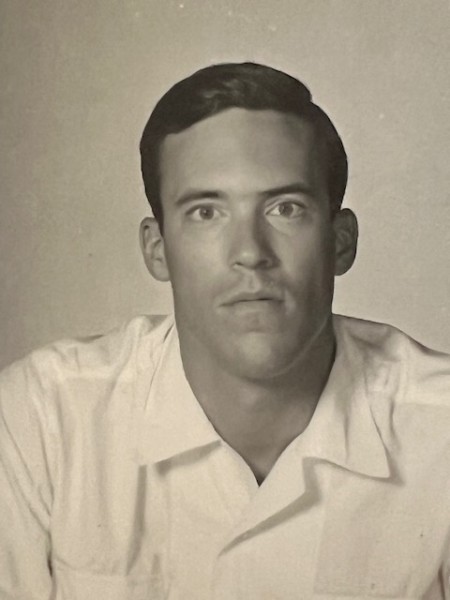
Over my time in Guam, I was legal counsel in some of the most interesting cases of my career. Before I arrived, I had to undergo a deep background investigation, conducted by the FBI and the CIA, who questioned people who knew me at every place I ever lived in my life. I was ultimately granted the highest clearance possible, SIOP-ESI, which means “Able to handle nuclear weapons”. I still can’t reveal why I had to have this top security clearance, but I can say that I handled two case involving nuclear submarines. In the first case, I represented the captain of an attack nuclear sub involved in an undersea incident with a Russian submarine. In the second case, I went aboard a Polaris missile submarine at sea for a week to represent a seaman charged with attacking another seaman underwater while on their 60-day secret mission patrolling the waters of the Pacific. Much more to say, but I can’t say it.
Other cases I handled: sole prosecutor of a capital murder case involving a black sailor who killed another serviceman right after Martin Luther King’s assassination for the sole reason that he was white; and three cases involving a crazy Navy Commander who tried to throw out of the Navy an enlisted man just short of his retirement because he was an alcoholic, then he tried a sailor who cashed a Xerox copy of a check; and finally he prosecuted a sailor facing 10 years in prison for bringing a stash of marijuana cigarettes back to Guam from Vietnam. I won all three cases, and on the case involving the Xerox copy of the check, the Commander ordered me to take the case to trial right after I had been appointed as the accused’s defense counsel. I told him to “go fuck himself”, something a Lieutenant does not tell a Navy Commander. I got a reprimand placed in my record for saying this, but I did not care. I was right…
I tried a lot of cases on Guam against a Harvard graduate Navy JAG officer who later became Godfather to my children, although we fought like cats and dogs in the courtroom on Guam. He went on to become a prominent judge in Connecticut, on the way to becoming head of the Connecticut Supreme Court, until he was trapped in a setup DUI, forced to resign as a judge, and committed suicide. One of the great tragedies of my life.
My final Navy case involved embarrassing the local government of Guam for passing a law requiring Navy personnel who committed offenses off the naval bases in the local courts. In this case, the sailor was sentenced to six years in jail for raping the wife of another sailor. I was appointed to represent him after he was convicted in the Guam court, but discovered that the bruises put on the victim’s arms were done a few hours before my client visited her by another man who came by to have sex with her. The Ninth Circuit Court of Appeals reversed his conviction after I was released from active duty. He was never retried.
What to Do With the Rest of My Life?
It was now mid-1969, and I was done with my active duty military service, right as the Vietnam War was at its peak. I had a ticket from the Navy to return from Guam to my home of record in the New York area the long way around. At age 28, what to do with the rest of my life? First, I went back to Saigon, where I had defended several military cases over the past two years, going there on my own terms. I was hoping to find in Saigon the beautiful French-Vietnamese woman I had met there. Never found her, and I felt very weird being a tourist in Saigon at the same time as 450,000 American servicemen were fighting for their country and dying there. So I left.
I went to Nepal, to join an American mountaineering expedition attempting to climb the sixth highest peak in the world, Dhaulagiri, but I got deathly sick with dysentery and bailed from the expedition. This saved my life, as almost all the members of the expedition died in a huge avalanche. So I returned to the U.S., and flew to California with $100 to my name and a law degree. The woman I had dated at Camp Pendleton picked me up at LAX. I ended up marrying her in November, 1969, raising twin daughters with her, buying a house in Malibu with her, and practicing law in L.A. for the rest of my life…
Comments

Powered by RoundtableAn AI/DeFi-powered Enterprise Media Operating System. Learn more at Roundtable.io.© Roundtable 2026. By using this site you agree to the Terms of Use and Privacy Policy