


May 1, 2025 2:20 AM
Updated May 3, 2025 10:00 AM
The political history and partisan leanings of the South Bay area of Los Angeles County don't generally lead one to think of progressive activism but maybe that is changing
Positioned along the Pacific Coast and just south of Los Angeles International Airport, the South Bay region of Los Angeles County is known for its stunning beaches and aerospace industry legacy. But it doesn't have a reputation for being especially social justice-oriented. But beyond its postcard-worthy sunsets lies a fascinating political history that reflects broader shifts in California’s partisan landscape. In an interview with Wade Kyle, a South Bay denizen, educator, and labor activist, we touch on the political roots, changing affiliations, and current voting trends in the South Bay — a microcosm of California’s evolving political identity.
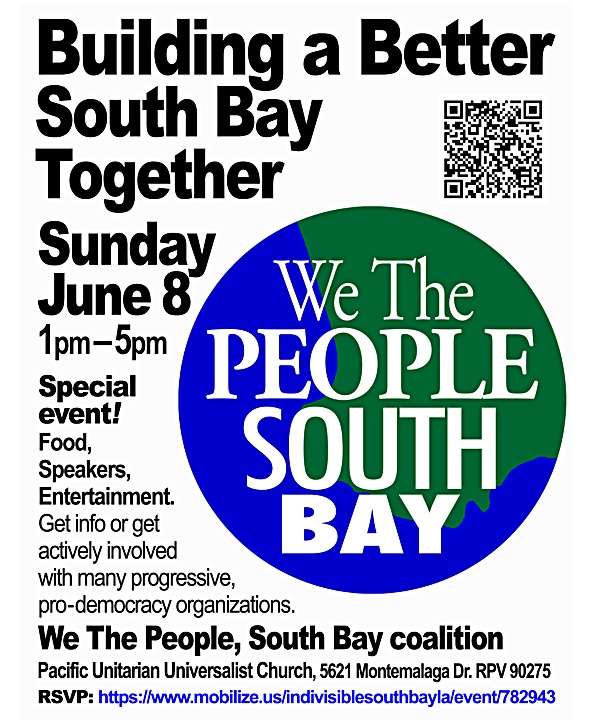
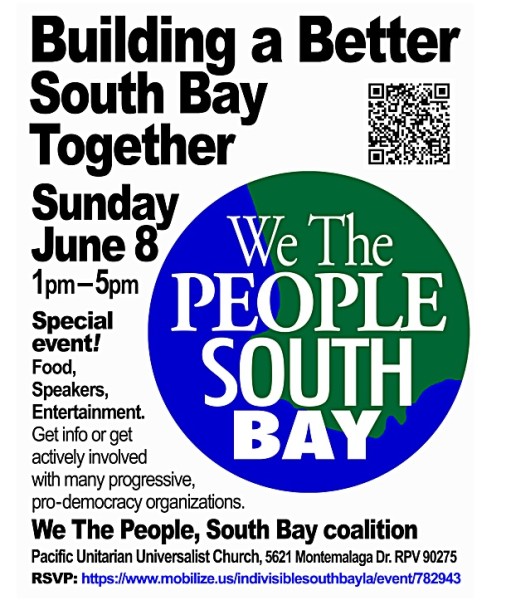
But before we get into the roots — here's a flyer for an event Wade and his fellow activists have organized to help locals to discover meaningful ways to get involved politically. Multiple organizations, including Democratic clubs, advocacy organizations, and activists making real change in the South Bay, are working to build progressive power. Join them and enjoy compelling speakers, live entertainment, and delicious food options.
What: We the People South Bay Coalition building and fun
Where: Pacific Unitarian Universalist Church, 5621 Montemalaga Dr., Rancho Palos Verdes, CA
Related stories
When: Sunday, June 8, 2025, from 1:00 to 5:00 PDT
RSVP - CLICK HERE
A Brief History of South Bay Politics
Historically, the South Bay — including cities like Torrance, Redondo Beach, Manhattan Beach, and Palos Verdes — leaned conservative. In the post–World War II era, many aerospace and defense workers settled in the region, bringing with them the kind of fiscally conservative and pro-defense views that aligned with the Republican Party. This was particularly true during the Cold War, when South Bay cities were hubs for large corporations with big Department of Defense contracts such as Northrop Grumman and Hughes Aircraft.
Throughout the 1960s and 1970s, Republican candidates often found strong support in South Bay cities such as Palos Verdes Estates and Rolling Hills. Other South Bay cities like Torrance and Redondo Beach, though slightly more moderate, also leaned red. The region was, for a long time, reliably Republican in both local and national elections. And even though some Republicans can still count on support from the region, like in the recent Lomita City Council race, in recent years, people watching the South Bay have witnessed change.
Shifting Demographics and Changing Partisan Trends
Like much of California, the political map of the South Bay began to shift in the 1990s and 2000s. The shift was partly a consequence of the end of the cold war, which led to the aerospace industry in Southern California losing a significant number of Department of Defense (DoD) contracts and jobs. The region's economy and political landscape changed dramatically. Highly compensated aerospace employees and their families moved out; younger and more diverse populations moved into the region. This population shift led to more of a focus on social issues like affordable housing and quality education and began playing a larger role in how residents voted. Suburban coastal cities that once prioritized defense and low taxes began to weigh climate policy, immigration, and healthcare more heavily.
By the 2010s, the South Bay was a battleground. Torrance, for example, saw its local politics shift to the center, with Democratic candidates gaining ground in both state and federal elections. Redondo Beach and Hermosa Beach, historically moderate, began leaning more solidly Democratic, particularly on environmental and social justice issues.
One of the biggest signs of this shift came in 2018 and 2020, when Democratic candidates won handily in several South Bay congressional districts. The 36th Congressional District, which includes much of the South Bay, flipped blue and stayed that way, signaling a broader realignment.
As one sign of those changes, 20 years ago, I briefly lived in Torrance with my soon-to-be husband, Dick. When we put a "Vote for John Kerry" sign in our front yard, a neighbor from around the corner knocked on our door and almost threw herself into our arms when we opened it. "I thought I was the only liberal," she said, practically weeping.
The Present-Day Political Landscape
Today, the South Bay region of Los Angeles County is politically diverse — and increasingly blue. While cities like Manhattan Beach and Palos Verdes still contain pockets of conservatism, the overall trend leans Democratic, especially in coastal and younger communities.
Inglewood and Hawthorne are deeply Democratic, reflecting their majority-minority populations. Torrance and Redondo Beach remain politically mixed but have shifted significantly from their earlier Republican roots. Voter registration data confirms this trend: as of the latest figures, registered Democrats now outnumber Republicans in most South Bay cities.
Local elections remain competitive, however, with issues like housing development, homelessness, public safety, and environmental policy often overriding strict party lines. The South Bay also tends to favor pragmatic, moderate candidates who reflect the nuanced values of their constituents.
What It All Means for California Elections
As California continues to serve as a bellwether for national political trends, the South Bay plays a key role in shaping outcomes. The region’s diverse mix of longtime homeowners, working-class families, and tech-savvy newcomers offers a unique political profile that can’t be easily categorized. Which makes organizing even more difficult.
Understanding South Bay Los Angeles politics is crucial for anyone tracking California elections, partisan trends in Southern California, or the evolving demographics of Los Angeles County voting patterns. This is a region that’s no longer easily defined by its past — and that’s precisely what makes it so politically important, especially at a time when progressives have an opportunity to find their voice here.
The South Bay region of Los Angeles County includes a mix of beach cities, inland cities, and unincorporated areas. Here's a list and a map of the main cities and communities generally considered part of the South Bay:
Beach Cities (West Coastline)
- El Segundo
- Manhattan Beach
- Hermosa Beach
- Redondo Beach
- Torrance
Palos Verdes Peninsula
- Palos Verdes Estates
- Rancho Palos Verdes
- Rolling Hills
- Rolling Hills Estates
Inland South Bay Cities
- Carson
- Gardena
- Hawthorne
- Lawndale
- Lomita
- Inglewood (sometimes included depending on context)
- Harbor City (neighborhood of Los Angeles)
- Wilmington (neighborhood of Los Angeles)
- San Pedro (neighborhood of Los Angeles)
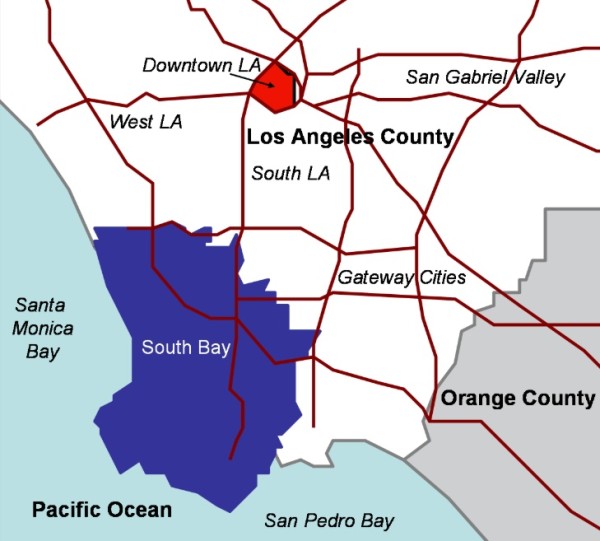
Now, back to the event: Whether you're a seasoned activist or simply curious about how to make a difference locally, this inclusive event welcomes everyone interested in building a more just, equitable, and vibrant South Bay. Click here to rsvp
Comments

Powered by RoundtableAn AI/DeFi-powered Enterprise Media Operating System. Learn more at Roundtable.io.© Roundtable 2026. By using this site you agree to the Terms of Use and Privacy Policy