


May 24, 2023 12:00 PM
Writers can disturb the social oppression that functions like a coma on the population
Authoritarians, Toni Morrison told her audience, know the perils of giving “free range” to publish “the judgments of “perceptive, dissident writers,” writers who “follow their creative instincts” (The Source of Self-Regard). That kind of freedom, she continued, just isn’t permissible in a state wanting to control what is thought, written, read by its citizens.
There are perils, however, for writers too, Morrison acknowledged. Those writers who unsettle or call into question what is to be accepted as a given, who make readers look deeper, who challenge rather than accept the status quo should know the perils of such resistance authoritarians. “Writers—journalists, essayists, bloggers, poets, playwrights—can disturb the social oppression that functions like a coma on the population, a coma despots call peace and they stanch the blood flow of war that hawks and profiteers thrill to.” And they should know tyrants won’t stand for it!
There are, too, perils for the inheritors, the readers, the audience—anyone these days who wants to consider themselves “woke.” That is, just knowledgeable about the history that is the US, the history of its role as perpetrators of conquest, domestic and foreign. The US’s role as enslavers and oppressors isn’t ancient history! Think of the wealth this nation received from the brutal system of kidnapping and transporting and auctioning for sale Black men, women, and child!
Most of the artwork of African Americans, in particular, speaks to the history of enslavement and the legacy all Americans live with, regardless of whether or not many want to acknowledge this foundation in violence or not. African Americans have recalled the past in works of fiction or prose. But as Morrison told the audience, to be deprived of artwork is to live in an “unlivable” and a “bleak” world. It is also to deny the right of Black freedom fighters the right to speak now, to teach now to another generation very much in need of history.
Related stories
“How quickly thought and liberty die!” noted the writer Jean Guéhenno recording his observations during the years of German occupation of France in his diary. He continued: “Literature. Nothing is nobler than its play when it is the flower of freedom, but nothing is baser than when it is the means of doing without freedom, of avoiding the risks of freedom—when it is entertainment and a cover for the servitude one has accepted.” Truly, the right to learn, to think critically on the history of one’s past that very human progressive endeavor comes to die in cities, states, or nations where writers, past and present, are under attack.
Guéhenno recalled that the “mere attempt to learn something” was “almost considered a crime.” To learn something from “branded” writers, that is, those branded leftists or communists or liberals or Black or Muslim, LGBTQ +, to learn from those who challenge systemic racism, or the imposition of fascism, made the reader subject to ridicule or worse. Writers were deprived the right to “call into question the lies the newspapers” imposed on citizens “every morning.” Lying became a valuable tool for suppressing truth. Lies were given wings! It’s “a strange regime,” Guéhenno noted, when “everyone must hide the best thoughts he has,” and what is left of “writers” if not “a clique of failures and cowards, quite ready to think on command it gives them a position.” As a result, refusing to be complicit within a fascist regime, Guéhenno sent his work underground.
Authoritarian regimes, anti-democratic regimes, fascist regimes, bullying writers who “disturb the social oppression,” are really fearful of the truth.
What kind of world is this if not one that revels in chaos?
What literature comes to the world from within Russia today. I remember reading as an undergrad Tolstoy, Dostoevsky, Gogol, Turgenev, Chekhov, and others. But now? Or how about North Korea?
As a writer herself, Morrison had the foresight to see the crisis we find ourselves in now where we must stand up in defense of writers, past and present. Writers of fiction, prose, poetry. Writers of truth. “We should remind ourselves,” Morrison told the audience, “that their absence, the choking off of a writer’s work, [that is,] its cruel amputation, is of equal peril to us.” To rescue the writer is to extend “generosity to ourselves.”
Authoritarian regimes, anti-democratic regimes, fascist regimes, bullying writers who “disturb the social oppression,” are really fearful of the truth. “Truth is trouble.” For the warmonger, truth is trouble; for the torturer, “the corporate thief, the political hack, the corrupt justice system, and for a comatose public,” truth is bad news. “Unpersecuted, unjailed, unharassed writers are trouble for the ignorant bully, the sly racist, and the predators feeding off the world’s resources.”
Morrison continued: “The historical suppression of writers [present or absent] is the earliest harbinger of the steady peeling away of additional rights and liberties that will follow.” To consider a nation’s literature is to consider the history of “persecuted writers,” writing in “stillness” (Morrison), or “solitude” (Guéhnno). Writing against “the catastrophic, the world wanton, or incorrigible,” Morrison suggested.
*
For Harriet Jacobs, she needs to tell her story in order to support herself and her children once they escaped to the North. Pursued as a fugitive from the plantation in the 1830s, she would qualify as a writer in need of our protect these days of book banning and anti-wokism. In her introduction to her narrative, Incidents in the Life of A Slave Girl, Jacobs wrote that she wasn’t writing “to attract attention” to herself; on the contrary, with her artful yet critical writing on her lived experience, she hoped, would “arouse the women of the North to a realizing sense of the condition of two millions of women at the South, still in bondage, suffering what I suffered, and most of them far worse.”
“Slavery is terrible for men, but it is far more terrible for women.”
As so Harriet Jacobs wrote under the pen name, Linda Brent, for those women enslaved then and those of us now, more than ever, in need of learning who were the real American heroes of democracy.
Jacobs’ narrative is part of our inheritance. For those ancestors who provide us with this inheritance, shouldn’t it be our responsibility to fight the “ignorant bully, the sly racist, and the predators feeding off the world’s resources”--all those who want to strip us of our inheritance? We inherit the work that resists the chaos imposed by authoritarian regimes on the lives of writers, creating in “stillness,” solitude.” Those who stood up to the tyranny of slaveholders, to the activism of governments in the grip of Confederate power, to the profiteers in need once again of cheap if not free labor, did so out of love for a mistreated people. They did so out of love for justice.
We are protecting, after all, our history—what the philosopher Hegel declared in Phenomenology of History, that Africans and their descendants did not possess. It’s the history of oppression and resistance. Of struggle and ingenuity. Against white supremacy, fascism, against the lack of empathy toward a people repeatedly denied justice.
Who is to say that they aren’t in need of protection from those who perceive Black Americans as a threat to their very existence?
And at great risk to their lives!
We are protecting the wisdom of our ancestors to speak, to convey what was and to show what still needs to be done.
I think another fugitive and the risks he endured while working as an abolitionist and writing articles in opposition to enslavement. Like Jacobs, Frederick Douglass wrote on behalf of those still in bondage while he, himself, had to keep an eye out for the “Four horsemen,” on his heels, just crossing his yard… There was always the risk of being betrayed and returned to the cruelty of plantation life.
Yet, Douglass wrote not only Narratives of the Life of Frederick Douglass, An American Slave (1845) and My Bondage and My Freedom (1855) but also founded and edited The North Star (1847). He presented lectures, speaking out against the tyranny of enslavement and on behalf of the millions in bondage to a cruel system of depravity. For Douglass, it wasn’t a question of why write or speak out or for whom to write or speak out to.
He informed a skeptical UK audience wonder why he bothered to address them with the woes of slavery. Why not stay in the US, where the slaveholders maintained their dominance in the government and in public life. Address them! To which Douglass answered that slavery wasn’t limited to the US, but rather it’s “the common enemy of mankind.” The “abominable” character of enslavement should be common knowledge among all living and future beings. And the best primary source of knowledge about slavery is from the enslaved. In Bondage, he wrote, “I expose slavery in this country because to expose it is to kill it. Slavery is one of those monsters of darkness to whom the light of truth is death. Expose slavery, and it dies…” He continued, “the slaveholders want total darkness on the subject. They want the hatchway shut down, that the monster may crawl in his den of darkness, crushing human hopes and happiness, destroying the bondsman at wll, and having no one to reprove or rebuke him. Slavery shrinks from the light; hateth the light, neither cometh to the light, lest its deeds should be reproved.”
It’s easy to understand why the words of the 19th Century writer Douglass would threaten a fascist regime! That fight to expose the darkness of slavery on a society that insists on its exceptionalism continues today. And so, Narratives of the Life of Frederick Douglass, An American Slave is a banned book!
As an intellectual activist and writer, W. E. B. Du Bois offered himself and his work, just as Douglass did, in the service of democracy. Lincoln, hoping to persuade Blacks to immigrate to Africa, didn’t appreciate the determination of Douglass to claim America for democracy. In Black Reconstruction in America, Du Bois offers a history of Douglass’ first-hand account of his resistance to Lincoln’s solution to the “Negro Problem.” A piece of history necessary to the fight against tyranny today.
Du Bois made a bit of history himself when he took on the racist propaganda spewing out of Hollywood in 1915. In “Propaganda and World War,” Du Bois criticized how “the new technique of the moving picture” was “much more insidious and hurtful” than the novels written by first-rate propagandists, enforcing the lie of a white America, for white Americans. (Du Bois called out writer Thomas Dixon for his novel, Leopard’s Spots, and his play The Clansman”). As Du Bois wrote, “popular entertainment became great when David Griffith made the film ‘The Birth of a Nation,’” but at the expense of truth: the determination of Blacks to defend democracy and the determination of slaveholders and their supporters to defend slavery. To exercise one’s freedom is fine—except when it results in an increase, as Du Bois notes, in the number of Blacks lynched.
What is the message these cultural productions send to the “youth of the nation” or to the “unthinking masses” or to the world if not “a story,” Du Bois asked, “which twisted the emancipation and enfranchisement of the slave in a great effort toward universal democracy, into an orgy of theft and degradation and wide rape of white women.” This “story” is a lie! Propaganda! As a result of craftily writing out wished-for scenarios, many Black Americans suffered death-by-noose for someone’s right to produce propaganda.
Du Bois continues, “without a doubt the increase of lynching in 1915 and later was directly encouraged by this film. We did what we could to stop its showing.” But “the number of mob murders so increased that nearly one hundred Negroes were lynched during 1915.”
“Eight Negroes lynched since last issue of the newspaper Free Speech. Three were charged with killing white men and five with raping white women. Nobody in this section believes the old thread-bare lie that Negro men assault white women.”
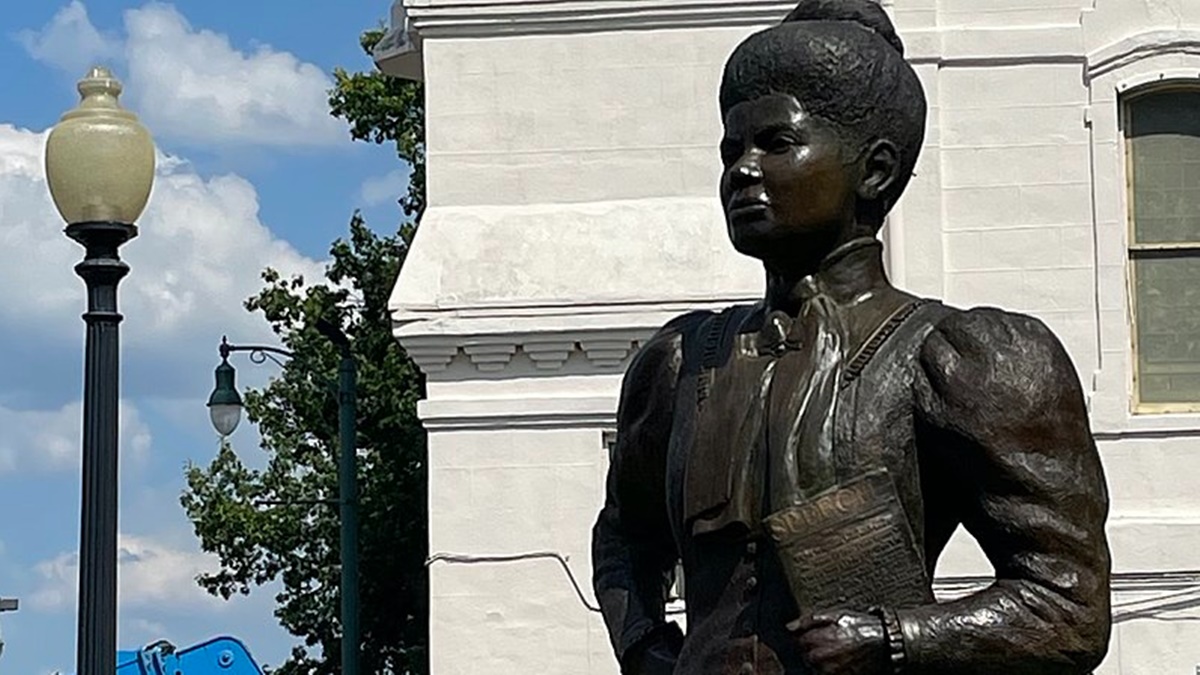
So she wrote journalist and activist Ida B. Wells in May 1892 when, she wrote in Crusade for Justice: The Autobiography of Ida B. Wells that her eyes opened about lynching after the lynching of her three Memphis friends, Thomas Moss, Calvin McDowell, and Lee Steward. Memphis had been one of the “leading cities in the South, in which no lynching had taken place before.”
These businessmen, Wells, noted, “had committed no crime against white women. This is what opened my eyes to what lynching really was. An excuse to get rid of Negroes who were acquiring wealth and property and thus keep the race terrorized and ‘keep the nigger down.’”
This is Wells, still teaching!
History will do that!
Comments

Powered by RoundtableAn AI/DeFi-powered Enterprise Media Operating System. Learn more at Roundtable.io.© Roundtable 2026. By using this site you agree to the Terms of Use and Privacy Policy