

May 21, 2026 5:11 PM
Updated May 22, 2026 7:02 PM
People say freedom isn’t free, but it’s not just the dead who pay the price for it.
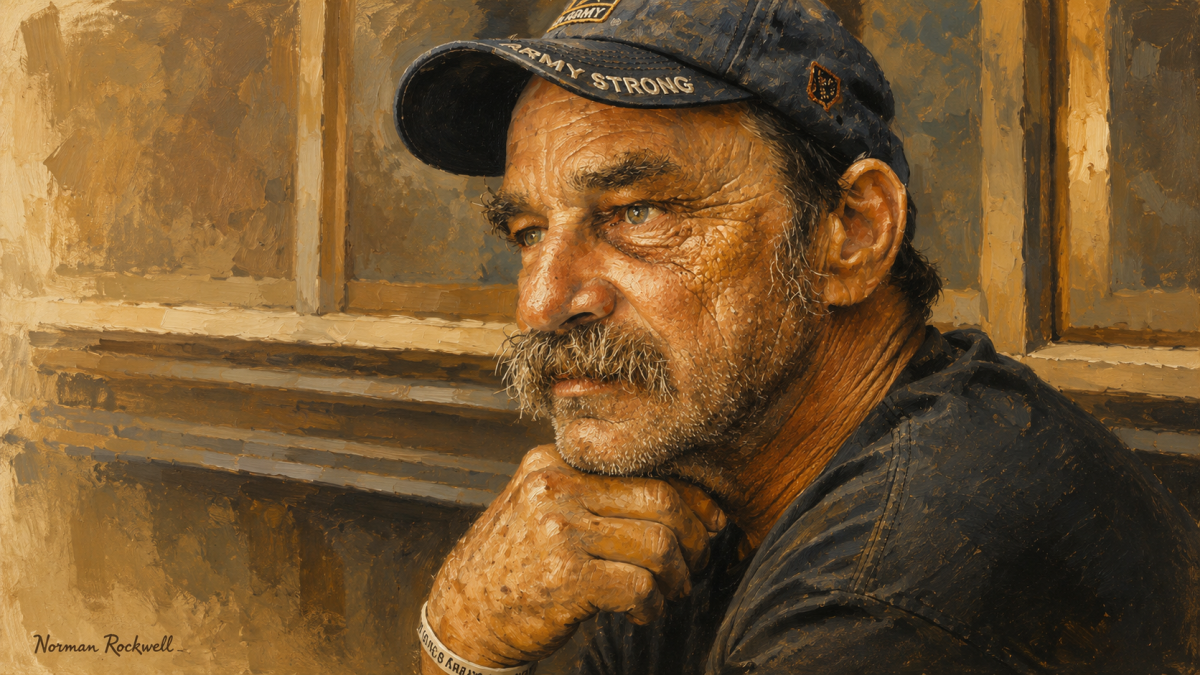
Memorial Day is just around the corner, and it’s always an interesting time for me, like Veterans’ Day. When people learn I’m a veteran, they’re eager to thank me for my service. Some of them even tell me they’re free because of me, but what I did in my war had no impact on whatever freedom they think they enjoy.
Both Veterans’ Day and Memorial Day involve lots of flags and ceremony, but there’s a critical difference between them. Veteran’s Day is for all veterans. Memorial Day is only for the ones who didn’t make it home alive—the ones our president likes to call suckers and losers. One event honors the living. The other honors the dead. Memorial Day was established in 1868 as Decoration Day, in the wake of America’s deadliest war. Veterans’ Day was established by Congress as Armistice Day in 1938, then renamed Veterans’ Day in 1954, to recognize everyone who ever wore the uniform of the United States.
When established, Armistice Day commemorated the moment when the belligerents in World War I agreed to stop fighting. The Treaty of Versailles that followed formally ended what people called the War to End All Wars, but as David Fromkin has argued, what it actually did was to initiate a Peace to End All Peace. Since Versailles, there has not been more than a rare moment when someone was not waging war somewhere on the planet.
Most of those wars have been small, brief, and local, but if war is a racket, as General Smedley Butler declared, then the racketeers have been busy constantly since the the end of War to End all Wars. And American troops have been involved in more of that racketeering than most people suspect. In the century since 1919, United States troops have been involved in over fifty armed conflicts, and more than 600,000 of those troops have died. Memorial Day is for them, and for all the others who’ve died in America’s wars.
Related stories
So now, on Memorial Day in the spring and on Veterans’ Day in the fall, people gather to feel warm and fuzzy about veterans—to “honor the troops” as they say. They parade, make speeches, and chant USA! USA! And they sing along with Lee Greenwood, who says he won’t forget the men who died to give him his freedom. I’ve always wanted to ask him, what about the men who lived, the millions who served, came back alive, and quietly got on with their lives, now invisible among us?
People say freedom isn’t free, but it’s not just the dead who pay the price for it. Will Lee Greenwood and all those who sing along with him remember the ones who made it back to the world but still haven’t found their way home—the ones in wheel chairs and on walkers and prostheses, sleeping on the street and in homeless shelters, struggling every day to cope with the terrors of PTSD, or in so-called patriot militias, plotting to overthrow the government they served?
Or will they look away, embarrassed by yet another reminder of the price their troops pay for the opportunity to celebrate wars and warriors on Memorial Day and Veterans’ Day?
We might also use duration as a criterion.
World War II in Europe lasted seven years. Japan’s war in East Asia began in 1905, against China, and continued almost without interruption until 1945. The first American death in my war occurred in 1945, in what’s now called Ho Chi Minh City, and the last American troops didn’t leave until thirty years later. The war on terror, begun in 2001, lasted until the last US troops left Kabul in 2021. We hope the current war against Iran will not be a long one, but already there are well over thirty countries involved in it in one way or another, a geopolitical Gordian knot that will be difficult to untie.
Of course, if we understand war as more than just people killing each other on battlefields, there are some that spanned generations. The Cold War—if we think of it as an actual war—went on for nearly half a century, from the creation of the American national security state in 1947 until the collapse of the USSR in 1990. And from the obliteration of the Pequot nation in 1637 to the massacre at Wounded Knee in 1890, the war on indigenous peoples in North America lasted two and a half centuries. Many would say it hasn’t ended yet.
Comments

Powered by RoundtableAn AI/DeFi-powered Enterprise Media Operating System. Learn more at Roundtable.io.© Roundtable 2026. By using this site you agree to the Terms of Use and Privacy Policy