


May 6, 2020 11:00 AM
Updated Feb 10, 2022 11:00 PM
Walter G. Moss: Although protests were televised in California, Michigan, and Massachusetts, the governors of those states demonstrated courageous leadership in resisting the shouts of those who demanded easing.
In Los Angeles, Lansing, Michigan, and Boston in early May protesters called for an end to government coronavirus restrictions placed upon them by their governors. Encouraged by President Trump’s tweets of 17 April—”Liberate Minnesota,” “Liberate Michigan,” “Liberate Virginia, and save your great 2nd Amendment [the right to bear arms]. It is under siege!”—protesters were tired of leading restricted lives.
As a Boston Globe article of 4 May indicated, “After nearly two months of imposed isolation, and with temperatures finally swelling into the 70s, the past weekend seemed to make official what most of us have long known: Quarantine fatigue has set in…The warm weekend weather drew crowds around Boston…Lots of people sitting on benches near others, sunbathing and breaking social distancing rules at Constitution Beach…Spring’s arrival has propelled countless residents from their homes and toward the city’s parks and beaches.” In South Boston, the “area’s plethora of trendy bars and restaurants, was the site of a number of alleged offenses over the weekend, from packed roof parties to public drinking.”
Although protests were televised in California, Michigan, and Massachusetts, the governors of those states demonstrated courageous leadership in resisting the shouts of those who demanded easing.
Although protests were televised in California, Michigan, and Massachusetts, the governors of those states demonstrated courageous leadership in resisting the shouts of those who demanded easing. Many other governors, like Georgia’s Brian Kemp, began easing earlier limitations. Like President Trump, they ignored some of the best public-health advice in their impatience to return to “normalacy.”
But just as they were displaying such impatience, new studies were forecasting a doubling of previously estimated deaths mainly because so many states were beginning to ease social distancing and other requirements.
Related stories
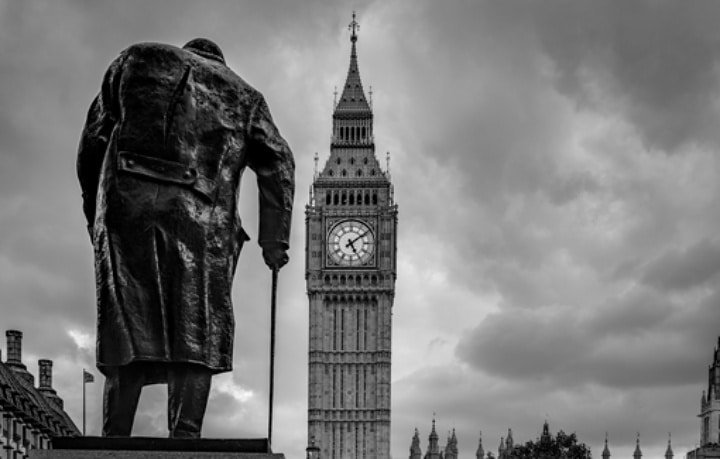
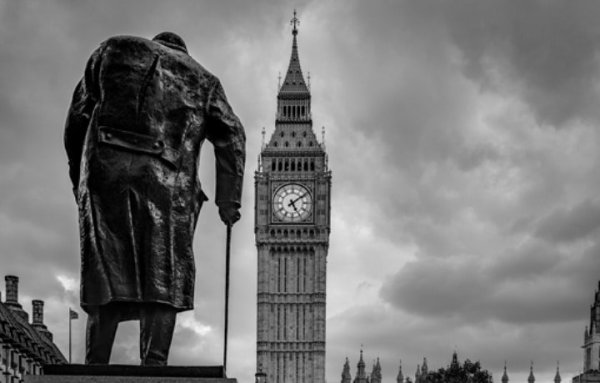
Reading of all of this, the historian in me could not help but think of previous examples of people in crises and how they weathered them—e.g., the people of Leningrad besieged by German armies for 900 days or the people of England facing Hitler’s forces almost alone after his armies had taken over most of Western Europe in 1940. But then again, Leningraders were tough, used to all sorts of tribulations. And the British had Churchill. Although not faultless, he was an inspiring war leader, a man who understood the nature of true leadership. Listen to part of his speech of 4 June 1940, after retreating English troops had been forced from the French coastal city of Dunkirk:
… we shall prove ourselves once again able to defend our Island home, to ride out the storm of war, and to outlive the menace of tyranny, if necessary for years, if necessary alone. . . .
Even though large tracts of Europe and many old and famous States have fallen or may fall into the grip of the Gestapo and all the odious apparatus of Nazi rule, we shall not flag or fail.
We shall go on to the end, we shall fight in France,
we shall fight on the seas and oceans,
we shall fight with growing confidence and growing strength in the air, we shall defend our Island, whatever the cost may be,
we shall fight on the beaches,
we shall fight on the landing grounds,
we shall fight in the fields and in the streets,
we shall fight in the hills;
we shall never surrender.
But rather than inspiring us Americans to continue our fight against that main evil of our time, the coronavirus, President Trump encourages citizens to “liberate” their states from governors who have had enough sense to follow public-health guidelines that will save lives.
No wonder, one knowledgeable journalist who has specialized in public health reporting is “shocked that America isn’t in a position to provide leadership for the global response to this crisis, in part because science and scientists have been so degraded under Trump,” whom she labels “the most incompetent, foolhardy buffoon imaginable.”
Walter G. Moss
Comments

Powered by RoundtableAn AI/DeFi-powered Enterprise Media Operating System. Learn more at Roundtable.io.© Roundtable 2026. By using this site you agree to the Terms of Use and Privacy Policy