
Andrea Kirkby • Attribution-NonCommercial (CC BY-NC 2.0) • Flickr


Mar 20, 2023 12:00 PM
Liberal democracy meant that no one, even the majority, could claim absolute or perpetual power, because no one could claim to know the whole truth.
Prime Minister Víktor Orbán of Hungary uses this formula to describe a democracy that rejects traditional protections for minority populations and points of view, affirming instead the fundamentally Christian character of his country. And he uses “Christian” in a very traditionalist vein, denying legitimacy, for example, to the LGBTQ community. His perspective has been cited approvingly by right-wing American leaders like Donald Trump and Tucker Carlson.
Democracy was a term first coined by Plato and Aristotle to mean literally “rule by the people,” and it was not used positively. It meant tyranny of the poor majority over the minority of people who were better (wealthier or wiser, or both). Democracy continued to be seen in this classically negative light right up to the late 18th century and the revolutions in the United States and France.
The US came up with a constitution that embedded the principle of majority rule in a set of checks and balances that limited the scope of an electoral majority: the Electoral College, the Senate, the courts, the federal system. The national majority could literally determine only who got elected to the House of Representatives. And the majority was also limited by time: elections were for set terms, after which those elected would be replaced in new elections.
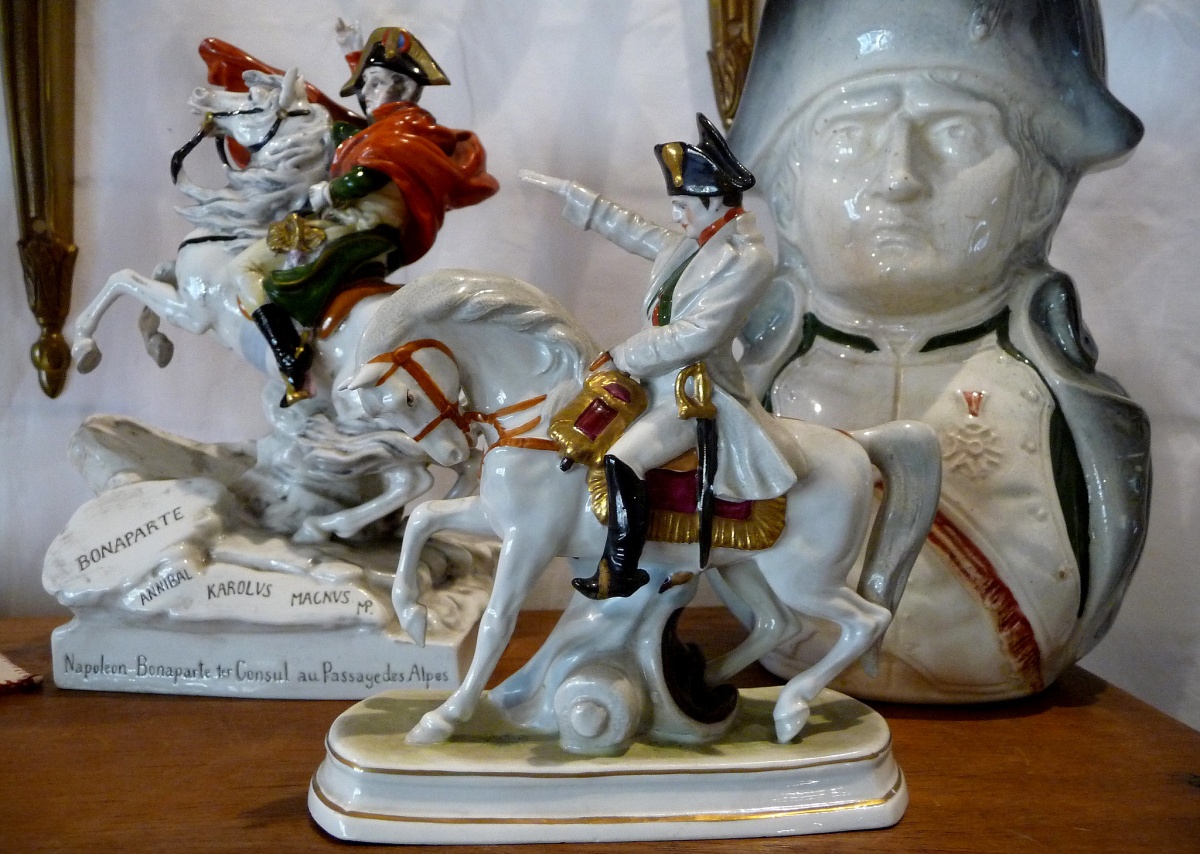
Revolutionary France, in contrast, adopted majority rule as its basic principle, considering the French People as sovereign, unchecked in its authority. Democracy as majority rule proved unsustainable: it led inexorably to the tyrannical rule of small numbers of leaders who claimed the popular mandate, and then to instability as competing versions of legitimate order contended. After Napoleon, France endured two forms of hereditary monarchy, a Second Republic, a second Napoleonic Empire, and a Third Republic that finally achieved a modicum of stability after the final Napoleon lost the Franco-Prussian War in 1871.
Related stories
The Third French Republic did not copy the American system in detail, but it accepted the basic principle that the popularly elected parliament and the government it appointed would be bound by the Constitution. This principle of popularly elected, constitutionally limited governments proved to be the standard of what came to be called “liberal democracy.”
Liberal democracy meant that no one, even the majority, could claim absolute or perpetual power, because no one could claim to know the whole truth. Those with power had to be limited by the rights of minorities and by periodic elections in which minorities had the opportunity to become majorities.
Liberal democracy became, especially after World War II, the dominant political form in the West, and the form to which other countries aspired, with varying success. Even authoritarian regimes like the Soviet Union accepted the principle of popular consent. Alternative principles of legitimacy (like the Islamic Republic of Iran or the hereditary monarchy of Saudi Arabia) became rare.
Illiberal democracy took shape in the 21st century as a forthright conservative challenge to liberal democracy. If Orbán was its most systematic proponent, Trump was the most prominent. Ostensibly based on the principle of unchecked majority rule, it was in fact based on a commitment to defend a conservative vision of “Western civilization,” defined in practice as White, Christian, European and Male-dominated. If defending that vision required overruling majority rule, so be it. Hence, Trump’s insistence, without evidence, that he really won the 2020 election. Hence, the willingness of illiberal democrats to use the courts to overrule majorities on issues such as abortion access.
While liberal democracy has many imperfections, they tend to be self-limiting or self-correcting due to constitutional limitations and periodic elections. Illiberal democracy, with its commitment to a particular truth, has no such self-correcting qualities. The road to a new Napoleon, and ultimately to chaos, lies open.
Comments

Powered by RoundtableAn AI/DeFi-powered Enterprise Media Operating System. Learn more at Roundtable.io.© Roundtable 2026. By using this site you agree to the Terms of Use and Privacy Policy