


Nov 5, 2025 6:32 PM
Updated Nov 6, 2025 7:42 PM
Trump fails to understand the main purpose of history. It is not praising “remarkable achievements” and “fostering unity.” It is truth-seeking.
With Ken Burns’ “The American Revolution” set to premiere on PBS in mid November, we will soon be presented with two contrasting views of history—the Burnsian one and the Trumpian one. For, as The New York Times recently expressed it, with “its frank discussions of slavery and Native American dispossession, [AR] certainly cuts against the Trumpist view of history.” Also opposed to that skewed “Trumpist view of history,” which proposes to ignore or downplay its ignoble aspects, is the viewpoint of noted historian Joseph Ellis in The Great Contradiction: The Tragic Side of the American Founding (2025). In it he wrote of “two unquestionably horrific tragedies . . . the failure to end slavery, and the failure to avoid Indian removal.”
Five years ago on the History News Network, I wrote “as a nation we have not owned up to the grievous, centuries-long harm we have done to Native and African Americans.” In January 2024 regarding this two-pronged harm, I asked the question “Why are we not (as a nation) ashamed?”
Both of these pieces came before the start of Trump’s second term, which has escalated his attack on true, fact-finding history (see, e. g., his executive order of March 2025, which blasted history that undermined “the remarkable achievements of the United States by casting its founding principles and historical milestones in a negative light...Rather than fostering unity and a deeper understanding of our shared past, the widespread effort to rewrite history deepens societal divides and fosters a sense of national shame, disregarding the progress America has made and the ideals that continue to inspire millions around the globe.”)
But Trump fails to understand the main purpose of history. It is not praising “remarkable achievements” and “fostering unity.” It is truth-seeking. As I indicated in mid 2020, “Tell the truth” should be as central to the historian’s mission, as “First, do no harm” is to doctors and nurses. Trump’s approach reminds me more of the long-running Soviet attempt to glorify its history and ignore its oppresive nature.
Related stories
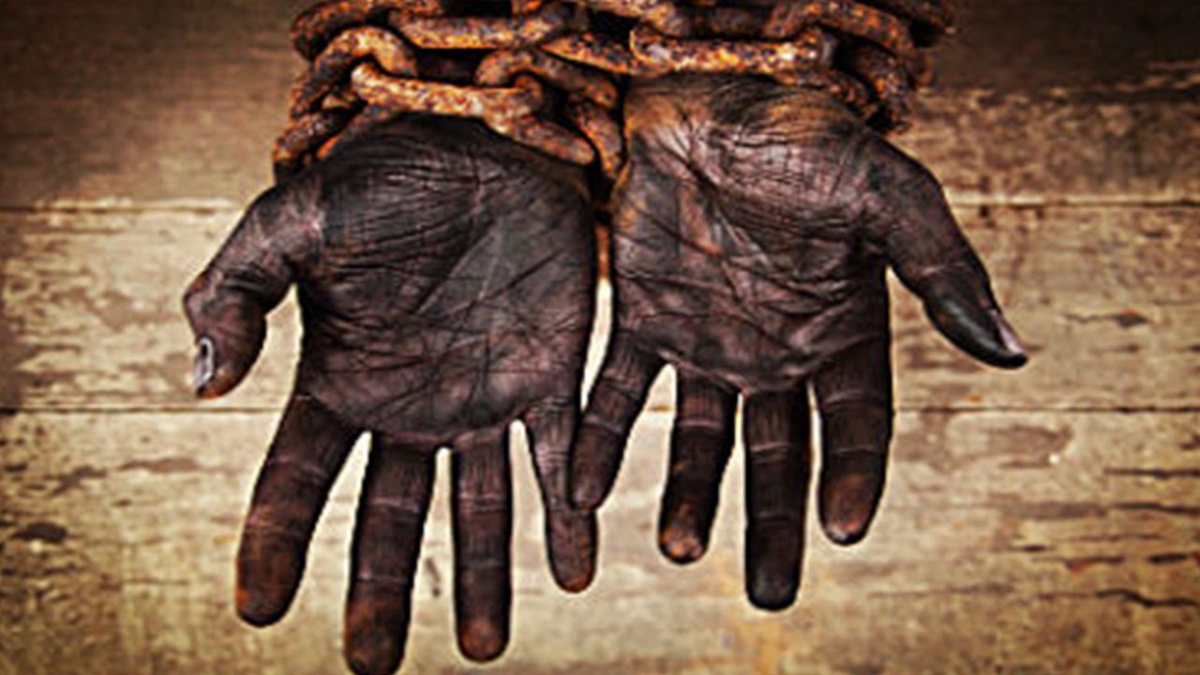
Thus, let’s examine the two tragedies referred to in this present article’s title and also by Ellis. First, slavery. According to Ellis, between 1550 and 1860, European ships brought 10.7 million slaves to the New World, but many more to the South American and Caribbean parts of it (each receiving close to five million) than to the future United States, which received only about four percent of the enslaved Africans. According to the same author, around the time of the American Revolution, there were about one-half million “slaves of African origin in the mainland British colonies—20 percent of the total population.” By far the greatest number of these were in Virginia, followed by Maryland and the Carolinas.
In compromising to bring about our Constitution (signed in 1787)—about 45 percent of the delegates to the Constitutional Convention owned slaves—“the word ‘slave’ does not appear in the document. The framers avoided it, realizing that its mention would defile their project. One delegate from South Carolina stated that “unless regulation of the slave trade was left to the states, the southern-most states ‘shall not be parties to the union.’”
Instead, in the Constitution, southern states received compensation for their heavy reliance on slaves (referred to by a euphemism): They got three-fifths representation in the House of Representatives and extra votes in the Electoral College for the slaves owned. Also, the Constitution “prohibited Congress from outlawing the Atlantic slave trade for twenty years. A fugitive slave clause required the return of runaway slaves to their owners.” And “the Constitution gave the federal government the power to put down domestic rebellions, including slave insurrections.”
Although Ellis’s book deals with the two historic tragedies of African and Native Americans, it spends more time on African Americans, partly because “it connects the way we were then [in the days of slavery] with the way we are now, as a society that continues to grapple with the political and even emotional implications of becoming a biracial or multiracial America. In effect, we are still living a story about the presumption of white supremacy that had its origins and first chapter in the American founding.”
After Lincoln ended slavery, oppression of Blacks continued (primarily in the South) from the late 19th century Reconstruction and then segregation up until the early 1960s. There were also lynchings—the Equal Justice Initiative documented over 5000 “racial terror lynchings” between 1877 and 1950. Today there are about six times as many people with Black blood as compared to those with Native American (including Native Alaskan) blood.
Regarding Ellis’s comment about the present “presumption of white supremacy,” one need only mention Trump’s comments about Haiti—“Why do we want people from Haiti here? Why do we want these people from all these shithole countries here? We should have more people from places like Norway”—his preferential immigration treatment given to White South Africans; and his administration’s attack on Diversity, Equity, and Inclusion (DEI) policies in Higher Education and elsewhere.
Although not dealt with as often by Ellis, the centuries old tragedy of Native Americans was also extensive. Even our best pre-20th century presidents treated them shabbily. In Colin Calloway’s The Indian World of George Washington we read, “Washington . . . developed and articulated policies designed to divest Indians of their cultures as well as their lands and that would shape US-Indian relations for more than a century. . . . He found little to admire in Indian life...When he looked at Indian people, he saw either actual or potential enemies or allies.” In Ron Chernow’s acclaimed biography of Washington there are these lines: “By March 1779 Washington had steeled himself to act ruthlessly against the Six [Iroquois] Nations and resort to cold-blooded warfare against civilians as well as warriors.” Chernow also recognizes that as president, “his most flagrant failings remained those of the country as a whole—the inability to deal forthrightly with the injustice of slavery or to figure out an equitable solution in the ongoing clashes with Native Americans.”
Even Lincoln, who freed the slaves, fares little better. An article in the Washington Monthly, “Lincoln: No Hero to Native Americans,” states, “Abraham Lincoln is not seen as much of a hero at all among many American Indian tribes and Native peoples of the United States, as the majority of his policies proved to be detrimental to them.” Historian Douglas Brinkley has observed that Lincoln “exhibited much the same insensitivity” toward Native Americans as did other government officials of his day.
It was not until the presidency of Franklin Delano Roosevelt (FDR), which began in 1933, that Native Americans began to receive better—but not great—treatment. Brinkley indicates that “no other president had ever helped Native Americans prosper with the heartfelt conviction of FDR. The New Deal encouraged Indian self-rule, the restoration of tribal government, and the resuscitation of native culture and religion.” The American Journey, authored by seven historians, notes that “Native Americans also benefited from the New Deal.” And it provides an excerpt from a 1938 report which contrasted it with earlier treatment: “For nearly 300 years white Americans, in our zeal to carve out a nation made to order, have dealt with the Indians on the erroneous, yet tragic, assumption that the Indians were a dying race—to be liquidated. We took away their best lands; broke treaties, promises; tossed them the most nearly worthless scraps of a continent that had once been wholly theirs.”
Following FDR, the presidents who receive the most historical praise for their Native American policies (up to the end of the Obama administration) are Richard Nixon, Lyndon Johnson, and Barack Obama. In 2024, President Biden became the first president to formally apologize to Native Americans, Native Hawaiians, Native Alaskans. Having earlier made Native American Deb Haaland his Interior Secretary, he now said that “the federal Indian boarding school policy...will always be a significant mark of shame, a blot on American history.” It was “horribly, horribly wrong” and “a sin on our souls.” This “‘sin’ included the government’s creating and operating (in 37 states) more than 400 federal Indian boarding schools from 1819 to 1969—or paying religious groups to run them. The goal was to assimilate Native children (from ages four upward) by removing them from their families, languages, and culture.”
And just as Ellis realized that the past effects of the treatment of African Americans continues to affect them today, so too do our past sins hamper Native Americans at present. For example, at present Native Americans and Alaska Natives have the highest poverty rate among all minority groups in the United States. And during the covid epidemic, Princeton researchers found that Native Americans experienced “substantially greater rates of COVID-19 mortality compared with other racial and ethnic groups.”
In summary, Ellis is right: “Two unquestionably horrific tragedies...the failure to end slavery, and the failure to avoid Indian removal” scar our nation’s history. Yet, unpleasant as these truths may be, the way to deal with them is not the Trumpian method of ignoring or downplaying them, but rather acknowledging and atoning for them.
Comments

Powered by RoundtableAn AI/DeFi-powered Enterprise Media Operating System. Learn more at Roundtable.io.© Roundtable 2026. By using this site you agree to the Terms of Use and Privacy Policy