


May 2, 2025 7:00 AM
Caryl Chessman still haunts me on this anniversary of his execution. I hope that I live to see the abolition of the death penalty, at least in California.
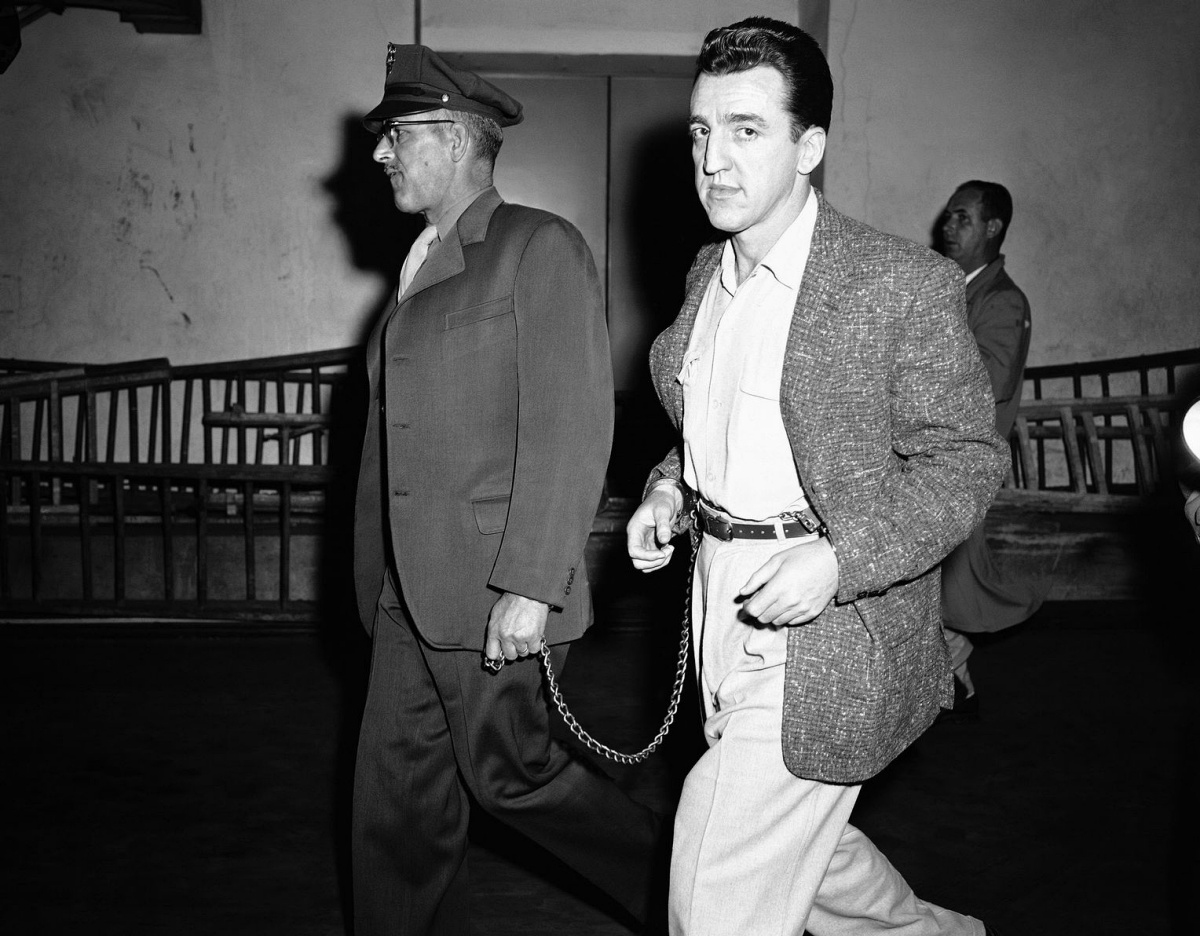
There cannot be more than a handful of people who remember that 65 years ago today, May 2, 1960, Caryl Chessman was executed in the San Quentin gas chamber, bringing his long struggle for life and against the death penalty to a tragic conclusion. His 12 years on Death Row galvanized the attention of the world. During his imprisonment, he waged a heroic battle, writing four books in his San Quentin cell and filing countless appeals. He garnered the support of world leaders and thousands of citizens throughout the world.
I studied Chessman’s case, read all four of his remarkable books, researched the law as best I could, and learned about the grotesque use of the death penalty in human history.
I’m one of the few who remember. His cause captured my youthful imagination and passion in high school, riveting my attention and allowing me respite from the dreadful routines of academic and social life I encountered. It marked my first truly independent social activism of my long life. I attended rallies and circulated petitions. I studied Chessman’s case, read all four of his remarkable books, researched the law as best I could, and learned about the grotesque use of the death penalty in human history.
I suffered through his appeals and temporary reprieves. On the fateful morning of May 2, I told my Spanish teacher that I would leave campus to join a vigil to protest the impending 10 a.m. execution. He bluntly forbade me, informing me that it was against school rules. He also told me how much he supported the death penalty, especially for Chessman.
Related stories
This was an early brush against oppressive authority. The teacher told me that the penalty for leaving without authorization would be a “U” (unsatisfactory) for “citizenship” for the entire semester. In addition to academic grades, each student got a citizenship grade of E (excellent), S (satisfactory), or U. This bizarre Cold War remnant scarcely phased me. I don’t recall ever receiving any grade above “S” anyway and I thought a “U” would be a small price. Decades later, I amusingly relate this anecdote to my university students, remarking that my “ U” in Spanish has never impeded anything I have ever done in my life.
When Chessman’s death was announced, I was devastated. It was my first political defeat; many more would come, but it galvanized a spirit of political activism that has pervaded my entire existence. I resolved to fight the death penalty for the rest of my life. I’ve kept my pledge, even though it has still been unsuccessful in much of America and even technically in California.
Later, in college, while becoming immersed in the burgeoning civil rights movement, I always protested the regular grisly gas chamber killings in San Quentin. I wrote letters, signed petitions, and spoke about the injustice of capital punishment. Everyone in the movement, in both the South and in California, concurred. My fellow racial justice fighters also emphasized the egregious racism of the death penalty, noting regularly how many people of color were incarcerated on death rows and actually put to death throughout the nation.
In college, my activism helped me (after some struggles) to develop sound time management skills so that I could both do my academic work well and continue my more important political efforts. A few years later, as a law student at Berkeley, I became extensively involved in the Free Speech Movement and then in the anti-Vietnam War protests. That continued my high school and college activism catalyzed initially by the Chessman case of the late 1950s and early 1960.
I routinely left Berkeley to attend vigils at the notorious San Quentin State Prison just a short drive away on execution days. They were somber and respectful events; I felt impelled to participate, lending my presence to the still unsuccessful drive to end this barbaric practice.
One of the most publicized executions occurred on April 12, 1967 when African American Aaron Mitchell was gassed to death at San Quentin. I spent the entire night sitting outside the prison, with a large crowd (including a young Jerry Bown), fending off counter protestors, including the American Nazi Party leader George Lincoln Rockwell. Governor Ronald Reagan was firmly committed to the death penalty and apparently eager to see Mitchell die. I also kept a running dairy through the night, publishing it as “Twelve Hours at Quentin” in some college radical newspaper where I think I may have contributed from time to time.
Not long thereafter, I commenced my long and continuing university teaching career, where I’ve also continued my activism on as many fronts as possible over the decades. But I have also incorporated my opposition to capital punishment into my political activities throughout all this time. I recall several examples. In 2009, I joined a protest at the Federal Building in Westwood to protest the gas chamber execution of Robert Alton Harris. I also protested various others, after the state changed to lethal injection as its form of legalized homicide. I was always aware that these persons were truly horrible murderers who deserved to be incarcerated for life, but that their executions would only institutionalize and reinforce pure vengeance and retribution.
Likewise, I incorporated the topic into my teaching. For many years, I’ve taught a course on the history of American social protest, largely addressing labor agitations, civil rights, feminism, anti-war protests, LGBTQ actions, and similar protests over the years. I’ve always managed to include other themes like the environmental movement, animal rights, disability rights, and more, including the opposition to the death penalty.
I’ve regularly shown or referenced visual imagery to indicate to my students how cruel some human beings have been throughout history in imposing this maximum and brutal judicial penalty.
My most important pedagogical focus on death penalty issues has involved my long term art history teaching. I’ve regularly shown or referenced visual imagery to indicate to my students how cruel some human beings have been throughout history in imposing this maximum and brutal judicial penalty.
Some shocking examples include Jacques Callot on the gruesome methods such as breaking on the wheel and mass hangings; Francisco Goya on the garrote; Honoré Daumier on beheading; George Bellows on the electric chair; and José Guadalupe Posada on the firing squad. There are, regrettably, many others, including even more horrific modes of execution. The point is to show how socially conscious artists have documented this particular evil along with the multiple others over the centuries. My objective has never been to provide answers, but rather to encourage students to reflect on some deeper questions of human motivations and inclinations towards hostility, destruction, and malice toward others.
In 2025, the United States continues to employ the death penalty, joining such countries as Iran, China, North Korea, Saudi Arabia, Afghanistan, and a few others. It’s declining throughout the world, even here. Several states have abolished it and others have an unofficial moratorium.
Still, many Southern states use it all too often, with Texas and Alabama leading the way. Lethal injection is the usual mode, but some states find it difficult to obtain the “proper’ drugs. Instead, some are using nitrogen to kill their subjects The firing squad is again in play and the electric chair also remains a possibility.
All of this is monstrous. Currently, more than 2000 people are awaiting execution in American prisons. Almost 600 are in California. Many are minorities and far too many suffer from debilitating mental health issues. Some die on death row and a few commit suicide. When he initially assumed office, Governor Gavin Newsom imposed a moratorium on executions, ensuring that this barbarity will not occur here in the foreseeable future.
I feel compelled to add a disappointing and critical word about former Governor Jerry Brown. In January 2019, he left office for the final time. Throughout his long life, he professed his abhorrence for the death penalty. He had the power to commute the sentence of everyone on death row, to life imprisonment without parole if he saw fit. He declined. It was a disgraceful act of political cowardice. An early octogenarian, he would never run or hold elective office again. He had the opportunity to leave a profound moral legacy. He missed it.
I’ll continue to remain active against the death penalty, signing petitions, occasionally writing letters to Governors, and speaking and writing on the issue. The carnage will continue and intensify at the federal level with the bloodthirsty Trump Administration and the retrograde Attorney General Pam Bondi. The federal courts are unlikely to provide any serious guardrails except in the most egregious cases. Trump will appoint even more reactionary judges during his term; these men and women are unlikely to have much sympathy for death row petitioners or the courageous lawyers who undertake their defense.
I’m aware that this is merely one issue in a fraught world. We’re dealing with Israeli genocide in Gaza , mass murder and starvation in Sudan, the vast complex of Trump’s grotesque actions and policies, and so much more. I’m out on the streets every two weeks protesting with millions of others resisting fascism in America.
But Caryl Chessman still haunts me on this anniversary of his execution. I hope that I live to see the abolition of the death penalty, at least in California. It’s long past time for this particular barbarism to end. I regularly listen to (and play for students and public audiences) the YouTube recording of “Caryl Chessman” by the late Black balladeer Bill McAdoo, especially on such a tragic and unnoticed anniversary. Memory has its demands.
Comments

Powered by RoundtableAn AI/DeFi-powered Enterprise Media Operating System. Learn more at Roundtable.io.© Roundtable 2026. By using this site you agree to the Terms of Use and Privacy Policy