


gilded podiums
Jan 20, 2025 6:27 PM
Updated Jan 20, 2025 6:38 PM
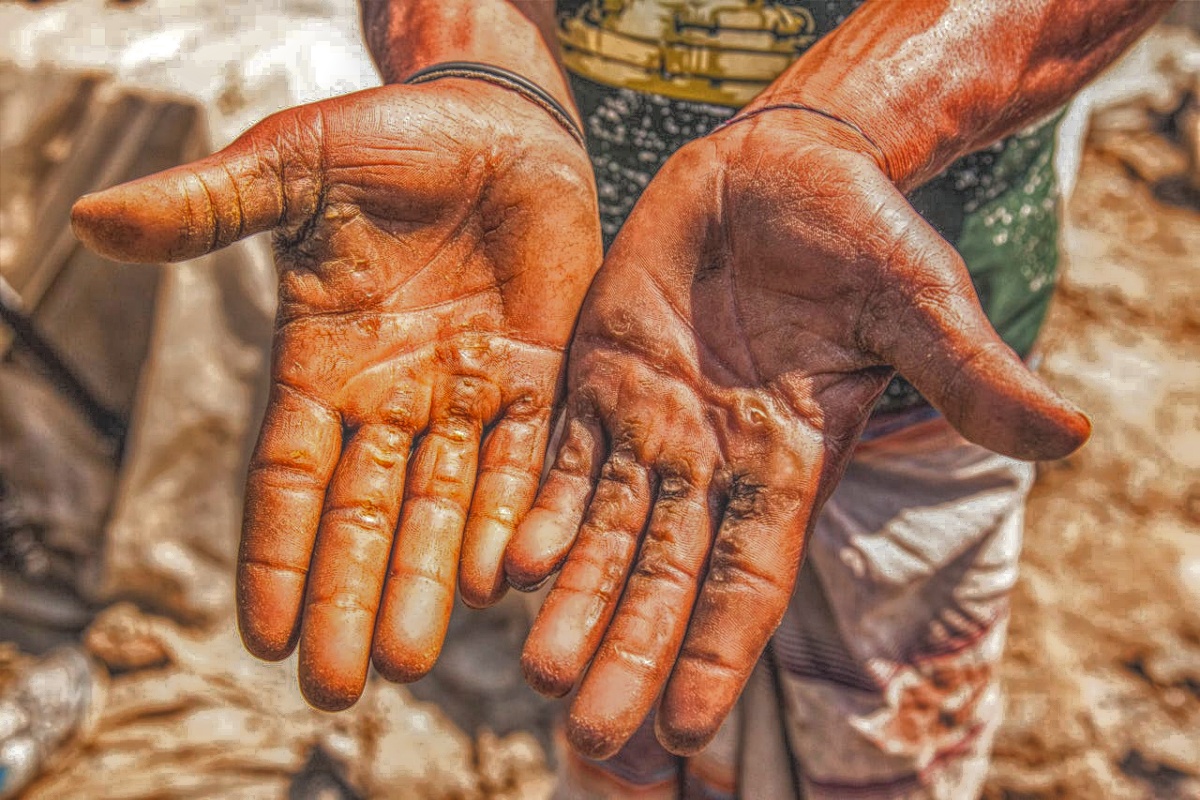
The hands that built America’s skylines and powered its dreams are calloused still, but now from grasping at survival, not opportunity.
It is no exaggeration to say that politicians throughout the United States have forsaken the working class, casting them adrift like an unmoored ship in a relentless storm. Standing tall on their gilded podiums, flanked by the gleam of their mega-donors and the rustle of freshly minted Benjamins, they proclaim their triumphs for the middle class as if cradling the crown jewel of their governance. Yet, beneath their polished rhetoric and choreographed gestures, lies a truth they dare not confront: the working class, abandoned and forgotten, drifts further into the shadows.
These champions of prosperity, perched high above the fray, trumpet victories that rarely touch the calloused hands of those who built the nation’s foundation. The working class—battered by the winds of automation, crushed by the weight of stagnant wages, and drowning in the undercurrents of systemic neglect—becomes little more than a faint echo in their speeches. They are cast aside, not with malice but with the quiet indifference of those who have traded solidarity for spectacle, progress for profit, and justice for power.
The factories that once roared with the clatter of machines now sit silent, their windows shattered, their floors carpeted in dust. The hands that built America’s skylines and powered its dreams are calloused still, but now from grasping at survival, not opportunity.
America's cities, once vibrant with the hum of working-class life, now bear scars of this abandonment. Boarded-up storefronts line streets that once teemed with promise. The working class, the very backbone of this nation, has been relegated to the margins, their sweat undervalued, their contributions woefully unacknowledged.
Related stories
We have betrayed the working class—sold their dignity for profits and convenience, their futures for boardroom applause. The union halls, once fortresses of solidarity and strength, now echo with the ghosts of voices that demanded fair wages and humane conditions. Few jobs remain that are shielded by the armor of collective bargaining. The rest are stripped bare, left to the whims of gig work and corporate greed, where workers labor under the precarious weight of exploitation, knowing they are disposable.
Like an old oak tree cut down for kindling, the working class is being splintered, used up, and discarded, even though it is their roots that hold the soil of this country together. When will we remember that the strength of a nation is measured not by its wealth but by its willingness to stand with those who toil in its fields, factories, and cities? When will we cease this betrayal and finally honor the hands that built the foundation of our shared home?
The dramatic decline in union membership over the past four decades has emerged as a stark symbol of shrinking opportunities for working Americans and a broader loss for the nation’s social and economic cohesion. A Pew Research Center survey conducted in early 2024 highlights the following sentiment: Nearly six in ten Americans—59%—acknowledge that the decline of unionized workers has dealt a blow to the lives of working people, and a majority, 54%, believe this erosion has harmed the country as a whole. These numbers speak not just to shifting public sentiment but to a broader reckoning with the void left in the wake of declining union power. Once the bedrock of economic justice, unions stood as guardians of workers’ rights, the arbiters of fair wages, and a stabilizing force for the nation’s prosperity.
Now, with union membership dwindling to a mere 10% of the workforce—a shadow of the 20.1% it once was in 1983—America is faced with a crossroads. The steady dismantling of this pillar of equity raises urgent questions: Who will champion the rights of the laborer in an age dominated by corporate consolidation and unyielding gig economies? How will the fight for fairness endure in a landscape where solidarity is fractured, and individualism reigns supreme? These are not just questions about labor policy; they are inquiries into the very soul of the nation, into whether America can reclaim its promise of dignity and opportunity for all who toil within its borders.
Unsurprisingly, partisan affiliation plays a significant role in shaping perceptions of the decline in union membership. Among Democrats and Democratic-leaning independents, 69% believe the decline has been bad for the country, and an even larger share (74%) see it as harmful to working people. Liberal Democrats are especially likely to express these concerns, with 85% describing the impact on workers as negative, and nearly half (45%) saying it has been very bad.
In contrast, Republicans and GOP leaners are more ambivalent or even optimistic about the decline of unions. Only 40% see it as bad for the country, and 43% say it has been harmful to workers. Conservative Republicans, in particular, are the most likely to view the decline positively: 60% believe it has been good for working people, with 24% describing it as very good. Meanwhile, moderate and liberal Republicans are more divided, with about half expressing concerns over the consequences of declining unionization.
Within each party, attitudes toward union decline vary significantly by age, education, income, and racial or ethnic identity.
While the debate over unions is heavily influenced by ideology and personal circumstances, the numbers paint a clear picture of erosion in worker representation and its perceived consequences. Union membership once symbolized collective strength and a pathway to upward mobility, ensuring fair wages, benefits, and workplace protections. Its decline coincides with the rise of income inequality and the proliferation of precarious, non-unionized work environments.
This divergence in perceptions reflects deeper cultural and economic divides. To some, unions are a relic of a bygone era, replaced by an economy that rewards individual initiative. To others, their decline represents the unraveling of solidarity, the weakening of protections for working people, and the widening gulf between the privileged and the disenfranchised.
As the debate rages on, one truth looms large: the erosion of unions in the American workforce is not merely an economic adjustment but a seismic rupture in the nation’s social tapestry. Once, the union hall was a sacred space—a bastion where workers found solidarity, a collective voice, and the power to challenge the forces of capital. Now, that space lies hollowed out, its echoes replaced by the relentless hum of digital platforms that masquerade as modern-day town squares.
In place of organizing chants and shared purpose, we have the algorithmic allure of podcasts like The Joe Rogan Experience, platforms that cloak themselves in the guise of unvarnished truth while subtly laundering the lies of demagogues. Here, the sins of Trump’s calamitous first term—the divisive rhetoric, the dismantling of democratic norms, the cruel policies—are polished and repackaged, made palatable for millions eager to believe that chaos is strength and bluster is bravery. This is sane washing at its finest.
This shift is no accident; it is the calculated reconfiguration of power, where collective action gives way to individual consumption, and the working class is left stranded in the wreckage of its disconnection. The digital age, for all its promises of connectivity, has birthed an era where truth and solidarity are drowned in a sea of half-truths and curated outrage, leaving workers not only voiceless but complicit in their own disenfranchisement.
Trump’s election platform masterfully reframed America’s deepest fractures, shifting the spotlight away from material inequality and toward the incendiary theater of the culture wars. With the precision of a showman, he played to the anxieties of a fractured nation, conjuring visions of classrooms turned battlegrounds in a supposed war on values. His rhetoric painted teachers as shadowy puppeteers, whisking children away for gender reassignment surgeries without parental consent, indoctrinating white students to loathe themselves for the sins of slavery and Jim Crow, and encouraging the embrace of queerness as if it were a trend rather than an identity.
These narratives, woven with threads of fear and hyperbole, painted education not as a cornerstone of democracy but as a Trojan horse for leftist indoctrination. To his audience, classrooms became crucibles of communist ideology, where children were taught to hate their country rather than to grapple honestly with its history. It was a strategy designed not just to divide but to galvanize—a siren call to parents and voters who, bewildered by change, found comfort in an enemy they could name. By turning education into a culture war battleground, Trump sidestepped the systemic challenges of economic precarity, offering instead a scapegoat cloaked in the guise of moral decay.
Among the measures Kamala Harris endorsed in a 2019 ACLU questionnaire was the provision of taxpayer-funded gender transition surgeries for prisoners—a stance as polarizing as it is emblematic of a progressive ethos.
That same document, a manifesto of liberal ideals, also championed the decriminalization of federal drug possession and reform of immigration detention, a testament to her willingness to traverse treacherous ideological waters.
Amid the din of Donald Trump’s accusations and his derisive moniker, “Comrade Kamala,” Harris was left standing at a crossroads where principle meets pragmatism. The echoes of her past commitments danced like flickering shadows on the walls of her political future, a haunting and uncertain choreography that left observers questioning whether the bold strokes of her earlier convictions would serve as a beacon or a burden.
Meanwhile, Trump, with the ease of a seasoned provocateur, seized the battlefield of wokeness and declared victory—not with nuance or reason but with a spectacle that enthralled his base and silenced his critics. In doing so, he unleashed a new era of chaos and madness, where division became strategy, outrage became currency, and the line between truth and fabrication blurred into oblivion. This was no ordinary triumph; it was the redefinition of a nation’s discourse, where the loudest voice drowned out the most reasoned and the flames of cultural discord were stoked to a fever pitch.
Biden, for his part, wove his working-class roots in Scranton into the narrative of his working-class political identity, as if evoking the scent of coal dust and the rhythm of steel mills might bridge the chasm between his office and the everyday struggles of ordinary Americans. Scranton, with its weathered factories and blue-collar resolve, becomes the stage for his origin story—a symbol of resilience, grit, and the enduring promise of the American dream.
Yet, like an old photograph fading at the edges, this image feels distant from the realities of a nation where the working class, once the backbone of its prosperity, now bears the weight of shattered unions, stagnant wages, and corporate greed. Biden’s invocations of Scranton may comfort some, a nostalgic nod to the salt-of-the-earth ethos he seeks to embody. But for others, it is a reminder of the growing gulf between rhetoric and reality, where political nostalgia struggles to mask the wounds of economic inequality and social fragmentation.
The question of why the working class aligns itself with a party that seems to undermine its interests is a paradox as old as democracy itself, a riddle with which D. Earl Stephens wrestles in his investigation. It is a dilemma rooted not just in policy but in identity, emotion, and the power of storytelling—a testament to how deeply cultural narratives can overshadow material realities.
For many working-class voters, politics is no longer about economic interests but about belonging to the resistance against “the elites”. The Republican Party, with its carefully crafted rhetoric, has positioned itself as the champion of "real America," appealing to cultural pride, religious faith, and a shared grievance against elites who, they argue, sneer at their values and their way of life. This sense of betrayal by cultural progressivism—a perceived condescension from liberal circles—has created fertile ground for the GOP's appeal, even as it advances policies that favor corporations and the wealthy.
Trump’s genius lies in his ability to weaponize this resentment. He reframes the conversation, casting himself as the working man’s billionaire who fights not for the boardroom but for the diner booth. By spotlighting cultural issues—immigration, religion, and “wokeness”—he shifts attention away from the stark realities of stagnant wages, healthcare crises, and the decimation of unions. His voters, many of whom feel forgotten or alienated in a rapidly changing world, are drawn to the promise of reclaiming control, even if that promise is built on a derealization—an inability to perceive what is real and what is not.
Ultimately, it is not logic but the power of belonging, grievance, and identity that binds these voters to the party that betrays them—a masterstroke of political storytelling in a fractured nation where the heart often overrides the wallet.
Stephens poses the perplexing dilemma of why working-class voters are increasingly drawn to a party that systematically betrays their interests. In his exploration, Stephens draws on Jonathan Chait’s argument that Joe Biden’s administration has already enacted significant populist economic policies aimed at rescuing the working class from the ravages of neoliberalism. However, these efforts, according to Chait, have failed to reverse the tide of working-class support drifting toward Republicans.
Chait contends that Biden’s accomplishments—massive infrastructure investments, job creation, and economic recovery programs—were aimed at precisely the demographic now slipping through the Democratic Party’s fingers.
Yet these policies, while transformative on paper, have not succeeded in re-establishing the bond between Democrats and working-class voters. Instead, the Republican Party, through cultural wedge issues and emotionally charged rhetoric, continues to appeal to the grievances of working-class Americans, even as it promotes economic policies that exacerbate their struggles.
Stephens highlights this dissonance: while Democrats deliver substantive economic relief, Republicans offer symbolic victories and emotional validation, which seem to resonate more deeply with voters. This dynamic underscores a troubling paradox—economic populism, while necessary, appears insufficient on its own to reclaim the allegiance of a working-class electorate increasingly captivated by cultural identity and perceived victimhood narratives.
Despite the establishment efforts of the Democratic Party, Harris lost the election and Stephens rightly asks: What have the Republicans ever done for the working-class?
Stephen describes the Republican Party’s approach to the working class as follows:
- Starting with Ronald Reagan, the Republican Party has made it a point of pride to loathe unionization and stand against unions every chance they get. Is there any entity anywhere that stands for workers’ rights more than unions?
- The Republicans have never seen a bill to raise minimum wage — or wages in general — that they didn't eagerly vote against.
- The Republicans hate regulations of any kind on big businesses, banks, credit card companies, etc., all of whom regularly screw the working class in more creative and dastardly ways than just about anything I can think of.
- The Republicans — particularly in Red States — regularly turn down federal monies aimed at job programs, and education programs that teach and improve skills. Only 13 House Republicans voted for the landmark, $1.2 trillion infrastructure bill that is producing thousands and thousands of good-paying jobs in every single state. That has not stopped many Republicans who voted against it, for taking credit for it now. That’s another hallmark of these reprehensible people that doesn't get called out enough.
- The Republicans hate the thought that every American deserves the basic right to healthcare. How in God’s name is a working family without any medical insurance supposed to make it in this country if they are buried in obscene medical bills with no relief?
- The Republicans want everybody to reproduce, but would rather not give families a much-needed hand up in dealing with the skyrocketing costs of childcare. The American Rescue Plan’s Child Tax Credit that Democrats put in place cut childhood poverty in half in this country, and the Republicans torched it just as soon as they got power in 2023. How in the hell is that kind of venom directed at our children helping the working class?
- The Republicans passed exactly one piece of notable legislation during their demented, orange king’s four-year tenure: They lowered taxes on the richest Americans. And that benefits working-class Americans HOW?
The problem with pieces like the one Chait turned around is that it does a thoroughly polite job of battering Biden, and other Democratic leaders for their failures to connect with the working class, but fails to explain the reasons for the supposed gravitational pull of this key voting bloc to the Republican Party.
The perplexing reality of working-class support for Donald Trump, despite the clear superiority of Democratic programs designed to improve their material conditions—such as Social Security, Medicare, Obamacare, and the American Rescue Plan—can be traced to a deeper, more insidious sickness that I call “social sickness”. This sickness manifests as a cultural and psychological shift that transcends economic logic, a wound that festers in the heart of America's working class.
It is a sickness born of a corrosive atmosphere of fear, resentment, and yearning—a cultural malaise that Trump has masterfully cultivated and weaponized. The hatred of trans people and marginalized groups serves as the fertile soil in which this sickness thrives, a fear of the "other" stoked to deflect attention from systemic inequalities and redirect it toward scapegoats. Trump does not merely offer policies—he offers an identity, a visceral narrative of dominance and rebellion. He projects himself as the hyper-masculine archetype, a symbol of unrestrained power, in stark contrast to Biden’s more subdued, "beta-male" image, which many of his supporters associate with weakness, impotence, and irrelevance. For them, Biden conjures the specter of the incel—the basement-dwelling outcast—while Trump embodies the subliminal rage fantasies of porn-star escapades and taboo-breaking dominance.
In his farewell address, President Biden cast a resolute figure, a leader who, in his final moments at the helm, projected unwavering strength through the force of his words and the weight of his message. He delivered a powerful and forthright warning about the looming threat of oligarchy in America, driven by the unchecked dominance of the "tech industrial complex." With clarity and conviction, Biden called attention to the perils of misinformation and the dangerous consolidation of wealth and power in the hands of a privileged few, urging vigilance to protect the fragile pillars of democracy.
Reflecting on his administration’s achievements, Biden celebrated tangible victories: the modernization of crumbling infrastructure, the reduction of prescription drug costs, and the passage of significant gun safety legislation. He reminded the nation of its capacity for progress, citing his visit to the International African American Museum as a testament to the importance of learning from history to propel the country forward.
Yet, his presidency was not without its struggles. Low approval ratings, persistent inflation, and the challenges of immigration surges cast long shadows over his tenure. Still, in this final address, Biden rose above these trials to deliver a poignant meditation on the nation’s future, his voice heavy with the weight of his fears as he prepared to cede the Oval Office to President-elect Donald Trump.
It is a bittersweet irony that Biden’s farewell address, with its candor and urgency, revealed a tone and vision that many had longed to see during his presidency. Had he consistently embodied this commanding presence and unflinching directness, it is not difficult to imagine that his connection with the American electorate might have been stronger. In these closing moments, Biden illuminated the strength and steadiness of a leader—qualities that, had they been a steady drumbeat rather than a final flourish, might have changed the course of his political fate.
Trump’s base was able to squeeze Trump into a Rambo-like archetype—and despite his excessive girth he was received as a cinematic hero writ large, defiant in the face of relentless attacks by the political elite who sought to "destroy" him with judicial “witch hunts.” He has become a martyr to his followers, a man who withstood metaphorical crucifixions and even claimed the mantle of surviving a real-life assassination attempt. Each blow that should have toppled him instead forged him into a vengeful champion, the embodiment of strength in a world his supporters believe has stripped them of theirs.
The allure lies not just in Trump’s defiance of norms but in his flagrant transgressions. To his followers, the idea that a man who flouts decency and morality can ascend to the most powerful office in the world and still be adored provides a kind of absolution for their own misdeeds—if Trump can do all these terrible things then their own transgressions can’t be that bad. In his defiance of consequence, they see an absolution of their own transgressions. His survival against a tide of moral condemnation feels like their own vindication, as though his triumphs rewrite the rules of accountability for everyone else. His unapologetic swagger, his refusal to bow to shame, validates histories they might prefer to forget. Where others see a man who flaunts impunity, they see a champion of imperfection, a figure who reshapes failure and disgrace into badges of honor.
Consider Matt Gaetz, the man Trump sought to elevate to the position of Attorney General—a figure whose notoriety stems not from legal expertise or a storied career in public service but from the salacious headlines surrounding his alleged sexual exploits. His name conjures scandal rather than statesmanship, a reputation built not on the foundations of law and order but on the tabloid allure of controversy. And while he had to withdraw from consideration, he stepped right into having his own show on OAN. Trump has become a mirror, reflecting back the buried impulses of his base, their frustrations, and desires for a world where rules bend to willpower. His infamous claim two weeks before the Iowa caucuses in 2016 that he could "stand in the middle of Fifth Avenue and shoot somebody" and he "wouldn't lose any voters" was not just hyperbole—it is a revelation of the dynamic between leader and tribe. Trump offers them the ultimate permission slip: the assurance that transgression is not only excusable but an expression of dominance, power, and, paradoxically, righteousness.
This dynamic is not driven by reason or policy but by a primal need to belong, to rebel, and to feel seen in a world they believe has left them behind. For them, Trump is not just a leader; he is a totem, a walking testament to the belief that power and defiance can still triumph over justice, decency, and a changing social order that they feel no longer serves them.
This allegiance to Trump is not grounded in a careful analysis of policy but in an almost tribal connection to the man and the myth. Trump’s rhetoric and persona resonate with those who feel alienated in a rapidly changing world, offering them a sense of belonging and empowerment through the "Trump tribe." His followers see in him a reflection of their own grievances, their sense of loss, and their desire for retribution against the forces they believe have betrayed them.
In this way, the working class’s support for Trump is less a rejection of Democratic programs and more an embrace of a cultural identity that overrides economic interests. It is a stark reminder that political loyalty is often about more than policies—it is about the stories people tell themselves about who they are, who they fear, and who they aspire to be.
Trump stands as a monument to the unyielding paradox of power, a man who has weathered storms that would sink most others. He has defamed the ranks of the military, dismissing the sacrifice of soldiers as the folly of "suckers." He has insulted and assaulted women, his offenses as public as they are brazen. He has endured impeachments, allegations, felonies—scandals stacked like a pyre—and yet he emerges not diminished but emboldened, his grip on power seemingly unshakable. He remains, against all reason, the most powerful man in the world.
Trump’s resilience is a spectacle—part tragedy, part triumph—that taps into a primal desire to defy the forces that would judge or constrain. In his rise and sustained dominance, there is a message: redemption is irrelevant when power is its own justification. To his followers, he is not merely a man but an idea, a promise that survival, no matter how flawed, is the ultimate victory.
Trump’s appeal defies logic because it is not grounded in reality but in spectacle, myth, and a carefully cultivated cult of personality. Here is a man who can openly align himself with grotesquely wealthy grifters, the very class that has exploited and crushed the working-class under the weight of unbridled capitalism, and yet still be heralded as a populist savior. He dances—awkwardly, almost absurdly—to the strains of Van Halen’s Jump or the Village People’s YMCA. His campaign rallies are transformed into surreal carnivals of self-parody, and yet his followers cheer, not for policy, but for the performance of rebellion.
He has mocked the disabled on live television, called migrants “vermin” in rhetoric dripping with echoes of fascism, suggested Covid victims drink bleach, and mangled history with bizarre claims that the Continental Army “manned the air” and captured airports during the Revolutionary War. These moments, which should discredit any leader, instead elevate him in the eyes of his devotees. Why? Because, to them, he transcends the mundane realm of facts and reason. Such a man must be a demigod—untouchable, infallible, a force of nature immune to the rules that bind ordinary mortals.
Trump’s audacity is his superpower. Every time he flouts decorum, doubles down on falsehoods, or turns cruelty into a punchline, he reinforces his mythos as the unshakable strongman who answers to no one. For his followers, his flaws are not liabilities but affirmations of his authenticity. He doesn’t pretend to be moral or restrained; he is unapologetically himself, and in doing so, he offers a kind of twisted liberation to those who feel stifled by modern norms of decency and accountability.
Trump's rallies take you into a liminal space, a hypnagogic trance where the boundary between reality and illusion blurs. Watching him in the flesh is to imbibe the very aroma of madness, thick and heady in the air, swirling like fumes from a crack pipe. The crowd, mesmerized and complicit, drifts in this altered state, half-awake, half-ensnared by the siren call of a leader who offers no answers, only distractions—each word a lullaby that lures them further into the delirium.
Trump voters gather, not for education, but for the thrill of entering a grotesque theater of cruelty.
“Drink the bleach,” he says, and they do not laugh. He preaches hate with the gravity of a prophet offering salvation, as though redemption could be wrung from Kool-Aid and hubris, bottled and sold at a premium.
In the fevered labyrinth of his mind, Hannibal Lecter lounges, alive and smirking, perhaps raising a goblet of Chianti in the shadows of the backstage. Fiction and reality dissolve, and the monsters he conjures are no longer confined to stories. They roam freely, gnawing on truth, feasting on the marrow of logic.
And then, inevitably, come the windmills. The cursed windmills. “They kill the birds!” he bellows, a Quixote robbed of his poetry, tilting not at noble giants but at the steady breath of the earth itself. His unworthy steed—a lumbering army of grievances—staggers beneath him, but still, he charges. The turbines spin on, indifferent and eternal, their silent whispers a rebuke he cannot hear, truths he cannot bear to face.
Logic collapses under the weight of his performance, shattering into fragments that glint in the eyes of the crowd. Some applaud blindly, their hands aching with devotion, their breaths caught in their throats; a few remain silent, their lips moving in quiet prayer for a dawn they can no longer believe will come.
The air twists, heavy and warped, reality slipping its moorings to drift on a tide of madness. The circus staggers on, but its procession is a ruin. The elephants, wise enough to flee, leave only the clowns to orchestrate the chaos, who themselves finally escape through the trap door of the Big Top. And there, in the center of it all, stands the barker, his voice reverberating through the crumbling tent, swallowed by the void. Truth, in this grim theater, is not a beacon but a sideshow, drowned beneath the cacophony of a world that has forgotten how to listen.
After the rally fades into the night, the workers return to their factories, to their mines, to the mall, to the rhythm of their daily grind. The din of Trump’s voice still echoes in their ears, his promises reverberating like a distant drumbeat, a lullaby woven with the thread of hope and resentment. The Trump fans—the ones who stayed, the ones who cheered the loudest—filter back into their lives, but their allegiance is thicker now, saturated with a new energy. Hispanic voters, young people, those without college degrees, they are more resolute than ever, their fervor fueled by his rhetoric, by the vision of a world where they are wrapped in the cloak of protection, shielded from the icy winds of global economic competition.
Trump’s populist campaign works its sleight of hand, spinning an illusion of safety and prosperity, offering tax cuts not as a solution, but as a panacea to soothe their bruised sense of powerlessness. His promises sink deep into the bedrock of their frustration, casting a spell that swears to carve out a place for them in a world that is shifting beneath their feet. His growing strength among working-class voters and nonwhite Americans propels him like a rising tide, swelling his share of the vote, solidifying his hold in every corner of the country. His appeal is a careful choreography—an assurance of refuge in a world that seems ever more indifferent to their struggles, yet his power grows as he fans the flames of discontent, promising to protect them from the ravages of global economic forces, offering tax cuts as his balm for a world gone awry. But he does not win them through the sterile columns of Republican editorials or economic theory. No, his message reaches them through the raw, visceral creation of moral panics, wrapped in the flashing lights of cultural warfare—a metaphorical codpiece draped across the spectacle of fear. He does not need logic to bind his followers; he has crafted a narrative that burns through the fog of uncertainty, feeding their desire to reclaim what they feel has been stolen from them. In this theater of the absurd, they see themselves as the heroes, and he, their savior.
The catalog of Trump’s disdain for voters and the nation he seeks to lead is exhaustive. He’s called America a "shithole" and a "garbage can," words that would have buried most politicians in disgrace. Yet here he stands, resilient, buoyed by the very people he mocks. His proclaimed love for the “undereducated” is less affection than opportunism—a preference for a pliable audience over a discerning one. And then there’s his affinity for strongmen, fascist dictators like Orbán, Milei, Bukele, and Bolsonaro, whose authoritarian rule he admires with an almost fawning reverence.
The shameful record of Trump harassing women and championing white supremacist groups like the Proud Boys stretches ever longer, an ignoble ledger that seems immune to accountability. He has called America a "shithole" and a "garbage can," hurling insults at the very nation he claims to lead. His professed love for the “undereducated” offers little solace—it’s not an affirmation, but a calculated preference for an audience less inclined to challenge his lies. This is not leadership; it’s a performance of contempt, directed both at his followers and the democratic ideals he so brazenly undermines.
While Democrats go high, painting a soaring picture of America, and have detailed plans for improving our lives, Trump just treats the place like one his golden toilets that he can dump on, offers “concepts” of plans, and abuses his golf clubs while escaping work.
On inauguration day he will be back harrumphing around our White House telling us how bad everything is, while billing Americans for the trouble.
So what do we do in the meantime, until 2028?
As an educator, I would recommend a pedagogical approach that aligns with class struggle and the composition and culture of the working-class. To underscore the importance of class analysis and class struggle was what prompted me to differentiate my work from identity politics.
Beneath the carefully curated surface of neoliberal power lies a profound betrayal—a betrayal of the working class, consigned to lives of endless toil and precarity while the machinery of inequality hums on, cloaked in the guise of reform. We stand at a crossroads: we can either tinker at the edges of injustice, applying cosmetic fixes that shuffle the tokens of disparity, or we can summon the courage to tear out injustice at its roots. While the politics of intersectionality considers how multiple categories such as race, gender and class interact simultaneously, the imperative of class often is at risk of being overlooked as the root cause of inequality and oppression.
But this deeper reckoning comes at a cost—a cost too many are unwilling to pay. Among educators, there is a palpable reluctance to wade into the sinews of the economic system, an aversion rooted in the fear of labels: socialist, communist, Marxist. In an age where the specter of Trump looms large, critical educators and activists face a dangerous calculus. To confront the machinery of capitalist exploitation is to expose oneself to greater risks, to court backlash and censure. And yet, the even greater risk lies in doing nothing, in leaving the fortress of inequality unscathed while we reshuffle shadows and pacify ourselves with gestures.
The truth of history demands more of us. To confront inequality at its source is not merely an act of resistance; it is an act of creation—a galvanizing force that can reshape the very foundations of society. It means piercing through the noise of 'disparities discourse', rejecting the hollow victories of surface reforms, and focusing instead on the marrow-deep transformations that justice demands. This is easier said than done. And yes, the risk is great.
But the risk must be met. Because to settle for anything less is to barter away the future, to resign ourselves to a world where the architecture of inequality stands unbroken. Only a movement rooted in class solidarity—one that confronts capitalism's systemic truths without flinching—has the power to dismantle that architecture and build anew. Only then can we hope to craft a society where none are left to languish in the shadows of precarity, where justice is not a dream deferred but a reality shared by all.
Deeply rooted in the promise of democracy itself is a commitment to economic justice, equality, and collective flourishing. And in the American context, one of the most effective ways to communicate this vision is by drawing on the example of Bernie Sanders. His success in bringing class politics to the forefront of American discourse is nothing short of remarkable. Sanders has demonstrated that it’s possible to speak to working-class struggles—rising inequality, the corrosive power of corporate greed, and the dismantling of public goods—without alienating a public conditioned to distrust the language of socialism.
Still, the obstacles are formidable. Too many Americans astonishingly believe that the best government leaders are the super-rich, viewing wealth as synonymous with competence and vision—witness reverence towards Trump and Musk. This cultural reverence for wealth presents a staggering challenge to the very idea of class solidarity. It is as if the myth of meritocracy has been so deeply entrenched that even the victims of oligarchic exploitation see their oppressors as aspirational figures.
Yet the path forward demands strategic clarity. If we are to educate an American audience about class politics, we must speak their language while challenging their assumptions. By framing class struggle in terms of concrete, relatable issues—healthcare, wages, housing, and the erosion of democracy—we can make these ideas more accessible and urgent. And by connecting the dots between runaway inequality and the rise of oligarchy, we can expose the inherent contradictions of a system that venerates wealth while consigning millions to precarity.
The stakes are high. The right’s assault on critical pedagogy and class politics is not merely an attack on ideas—it is an effort to fortify the status quo, to ensure that the machinery of capitalist exploitation continues unchallenged. But the growing discontent with inequality offers a sliver of hope.
The next Democratic leader needs to harness that discontent, to pierce through the smokescreen of identity politics as a standalone solution, and to articulate a vision of reform/revolution that is both compelling and transformative and designed to build unity. In this moment, the work is not only to resist but to reimagine—to build bridges between progressive aspirations and transformative possibilities, and to challenge the myth that oligarchs hold the key to a better future for all Americas.
The call is for unity—an intentional weaving together of movements, ideas, and voices into a singular force for change. It is a call for action, grounded in the lived realities of those at the margins and driven by a shared urgency to confront American plutocracy. We need to remember that
“freedom is something that you take; it isn’t given to us”
Comments

Powered by RoundtableAn AI/DeFi-powered Enterprise Media Operating System. Learn more at Roundtable.io.© Roundtable 2026. By using this site you agree to the Terms of Use and Privacy Policy