


Jun 24, 2025 2:28 AM
Updated Jan 24, 2026 1:45 AM
A new US left – one that accepts and openly acknowledges the internal differences within its unity – could offer a powerful unified left alternative.
In the short period from1918 to the 1930s, the German working class suffered three historic traumas. Germany lost a devastating world war and thus its colonies, suffered one of the world’s worst inflations, and then crashed into the Great Depression. Nothing in the prior century had prepared Germany’s working class for the sudden losses of life, of physical and mental health, of family savings, and of jobs and careers that those traumas entailed. Quite the contrary, its 19th century had seen a political unification and a rapid industrialization that had made Germany a global competitor of the United States. Indeed, the two nations were the great challengers of the British Empire.
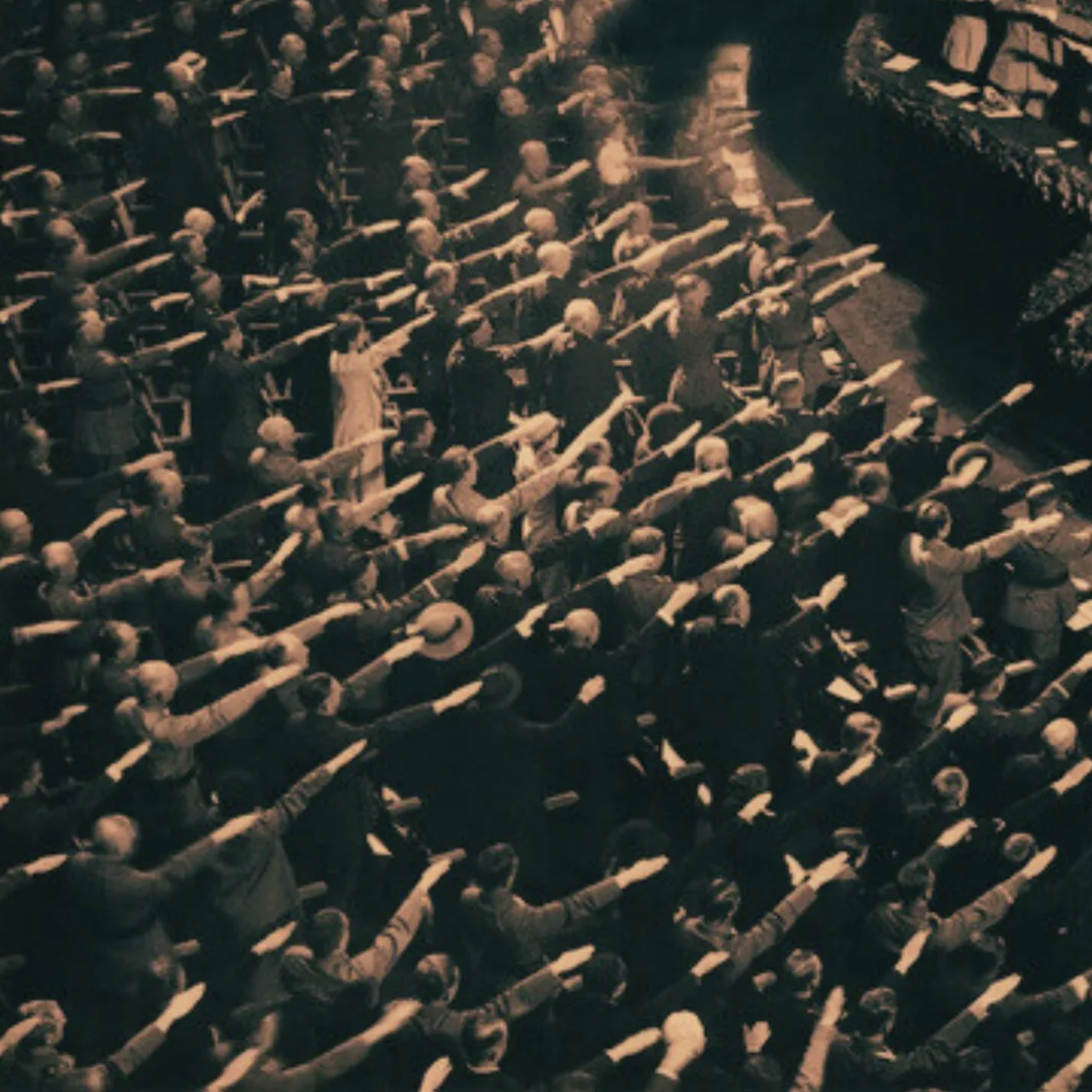
From the peaks of prosperity, growth, self-confidence and brilliant future prospects, Germany collapsed into poverty, immense debt and reparations. Unemployment in 1919 was around 2.9% while by 1923 it had risen to 28.2% and in 1932 it was 29.9%. The traditional German center-right governments were widely blamed for failing to prepare for and perform better during World War 1. The traditional center-left governments were blamed for the failings of the subsequent Weimar period. Opportunities opened for demagogues who could plausibly provide sympathy and real support to the traumatized masses. To succeed, such demagogues would also have to designate plausible scapegoats for the accumulated German anger over the collapse of its global position and self-esteem. Hitler and fascism found their historical moment.
Over the longer period from the 1970s to 2010, a somewhat parallel trauma afflicted the US working class and especially the better paid, unionized, white male component concentrated in manufacturing jobs. From the depths of depression in the 1930s, that component had emerged from World War 2 to enjoy 4 decades of exceptional well-being and prosperity. In part because those decades also saw the US empire rise to its peak, unionized workers could lead the way for much of the working class to obtain regular annual rituals of rising real wages. An “American Dream” (individual house for parents and children, car, TV, summer vacation, college education for children) became affordable for millions of workers. Politicians, mass media and academia congealed into a patriotic celebratory chorus. It renamed those millions a “middle class” that anchored a “free society” exceptionally entitled to lead the “free world” and thereby replicate everywhere what the US had pioneered.
As Germany’s rise before World War 1 had set the stage for its working class’s post-war collapse and associated trauma, so the US’s post World War 2 rise set the stage for the its working class’s trauma since the 1970s. Three factors combined then to destroy the jobs and incomes of especially the white, manufacturing, largely unionized, male workers. The first was technology (computers, then robotics, and now AI); automation accelerated. The second was the relocation of manufacturing jobs overseas aimed at profiting there because wages were far lower and market growth far faster. Finally, the third was immigration as immigrants offered to work for less wages and under poorer working conditions than what native workers were willing to accept.
Related stories
A few of those displaced by these three factors found other jobs and ways to live at the levels they had reached before, but most did not. The latter became sick, depressed, unemployed, home-bound, divorced, addicted, and/or took part and full-time service sector jobs much less well paid. They tended to blame themselves personally and individually for their deteriorated economic situation and its side-effects. Partly this reflected the US’s deeply-rooted individualist ideology. However it also reflected the then socially dominant celebration of technology, globalization, and neo-liberalism broadly. They were said to deliver prosperity to those able to grasp their vast opportunities for personal progress. Thus, their self-esteem gave way to bitterness, resentment, and anger as the American Dream slipped ever further out of their reach.
Neither the Republican Party nor the Democratic Party sympathized much with, let alone helped, this traumatized working class. Instead, the two parties’ traditional centrist leaderships competed to celebrate neo-liberal globalization, pander to its major corporate leaders, and increasingly depend on large donations from them. The sufferings of those damaged by automation, job off-shoring, and immigration became invisible to and in polite society. That only deepened social divisions. On one side were those who accepted and repeated the neo-liberal, globalizing story. They “saw” the US as a “healthy economy and society.” The other side ”saw” themselves as the sacrificial victims of a deeply unfair economic program favoring wealthy urban, coastal elites.
The political stage was thus set for a demagogic entrant to proclaim himself as the one to reverse key components of post-1970s history and thus make America great again. He would offer sympathy and compassion for the injustices suffered by the white working class. He would bring back manufacturing jobs. He would stop immigration and deport immigrants. He would defeat the coastal liberal centrists: first those controlling the Republican and then also those controlling the Democratic parties. Once President he would punish all those foreigners who had cheated the US economically with the complicity of coastal elites. Those Democrats who had enabled those foreigners to do so much damage would be defeated as Trump would lead the country in committing all public policy to America First.
With the background of Trumpism to date and its German predecessor, the mobilization of a paramilitary ICE to enact and limelight the deportation theater and of the California national guard to back up ICE brings the fascism specter another step closer. Nazis had mobilized several paramilitary formations and targeted them against Communists, Socialists, and Jews. Hitler had also threatened to reverse Germany’s loss of its colonies after World War 1. He had eventually “taken” lands neighboring Germany. Trump threatens to take Panama, Greenland, and Canada.
Trump’s “big, beautiful” tax bill exhibits his service to corporations and the rich. It not only extends their massive tax cuts from Trump’s first presidency. It adds further tax cuts and at least nods toward paying for them less by borrowing and instead more by extreme austerity: savagely cutting federal programs and payrolls. Massive deregulation of markets and business practices favors employer profiteering directly and, by ending protections for employees and consumers, also indirectly.
The huge difference that remains and separates Hitler’s Nazism from anything happening today is the 1929 collapse of global capitalism. That brought fascism to power in Germany. The 1930s Depression then shaped German fascism’s evolution in the 6 years before war subordinated everything to its imperatives after 1939. Defeat in war ended German fascism in 1944. The currently intertwined declines of the post-1945 American empire and US capitalism provide a different context for Trumpism - so far - than what the Great Depression provided for Nazism.
Hitler took power when the communist and socialist left had together built socially influential and politically powerful organizations. They seriously contested power at the ballot box and in the streets against the Nazis. The political center could not hold. The corporate elite feared for its survival, feared the left parties, and so opted to ally with Hitler given the German election results in 1932. From the beginning, German fascism represented a tight alliance of partners who desperately felt and embraced their need for one another. The capitalists needed massive governmental support to overcome and survive the Great Depression economically plus they needed a mass-based political party for political support. The NAZIs needed to gather the funds and institutional support that German capitalists could offer.
That is not yet the situation in the US. Ironically, the left in the US, while numerous, is badly disorganized. 70 years of Cold War purges, McCarthyism, and their conjoint legacies had devastating effects. In those years, the US right enlisted US liberals in a vast campaign called “anti-communism” but that was actually anti-much else on the left as well. That campaign split the liberals against the left. Nothing equivalent happened on the right. Thus when the center-right (e.g. Bushes) became far-right “authoritarianism” (Trump), the split liberal/left twice failed to mount an effective opposition. To date, therefore, Trump has not yet needed to do what Hitler did: arrest, draft, imprison and kill his opponents first on a massive national scale and then continentally.
What matters most now is how US capitalism continues to decline. That will be overdetermined especially by its own accumulated contradictions, the fading of its empire amid endless wars, and the competition from China and the BRICS alliance. The left will need to watch carefully to see if elements emerge that could bring a fascism fully into power. The left will need to rethink its own history and complicity in enabling a Trump to take power. And it will need honestly to rethink its divisions and their costs. A new US left – one that accepts and openly acknowledges the internal differences within its unity – could offer a powerful unified left alternative. That would radically transform US politics in ways that the absence of such a unified left made impossible after 1945.
Comments

Powered by RoundtableAn AI/DeFi-powered Enterprise Media Operating System. Learn more at Roundtable.io.© Roundtable 2026. By using this site you agree to the Terms of Use and Privacy Policy