
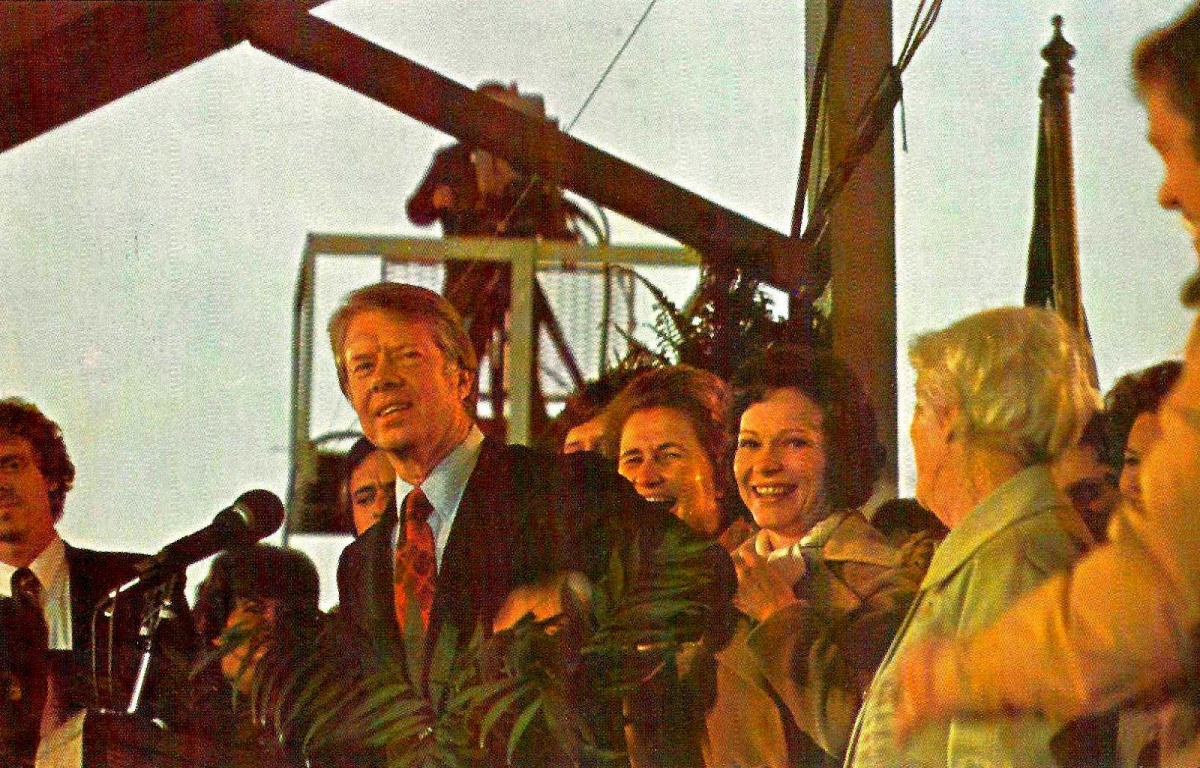
Joe Haupt • Attribution-ShareAlike (CC BY-SA 2.0) • Flickr


jimmy carter environmental legacy
Jan 3, 2025 5:04 PM
Updated Jan 3, 2025 5:05 PM
Carter’s prescience and dedication remain a guiding light, inspiring individuals and institutions alike to pursue bold and lasting solutions for the planet's future.
On December 29, 2024, the world bid farewell to one of its most enduring champions of environmental stewardship. Jimmy Carter, the 39th President of the United States, passed away at the age of 100 at his home in Plains, Georgia. His death, announced by the Carter Center, closes a chapter on a life defined by public service, visionary leadership, and an unrelenting commitment to protecting the planet.
While Carter’s presidency (1977–1981) is often celebrated for its global achievements, including the Camp David Accords, his most enduring legacy lies in his transformative environmental vision. President Carter’s environmental advocacy extended beyond politics, inspiring generations of leaders and scholars. His ties to Yale University, where he delivered a landmark lecture on renewable energy and conservation during the early years of the environmental movement, underscored his role as a catalyst for global ecological awareness. In recognition of his contributions, Yale honored Carter with the Chubb Fellowship, highlighting his profound influence on environmental policy and his encouragement of academic inquiry into sustainable solutions.
As the world faces escalating climate and ecological crises, Carter’s prescience and dedication remain a guiding light, inspiring individuals and institutions alike to pursue bold and lasting solutions for the planet's future.
The Alaska Lands Conservation Act: Carter’s Crowning Achievement
Among Carter’s many accomplishments, the Alaska National Interest Lands Conservation Act (ANILCA) of 1980 stands as his environmental magnum opus. This landmark legislation protected 104 million acres of Alaskan wilderness, an area larger than California, and created or expanded several national parks, wildlife refuges, and conservation areas. Carter’s foresight ensured the preservation of diverse ecosystems, from glacial valleys to arctic tundra, for generations to come.
Related stories
His willingness to take bold action, even in the face of fierce political opposition, underscores his deep commitment to conservation. When Congress stalled on passing the legislation, Carter used his executive authority to designate 56 million acres of Alaskan land as national monuments, a move that eventually pressured lawmakers into action. His resolve laid the foundation for large-scale conservation efforts in the United States.
Energy Leadership and the Dawn of Renewables
Carter’s presidency unfolded during a tumultuous period of energy shortages and skyrocketing oil prices. Instead of seeking quick fixes, he charted a bold, forward-thinking vision by establishing the Department of Energy and introducing America’s first comprehensive national energy policy. His plan emphasized conservation, efficiency, and the development of renewable energy, principles that remain central to addressing today’s climate crisis. The installation of solar panels on the White House roof in 1979 symbolized Carter’s vision of a clean energy future. The panels inspired a generation of environmentalists and underscored the potential of solar power. Carter’s administration also increased funding for research into wind, solar, and other renewable energy technologies, laying the groundwork for today’s transition to a low-carbon economy.
In his “Crisis of Confidence” speech, Carter urged Americans to embrace energy conservation as both a moral and practical imperative. “The energy crisis has not yet overwhelmed us, but it will if we do not act quickly,” he warned. The energy efficiency standards he championed for appliances and vehicles have since saved billions of dollars and significantly reduced greenhouse gas emissions.
A Visionary on Climate Change
Long before climate change became a mainstream concern, Carter recognized its existential threat. In 1977, his Council on Environmental Quality produced the first government report on the greenhouse effect, and Carter subsequently commissioned the National Academy of Sciences to study the issue. The resulting report, Carbon Dioxide and Climate: A Scientific Assessment, remains a foundational document in climate science.
Dr. Gus Speth, who served as Carter’s environmental adviser, described him as “the first president to grasp the reality of climate change.” Carter’s early recognition of this challenge and his commitment to finding solutions demonstrated his understanding of the interconnectedness of environmental, economic, and national security concerns.
The Superfund Program and Environmental Health
Another transformative achievement of Carter’s presidency was the creation of the Comprehensive Environmental Response, Compensation, and Liability Act (CERCLA), commonly known as the Superfund program. This initiative addressed the growing problem of toxic waste sites, providing resources for their cleanup and holding polluters accountable. The program has since remediated thousands of hazardous sites, protecting public health and revitalizing communities.
Carter’s administration also strengthened the Clean Air Act and championed international efforts to protect the ozone layer. His holistic approach to environmental health underscored his belief that protecting ecosystems and human well-being are inextricably linked.
Post-Presidency Advocacy and Global Impact
Carter’s environmental advocacy extended well beyond his time in office. Through the Carter Center, he integrated sustainability into global development projects, tackling issues such as deforestation, water scarcity, and desertification. His work in sub-Saharan Africa, in particular, demonstrated how environmental restoration could improve public health and economic outcomes. Carter continued to lead by example in his personal life. His home in Plains featured solar panels and energy-efficient designs, reflecting his lifelong commitment to sustainable living.
In his later years, Carter remained an outspoken advocate for climate action. In his 2010 book, White House Diary, he described climate change as “one of the greatest challenges our civilization has ever faced.” His voice was a constant reminder of the urgent need for action, even as global leaders often faltered in their commitments.
Jimmy Carter’s environmental legacy is profound for its visionary approach. His administration’s policies on renewable energy, conservation, and environmental health remain cornerstones of contemporary environmental governance. Carter’s leadership demonstrated that bold action and moral clarity could overcome political inertia, a lesson that resonates in today’s fight against climate change.
As we reflect on Carter’s life and work, it is clear that his legacy extends far beyond history books. The solar panels he installed on the White House, the millions of acres of wilderness he protected, and the seeds of renewable energy he planted continue to shape our world. His commitment to the environment serves as a call to action for leaders and citizens alike.
Carter once quoted his teacher, who said, “We must adjust to changing times and still hold to unchanging principles.” His life exemplified this ethos, demonstrating that the fight for a sustainable future is both a moral imperative and a practical necessity. As the world churns through the climate catastrophies of the 21st century, Carter’s vision and courage remain a guiding light for a planet in need.
Comments

Powered by RoundtableAn AI/DeFi-powered Enterprise Media Operating System. Learn more at Roundtable.io.© Roundtable 2026. By using this site you agree to the Terms of Use and Privacy Policy