
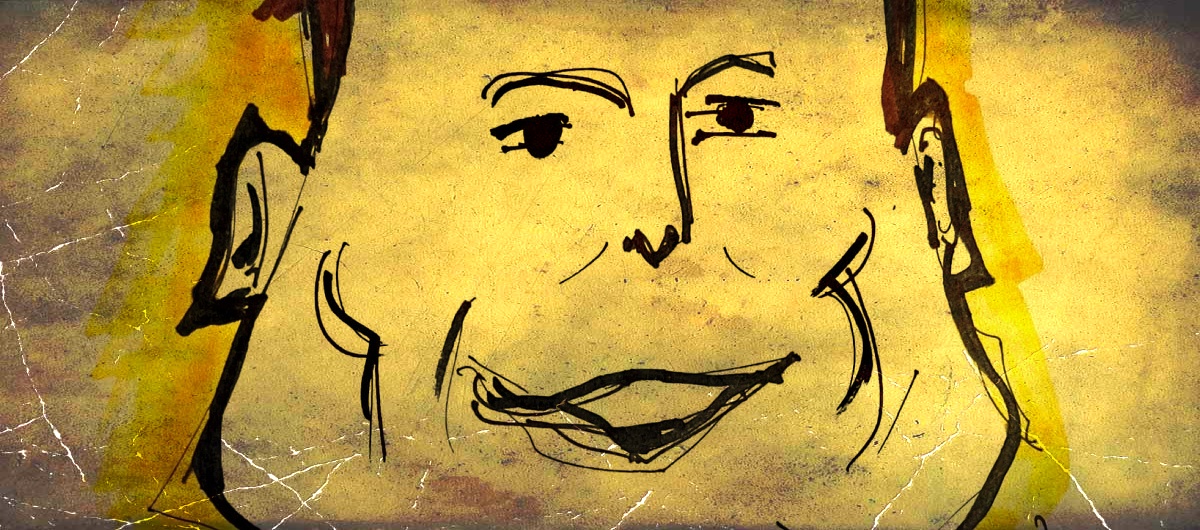


Elon Musk and the AfD
Jan 2, 2025 6:24 PM
Cloaked in the language of economic salvation, Musk's rhetoric serves as a darker alchemy—transforming Germany's collective anxieties over stagnation and identity into emboldened extremism.
The unthinkable reverberated across Germany as Elon Musk inserted himself into the nation’s snap election with calculated provocation. In a tweet viewed by more than 33 million people, and later in a controversial opinion essay published by the Welt, Musk declared the far-right Alternative for Germany (AfD) as the country’s “last spark of hope.” His words landed like a thunderclap: “The traditional parties have failed in Germany. Their policies have led to economic stagnation, social unrest, and the erosion of national identity.”
This endorsement, amplified by Musk’s colossal platform, sent shockwaves through German society. Alarm quickly turned to outrage as Vice President-elect J.D. Vance joined the fray, offering his tacit approval of the AfD’s platform. “It’s so dangerous for people to control their borders,” Vance tweeted with biting sarcasm, brushing aside concerns about the party’s openly extremist rhetoric. Meanwhile, Musk doubled down on his incendiary statements, posting the next day, “AfD is the only hope for Germany.”
The implications, according to Josh Axelrod, are staggering. The AfD, long under surveillance by German intelligence for its extremist ties, has openly called for mass deportations, the segregation of children with disabilities from regular schools, and propagated rhetoric steeped in xenophobia and Islamophobia. That two high-profile American figures—a vice president-elect and a close adviser to Donald Trump—would so unabashedly lend their voices to such a party represents a dangerous normalization of far-right extremism on a global stage.
This moment is not just a test for Germany but a warning to the world. Cynthia Miller-Idriss explains how the endorsement of the AfD by influential figures like Musk and Vance underscores the insidious ways extremism seeks legitimacy, slipping from the fringes into the mainstream. Make no mistake: this is a perilous precedent, one that threatens to erode the democratic safeguards Germany has fought so hard to maintain since the ashes of World War II. The stakes could not be higher, as Germany faces the chilling possibility of its past shadows creeping ever closer to its present.
Related stories
For many Germans, these remarks are not mere rhetoric but a dangerous amplification of the AfD’s divisive narrative, delivered by one of the most influential figures of the modern age. Musk’s intervention underscores the growing international entanglements of far-right populism, raising questions about how external endorsements can legitimize extremism and reshape the democratic landscapes of nations struggling to hold the center.
The battle for Germany’s democratic soul has grown fiercer, its stakes higher, as powerful voices from America seek to redefine its future.
Elon Musk, a modern Midas in a world on the brink, has turned his golden touch to the fraught terrain of Germany's political soul. His endorsement of the far-right AfD drips like molten iron into a fragile crucible, where the heat of economic uncertainty and cultural unease threatens to fracture the country's democratic foundation. Cloaked in the language of economic salvation, Musk's rhetoric serves as a darker alchemy—transforming Germany's collective anxieties over stagnation and identity into emboldened extremism.
Rather than a flight of visionary innovation, Musk's meddling evokes the myth of Icarus chasing his reflection in the sea—ultimately a reckless descent into chaos. With his vast digital megaphone, he amplifies the discord of a nation already grappling with its own fractures.
Trapped between the tectonic shifts of its historical legacy and the uncertainties of its future, Germany now faces a political landscape destabilized by the collapse of Scholz's coalition and the specter of snap elections. Into this volatile moment strides Musk, whose op-ed in Die Welt brands the AfD as a “last spark of hope.” Yet, far from a guiding beacon, this spark threatens in fascist mode to ignite a dangerous blaze of division.
Musk’s guest opinion piece for Welt am Sonntag—a sister publication of POLITICO owned by the Axel Springer Group—was the second time in a month that he supported the Alternative for Germany, or AfD.
Musk’s commentary, delivered with the flippant certainty of a professional provocateur, reduces the tangled thicket of ideology to the shallow optics of personal identity. “The portrayal of the AfD as right-wing extremist is clearly false,” Musk proclaimed, his words slicing through the air like a blade dulled by arrogance. “Alice Weidel, the party’s leader, has a same-sex partner from Sri Lanka! Does that sound like Hitler to you? Please!” It was a rhetorical sleight of hand, a conjurer’s trick meant to redirect the gaze—to make a single, anomalous detail eclipse the roiling, divisive undercurrents of the AfD’s ideology, as though a single leaf could mask the rot in the forest.
The rise of the AfD casts a long shadow that threatens not only the delicate political equilibrium of Germany but the very fabric of the European Union itself. Like a crack in a great dam, the surge of this far-right tide could send ripples through the continent, eroding the bonds that have held it together for decades. Germany, once the unshakable pillar of EU unity, could falter, its influence over immigration and climate policies undone, leaving the union exposed to the slow erosion of its shared purpose. The threads of collective effort that wove Europe into a semblance of cohesion could unravel, each tug at the fabric of cooperation, leaving it weaker and more vulnerable.
This new alignment, redolent of Nazi history, can easily turn its eyes toward Russia. Furthermore, its refusal to support Ukraine would not only sow division within Europe but could also fuel the fires of autocracy far beyond its borders. It is a whisper that could carry across the continent, emboldening regimes that thrive on the disintegration of democratic ideals, shaking NATO’s foundations with its foreign-policy shift. The echoes of this dangerous realignment might stir the dormant forces of authoritarianism, weakening the alliances that have held the West in place.
Moreover, the AfD’s rise has the power to transform political extremism into the very marrow of Europe’s political structure. What was once relegated to the fringes, an ideology lurking in the shadows, could find itself stepping into the light, fully clothed in the guise of political legitimacy.
Critics have drawn attention to Musk’s rhetoric and its dark historical parallel to Charles Lindbergh’s infamous isolationist rhetoric during the tumultuous years preceding World War II. Like Lindbergh’s “Des Moines speech,” which cloaked its antisemitism and nationalism in the guise of pragmatic leadership, Musk’s op-ed—declaring the AfD as Germany’s “last spark of hope”—risks normalizing extremism under the veil of economic critique and nationalist revival.
Ja’han Jones draws a chilling comparison, likening Musk’s actions to Lindbergh’s rallying cries that warned against U.S. intervention in World War II while at the same time invoking conspiratorial fears of foreign influence. Just as Lindbergh’s speeches sought to reframe isolationism as patriotic necessity, Musk’s commentary wraps the AfD’s xenophobic and anti-democratic ideologies in the seductive language of economic renewal and sovereignty.
Yet history teaches us that such rhetoric often fuels fires far greater than those initially imagined. Lindbergh’s appeals emboldened isolationist movements at a critical juncture, delaying action against a rising global threat. Similarly, Musk’s endorsement of the AfD—under surveillance for extremist ties and known for its incendiary positions on immigration and Holocaust remembrance—risks legitimizing an ideology that threatens not only Germany’s fragile democracy but also the broader stability of Europe.
The stakes transcend borders and decades. Musk’s actions, like Lindbergh’s, serve as a stark reminder of the dangers inherent in using the language of leadership to veil the advance of extremism. Germany, and the world, must remain vigilant, for such interventions have a way of fanning the flames of division, leaving smoldering embers long after the speeches have faded.
Musk’s commentary has led to a debate in German media over the boundaries of free speech, with the paper’s own opinion editor announcing her resignation, pointedly on Musk’s social media platform, X.
In his op-ed, Musk lauded Germany’s far-right Alternative for Germany (AfD) for its vision to “reduce government overregulation, lower taxes, and deregulate the market.” For a casual observer, these words might seem like the harmless jargon of economic pragmatism. But beneath the surface, a Tesla plant hums in Brandenburg—a mechanical heart beating to the rhythm of Musk's primal ambitions. Musk stands to profit handsomely from such deregulation, an unmistakable harbinger of Musk's self-interest masquerading as ideology.
An editor of Die Welt, Jan Philipp Burgard, warns that the AfD wants to remove Germany from the EU, which he says would be a “catastrophe” given the nation’s reliance on exports and the reliance of German citizens on the EU single market. He further argues that AfD’s isolationist focus could harm its relationship with the US in particular—and he asks: “doesn’t Elon Musk want to see many Teslas rolling along Germany’s highways in the future?” And, Burgard points out, Musk’s claims that the party isn’t so bad ignore the reality that Björn Höcke, another AfD leader, has been convicted—twice—of using banned Nazi slogans. An argument can be made that the AfD is, in fact, a fascist, neo-Nazi organization.
As a global figure with immense influence, Musk's endorsement, plain and simple, serves to legitimize and amplify far-right ideologies.
Musk’s public support for the AfD adds a dangerous layer to this political landscape. As a global figure with immense influence, his endorsement, plain and simple, serves to legitimize and amplify far-right ideologies.
Musk’s endorsement lends an air of credibility to a party otherwise marginalized for its extremism. His platform—both digital and industrial—serves as a megaphone, allowing AfD’s messaging to reach new audiences, messaging that advocates for a model of governance aligned with his unfettered capitalist ideals.
Musk’s involvement represents what Ernst Bloch calls a “swindle of fulfillment”, complicating Germany’s legal and cultural efforts to prevent the rise of extremist parties. While mechanisms like the Office for the Protection of the Constitution exist in Germany, Musk’s influence threatens to erode public confidence in his political fantasies.
Let’s face it, the world's richest man, armed with 200 million followers on X (formerly Twitter), is no mere entrepreneur. He is seen as a digital pied piper, using his platform to amplify a global political agenda that emboldens right-wing populists.
Allegations swirl like storm clouds: whispers of a promised €95 million donation to British populist Nigel Farage's party, and a substantial $250 million contribution to Donald Trump's campaign—a sum that helped secure his place as co-head of a department charged with gutting government oversight, a move as opaque as it is audacious. (Musk’s reference to Nigel Farage brought back memories of his visit to Chapman University, where I seized upon the opportunity to call out his fascism to his face).
In Germany, Musk’s affinity for the AfD could serve as a Pandora's box for the left, flinging open the gates for far-right forces to stride onto center stage. With his endorsement comes not only visibility but a veneer of legitimacy—a gilded mirror reflecting their narrative onto an audience primed to believe in Musk’s mythos of innovation and inevitability.
Musk’s op-ed in support of AfD detonated in the German media like a bomb disguised as banter, shaking the fragile scaffolding of free speech. In the newsroom that had granted Musk his stage, tremors of dissent rippled outward. The paper’s opinion editor, unable to reconcile her principles with the space she had ceded to his words, stepped down in an act of quiet defiance. She chose, with bitter irony, Musk’s own platform, X, to announce her resignation—a digital epilogue to a moral stand. Her departure echoed not as a scream but as a warning, a subtle thunderclap in a storm of amplified voices, reminding all who listened that in a world of unchecked megaphones, the truth is often lost in the din.
These political tremors have not gone unnoticed. Jens Spahn, a stalwart of the center-right CDU, took to X in order to craft a pointed rebuke to Musk. “Elon Musk says, look beyond the labels of the AfD. Now, let's do it then,” Spahn wrote, his tone dripping with sardonic resolve. “The AfD wants to leave NATO, reactivate Nord Stream 2, and is anti-US, pro-Putin, and pro-Russia. Is that what the USA wants? A Germany that turns towards Russia and away from the USA? The AfD wants to leave the Eurozone, our largest trading partner. Without the Euro and the EU, the German economy would completely collapse.”
Spahn’s words slice through the fog of ambiguity Musk so often cultivates, laying bare the stakes: a geopolitical game of chess where Musk, a billionaire bishop, tilts the board toward chaos. The man whose rockets touch the stars now appears tethered to a terrestrial agenda, one where deregulation and profit eclipse alliances and stability. Whether his influence propels democracy forward or burns its wings is not an open question. Clearly, his influence is detrimental to the fight for democracy. It is up to the left to call forth the dawn.
We have seen what happens when Musk is attacked by his critics, even critics on the far-right—they lose verification status on X and their subscriptions are deactivated. When push comes to shove, you can see where Musk truly stands on the question of free speech on America’s ‘most free social media platform’.
The AfD’s growing influence in Germany already offers troubling insight into what its ascent to governance at national and state levels could entail. The prominence of the party’s anti-immigrant rhetoric has pressured other political groups to adopt harsher stances, reshaping the country’s political landscape. For instance, Chancellor Olaf Scholz’s center-left coalition has supported policies to expedite the deportation of failed asylum seekers—a stark departure from former Chancellor Angela Merkel’s more compassionate leadership on migration.
This shift is, according to Li Zhou, part of a broader trend across the European Union, where anti-immigrant sentiment has surged amid rising migration from Africa and the Middle East due to military conflicts and economic instability. Against this backdrop, Germany’s historical leadership on refugee resettlement has been crucial for the EU. If the AfD were to gain control—either outright or as part of a coalition—it could undermine refugee protections across the bloc, given Germany’s outsized role in shaping EU migration policies.
The domestic consequences of AfD influence are already apparent in regions where the party has secured local power. In Sonneberg, a county in eastern Germany that made history by electing an AfD administrator, extremist views have gained social acceptance. Residents report that right-wing extremists now feel emboldened to voice their opinions openly, signaling a normalization of hate-filled rhetoric.
Elon Musk’s public support for the AfD adds a volatile dynamic to Germany’s already fractious political landscape, amplifying far-right ideologies under the guise of economic pragmatism.
With his outsized wealth and the massive megaphone he purchased in the social media platform X, Musk has fashioned himself into an international far-right benefactor by aligning himself with illiberal and pro-extremist movements around the globe. And he’s taken a particular interest in Europe’s far-right movements, which may have something to do with his reaction to the European Union's efforts to hold him accountable for the abusive behavior he’s allowed on his social media site.
By casting his formidable shadow over the AfD, Musk transforms what was once a fringe specter of German politics into a figure standing at the crossroads of legitimacy. The party, long marooned on the periphery for its xenophobia and extremist dogma, finds itself bathed in the refracted glow of Musk’s global influence. His sprawling empire of digital platforms and industrial clout serves as a megaphone, amplifying the AfD’s voice to echo in chambers that might otherwise have shut their doors. It is a subtle yet potent alignment, an alchemy of power and populism that underscores Musk’s growing pattern of tethering himself to movements intent on unraveling the liberal democratic fabric of Europe. His vision of governance—lean, laissez-faire, and impervious to regulation—finds its natural accomplices in the populist forces now surging across the continent.
In Germany, the consequences are profound, the stakes perilous. Musk’s entanglement with the AfD sends tremors through the institutional bedrock of German democracy, shaking the very mechanisms forged in the crucible of post-war reconstruction. Institutions like the Office for the Protection of the Constitution, guardians of the democratic order against the encroachment of extremism, are rendered vulnerable. The credibility Musk lends to voices steeped in intolerance does more than empower the AfD; it corrodes the public’s trust in the very safeguards meant to shield them from such ideologies.
The erosion of trust is insidious, like a slow leak in the dikes of democracy. The more Musk elevates the AfD, the more those critical protections—designed to keep authoritarian tides at bay—are recast as relics of a bygone era or, worse, obstacles to progress. In this reframing, institutions once seen as bastions of democracy risk being dismissed as partisan tools, their vigilance reinterpreted as overreach, their purpose blurred in the eyes of a disoriented public.
What emerges is not merely the rise of a party but a more profound, destabilizing shift—a reimagining of governance where the rules bend to the will of those who hold the loudest megaphones and the deepest pockets. In lending his voice, his platform, and his clout to the AfD, Musk doesn’t just amplify their message; he lends their cause the faint, dangerous sheen of inevitability. And in doing so, he risks not only fracturing Germany’s democracy but setting a precedent whose echoes may reverberate far beyond its borders.
The rise of the Alternative for Germany (AfD) looms over Germany’s political horizon like a storm gathering strength, a tempest heralding a shift toward populist nationalism and far-right ideologies that mirrors a broader, more ominous global trend. Its platform, a stark manifesto of xenophobia, climate change denial, and opposition to aid for Ukraine, reverberates with the disillusioned—those battered by the economic gales of inflation, unsettled by the perceived disorder of immigration policies, and weary of Germany’s steady alignment with international norms. In the AfD, they find not solutions but a siren’s song, its call alluring precisely because it demands nothing but surrender to grievance and fear.
Within Germany’s labyrinthine coalition politics, the AfD’s ascent is both symptom and shadow. The governing coalition—a precarious mosaic of liberal factions—is riven by contradictions. Meanwhile, the AfD, unburdened by the responsibility of governance, basks in the illusion of competence—a portrait painted only in theory, never in practice.
The AfD’s growing influence has already begun to reshape Germany’s political terrain, its shadow falling across even its rivals. The party’s relentless anti-immigrant narrative has pushed other political actors toward harsher policies, casting aside the legacy of Angela Merkel’s compassionate pragmatism. Chancellor Olaf Scholz’s coalition has embraced measures to expedite the deportation of failed asylum seekers, a cold recalibration of a nation once heralded for its moral leadership on migration. This transformation, however, is no isolated tempest; it is part of a rising tide across the European Union, where the currents of anti-immigrant sentiment surge stronger by the day.
As migration increases—spurred by conflicts and economic instability from Africa to the Middle East—the EU faces a reckoning. In 2023, asylum requests climbed to 1.1 million, far from the flood of 2015 but still enough to strain Europe’s fragile unity. Germany, the anchor of EU refugee resettlement, stands as both beacon and bulwark. Should the AfD ascend to power, its disdain for humanitarian commitments would ripple outward, threatening to dismantle the protections that bind the Union’s most vulnerable. The EU itself, like an aging dam under relentless pressure, could crack, its foundations undermined by Germany’s retreat into isolationism.
Yet this dangerous pivot has not emerged in isolation. Media titans such as Axel Springer have subtly tilled the soil for the normalization of far-right populism. The op-ed pages of Die Welt, steeped in the legacy of post-war reconstruction, now echo with the disruptive voice of Elon Musk—a figure whose global reach and unyielding ambition lend credence to the AfD’s narrative.
In this fraught moment, Germany teeters between its historical burden and its uncertain future. The AfD, with its seductive promises and its dangerous simplicities, offers a path backward, a rejection of the complexities that define modern governance. The question that lingers is whether Germany can weather this tempest—or whether the AfD’s rise will unmoor the nation, and with it, the fragile unity of Europe itself.
Li Zhou warns that the implications of such a crisis extend far beyond Germany. The potential rise of the AfD carries significant risks for the entire European Union and global stability.
Germany’s pivotal role as a stabilizing force in the EU could be compromised, especially as AfD policies are antithetical to the EU’s collective goals. A government influenced by the AfD would likely weaken EU cohesion by reversing Germany’s leadership on immigration and climate policies. Furthermore, the party’s pro-Russia stance and opposition to Ukraine aid signal a dangerous realignment that could embolden autocratic regimes and destabilize NATO. AfD success in Germany could also normalize far-right politics across Europe, inspiring similar movements in other nations.
Counteracting this far-right surge demands a multifaceted response. Mainstream political parties must present a unified front, clearly opposing cooperation with the AfD while addressing the socio-economic issues that fuel its rise. Grassroots organizations such as Omas Gegen Rechts are crucial in raising awareness and mobilizing public resistance to extremist ideologies. Regulatory action, such as invoking legal mechanisms to ban parties deemed unconstitutional, should be weighed carefully to uphold democratic values while combating extremism.
Media literacy and accountability are equally critical. Public discourse must scrutinize figures like Musk who wield their platforms to influence political outcomes. Greater awareness of his motives and their potential consequences can help counter the normalization of far-right ideologies. In this pivotal moment, Germany must confront these challenges to safeguard its democratic foundations and role as a stabilizing force in Europe.
All of this indicates that Musk is no mere spectator of the political tempest; he is a gifted provocateur whose vast fortune and 200-million-strong social media army have elevated him from entrepreneur to digital demagogue. His ventures into far-right movements across Europe hint at a deliberate strategy—an attempt to weaken democratic frameworks that resist his unfettered capitalist dreams. In Germany, as in the U.K. and Italy, Musk has positioned himself as a lightning rod for populist resurgence, his actions cracking the brittle veneer of liberal democracy.
For Germany, Musk’s fascist outlawry is more than a political gambit; it is a test of the nation’s ability to confront its darkest shadows while navigating an uncertain future. In a land still haunted by the ghosts of its past, Musk’s words are a harbinger of storms yet to come. Whether Germany will withstand the gale or be swept into the maelstrom remains to be seen.
In this pivotal moment, Germany’s mainstream parties must decide whether their commitment to democratic values can withstand the pressures of political expediency. For in the shadow of history, even the smallest concession to the far-right risks unraveling the hard-won fabric of post-war democracy.
Germany’s post-war legal architecture, meticulously crafted to guard against the specter of extremism, stands as a sentinel against the AfD's ascent. Central to this defense is the Office for the Protection of the Constitution, a bulwark forged in the aftermath of catastrophe to shield democracy from its enemies. Empowered to declare political parties unconstitutional, it embodies the vigilance demanded by history. Yet, wielding such authority against the AfD presents a fraught paradox: Can democracy defend itself without compromising its own principles?
In this delicate balance between protecting democracy and preserving its integrity, Germany confronts a profound challenge: to ensure its legal safeguards remain a shield against extremism without becoming a sword that severs the democratic trust they are meant to protect. The line between vigilance and overreach grows thinner, yet the stakes—freedom, justice, memory—demand nothing less than the utmost resolve.
As the AfD’s poisoned shadow lengthens, Germany stands poised at a precipice, the path ahead as perilous as it is profound. Will the nation summon the strength to extinguish these encroaching flames of fascism, drawing on the deep wells of its democratic convictions? Or will it falter, allowing this inferno to burn unchecked, leaving behind a desolate landscape of smoldering ideals and charred liberties? In this pivotal moment, Germany must choose whether to become the vigilant steward of its democracy or the lamenting witness to its undoing.
Comments

Powered by RoundtableAn AI/DeFi-powered Enterprise Media Operating System. Learn more at Roundtable.io.© Roundtable 2026. By using this site you agree to the Terms of Use and Privacy Policy