


Jul 25, 2026 4:26 PM
Updated Jul 25, 2026 4:28 PM
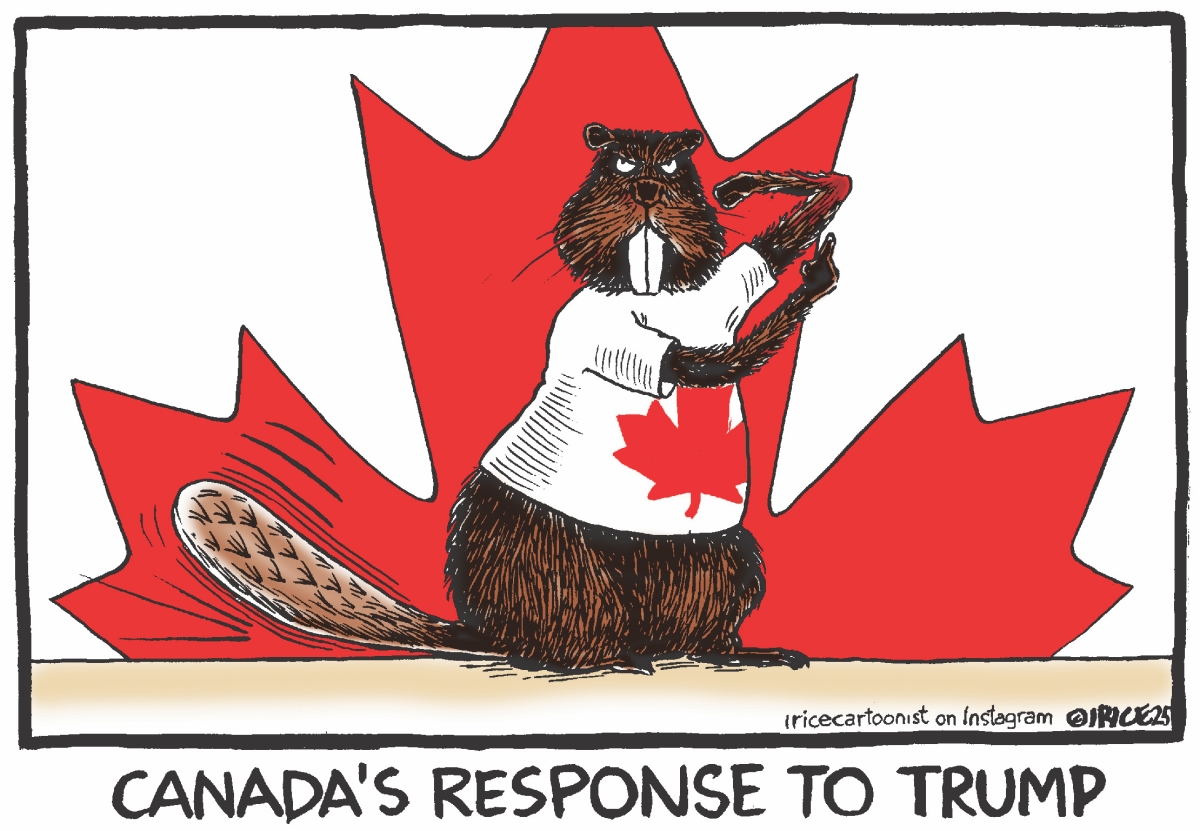
Despite fierce rivalries on the hockey rink, Canadians and Americans cultivated a friendship that much of the world admired. That relationship has now been profoundly damaged.
For generations, the border between Canada and the United States has represented one of humanity’s most remarkable political achievements. I should know. I spent the first thirty-five years of my life in Canada. I know the country not as a tourist, a nostalgic expatriate, or an observer from across the border, but as someone formed by its schools, public institutions, democratic traditions, and social ideals. That is why Donald Trump’s campaign of hostility toward Canada strikes me as both politically reckless and deeply personal.
Stretching nearly 9,000 kilometers from the Atlantic to the Pacific and northward into the Arctic, the Canada–United States border is the longest international land boundary in the world. It has often been described as the world’s longest undefended border—a living testament to the possibility that two sovereign democracies can share an immense continent without regarding one another as enemies. More than a geographical boundary, it represents a historic political achievement: the triumph of cooperation over conquest, diplomacy over domination, and mutual trust over militarized suspicion.
Despite fierce rivalries on the hockey rink, Canadians and Americans cultivated a friendship that much of the world admired. That relationship has now been profoundly damaged. Donald Trump’s repeated attacks on Canada—from punitive tariffs to threats against Canadian sovereignty—have generated a level of anti-American sentiment unprecedented in modern Canadian history.
Canada and the United States are connected by far more than geography. Their families, workplaces, universities, industries, energy systems, and cultural institutions are deeply intertwined. Canada is among the United States’ largest trading partners and remains its largest export market, while the United States continues to be Canada’s principal trading partner. Hundreds of thousands of people cross the border on an ordinary day, often with little sense that they are passing between two sovereign nations. For generations, economic integration reinforced political friendship rather than undermining it. Commerce became a foundation of trust, not an instrument of intimidation.
Related stories
Trump has shattered that assumption. He has transformed economic interdependence into a weapon, treating Canada not as a trusted ally but as a subordinate state to be threatened, humiliated, and coerced. In doing so, he has endangered not merely a trade relationship, but one of the most successful experiments in peaceful coexistence the modern world has ever known.
The two countries compete fiercely in hockey. Canadians delight in reminding Americans that the game is their national birthright, while Americans occasionally commit the unforgivable offense of defeating them. Beneath this friendly rivalry, however, lies something far more enduring than sport. For generations, the relationship between the two countries has stood as one of the modern world's most successful partnerships between neighboring democracies.
Even the migration of talented Canadians to the United States has long inspired mixed emotions north of the border. Canadians take genuine pride when their actors, musicians, writers, scholars, physicians, entrepreneurs, and athletes achieve success in the larger American market. Yet their accomplishments also revive an old national anxiety: that life beside the American colossus may gradually draw Canada's brightest minds and most accomplished citizens into a far larger cultural, intellectual, and economic orbit.
I became one of those Canadians. Like millions before me, I crossed the border in pursuit of opportunity. But I never left Canada behind. Its political culture, democratic ideals, and conception of the common good remained an enduring part of who I was. That is why the current assault on Canada is not merely a matter of foreign policy. It feels like an attack on one of my two homes.
For the past three decades I have lived in California, where I have had the privilege of teaching at several universities while continuing the intellectual and political work to which I have devoted my life. California's climate has also enabled me to manage chronic health conditions that harsher winters would have made increasingly difficult.
Yet living in the United States has never diminished my attachment to Canada. If anything, it has strengthened it. My identity has been shaped by both countries. I owe an immense intellectual debt to Canada, whose public institutions and democratic traditions helped form my political conscience. I remain profoundly grateful to the United States for the opportunities it has afforded me as a scholar, teacher, and writer.
It is precisely because I belong to both worlds that I cannot remain silent when one seeks to intimidate, humiliate, and threaten the sovereignty of the other.
Through generations of hockey rivalries, cultural anxieties, trade disputes, and political disagreements, the friendship between Canada and the United States endured. It survived changes of government, economic recessions, constitutional conflicts, and international crises. The world's longest undefended border stood as living proof that neighboring democracies could choose cooperation over domination, partnership over coercion, and mutual respect over imperial ambition.
Then came Donald Trump.
Trump has transformed friendship into intimidation, economic integration into a weapon, and one of the world's most successful democratic relationships into an instrument of coercion. His tariffs, annexation rhetoric, and repeated contempt for Canadian sovereignty have inflicted damage that cannot be measured solely in dollars or trade statistics. They have generated a profound sense of betrayal among Canadians who once regarded the United States not merely as a trading partner or military ally, but as their closest friend and most trusted neighbor.
The deepest injury is not economic but moral. Trust, once broken between nations, cannot be restored with the stroke of a pen or the repeal of a tariff. It must be earned again. Trump has not merely weakened an alliance; he has fractured a relationship that generations of Canadians and Americans patiently built through mutual respect, democratic solidarity, and a shared belief that power is best expressed through cooperation rather than domination.
The collapse in Canadian public opinion has been dramatic. In 2025, only 34 percent of Canadians expressed a favorable view of the United States, down from 54 percent just one year earlier. Nearly two-thirds viewed the United States unfavorably—the lowest level recorded by the Pew Research Center since it began asking the question more than two decades ago (Pew Research Center 2025).
Canadians have not suddenly become hostile toward the American people. Their anger is directed principally at an administration that has treated Canadian sovereignty as negotiable and democratic friendship as expendable.
The emotional rupture, however, is unmistakable. For generations, Canadians assumed that disagreements with the United States would unfold within a relationship grounded in mutual respect. Trump has shattered that assumption. His repeated suggestion that Canada should become America’s “51st state,” together with his willingness to employ economic coercion against a democratic ally, has transformed what was once a model international relationship into one increasingly defined by suspicion, resentment, and distrust.
This is not merely a dispute over tariffs.
It is the systematic unraveling of one of the world’s greatest democratic friendships.
Economic Integration as a Weapon
Trump's posture toward Canada forms part of a broader politics of humiliation. Its underlying message is brutally simple: the United States is larger, richer, and more powerful; therefore, Canada must submit.
This is not diplomacy among sovereign nations.
It is the logic of empire translated into the language of tariffs, market access, and economic punishment.
That logic became unmistakable on July 20, 2026, when the Trump administration announced an additional 50 percent tariff on nearly $20 billion in selected Canadian imports. The affected products included wine and other alcoholic beverages, dairy goods, cement, furniture, clothing, and hockey equipment, while energy, potash, fish, and several critical mineral exports remained exempt. Although the measure applied to only a portion of Canadian exports, its political significance extended far beyond its immediate economic consequences.
The distinction matters. Trump did not impose a blanket tariff on every Canadian export. Yet the limited scope of the measure should not obscure its larger purpose. The administration invoked Section 338 of the Tariff Act of 1930—an extraordinary statutory authority reportedly never before used in this fashion during its nearly century-long history. The tariffs were therefore more than a trade measure; they represented a dramatic assertion of presidential power against one of America's closest democratic allies.
Washington argues that Canada discriminates against American automobiles, dairy products, and alcoholic beverages. It also challenges Canada's supply-management system, provincial purchasing preferences, and alcohol distribution policies. Canada replies that many of its countermeasures were adopted only after earlier American tariffs and that Washington is now punishing Canada for resisting economic pressure that the United States itself initiated.
Reasonable people can debate the merits of these competing trade claims. What is far more difficult to defend is the transformation of economic disagreement into a strategy of political intimidation. Trade disputes between allies are common. Threatening a neighboring democracy with economic coercion while openly questioning its sovereignty is not.
Prime Minister Mark Carney has denounced the latest tariffs as unjustified and pledged to consider whatever measures are necessary to defend Canadian interests. Ontario Premier Doug Ford has called for matching American tariffs "dollar for dollar," while British Columbia Premier David Eby has proposed using Canada's critical mineral resources as strategic leverage. The provincial leaders differ over tactics, but not over principle: Canada should not submit to economic coercion.
The symbolism of the deteriorating relationship could scarcely be more striking. Canada canceled a planned joint celebration marking the opening of the Gordie Howe International Bridge linking Windsor and Detroit. A bridge named for a hockey legend revered on both sides of the border should have commemorated one of the world's closest democratic partnerships. Instead, it opens beneath the shadow of a trade war.
Trump has even threatened additional tariffs while citing smoke from Canadian wildfires drifting into the United States—a particularly revealing example of transforming a shared environmental catastrophe into yet another occasion for economic retaliation.
Economic integration, once celebrated as the institutional foundation of democratic friendship, has thus been recast as an instrument of political discipline. The issue is no longer simply commerce. It is whether economic interdependence will continue to strengthen democratic cooperation or instead become a mechanism through which the powerful compel the weak.
That question lies at the heart of Canada's response.
It also lies at the heart of the crisis now confronting North America.
Canada Refuses to Kneel
Canadians have demonstrated a remarkable willingness to resist, even when resistance carries economic costs. They understand that counter-tariffs can increase prices, disrupt industries, and threaten employment on both sides of the border. Yet overwhelming majorities continue to believe that national dignity cannot always be reduced to calculations of immediate commercial advantage. Economic prosperity is indispensable, but it cannot become the sole measure of political judgment. A nation that sacrifices its sovereignty for short-term economic gain ultimately risks forfeiting both.
This response should not be mistaken for anti-Americanism. Canadians are not rejecting the American people. They are rejecting a conception of international politics in which friendship is redefined as dependency and cooperation gives way to coercion.
Canada's resistance is significant not because every Canadian policy is beyond criticism or every retaliatory tariff is economically prudent. It is significant because a smaller democratic nation refuses to accept the proposition that superior economic power confers the right to command.
History repeatedly demonstrates that domination often produces resistance rather than submission. In The Great Transformation, Karl Polanyi argued that societies eventually defend themselves against economic arrangements that threaten their social fabric and democratic institutions (Polanyi 1944). Markets, he insisted, cannot be separated from the social and political relationships that sustain them.
Albert O. Hirschman extended this insight to international trade. In National Power and the Structure of Foreign Trade, he demonstrated how asymmetric trading relationships can become instruments of political influence, enabling economically dominant states to convert commercial dependence into geopolitical leverage (Hirschman 1945). Nations confronted with such pressures inevitably seek to diversify their economic relationships in order to preserve political autonomy.
Canada's present response reflects precisely these dynamics. Faced with escalating American economic pressure, Canadians are not simply defending domestic industries; they are defending the political independence that makes democratic self-government possible.
Trump's campaign of economic pressure has already accelerated Canada's search for alternatives. The proportion of Canadian exports destined for the United States has declined as trade with Europe, Asia, and other markets has expanded. The diversification remains incomplete, but the direction is unmistakable.
The irony is profound. Trump may ultimately accomplish what generations of Canadian economic nationalists could not: convincing Canadians that excessive dependence on a single foreign market is itself a threat to national sovereignty. A strategy intended to make Canada more economically compliant may instead leave it more economically independent.
The Threat to Canadian Sovereignty
Trump's hostility toward Canada cannot be dismissed as merely a disagreement over tariffs.
Again and again, he has referred to Canada as America's prospective "51st state." In January 2025, when asked whether he would employ military force to acquire Canada, Trump ruled out armed intervention but explicitly suggested the use of "economic force." He described the international border as an artificial line and implied that Canadian sovereignty might ultimately yield to American economic pressure.
Many observers dismissed these remarks as jokes, negotiating tactics, or theatrical exaggeration.
Such complacency is dangerous.
When the president of the United States repeatedly questions the sovereignty of a neighboring democracy and openly contemplates using economic coercion to absorb it, the threatened nation has no responsible choice but to take those statements seriously. Sovereignty does not become negotiable simply because the threat is delivered with a smile.
Trump's "51st state" rhetoric exposes the imperial logic underlying his trade policy. Canada is no longer treated as an equal democratic nation possessing an unquestionable right to determine its own political future. Instead, it is increasingly portrayed as an underutilized asset whose independence exists only because the stronger power has not yet decided otherwise.
More than two centuries ago, Immanuel Kant argued that no independent state may be acquired by another "through inheritance, exchange, purchase, or gift," because a state is not a piece of property but "a society of human beings" possessing the inherent right to govern itself (Kant 1795/2006). Sovereign equality, in other words, is a moral principle before it is a legal one.
Hannah Arendt later observed that domination begins by denying others full political standing—by reducing persons or peoples from self-determining political actors to objects of administration, management, or control (Arendt 1951). The contemporary United States is not a totalitarian state, nor is Canada confronted with totalitarian rule. Yet the casual suggestion that a neighboring democracy could be economically pressured into surrendering its sovereignty reveals a disturbing erosion of respect for the principle of sovereign equality upon which the modern international order rests.
The danger lies not only in whether Trump believes his own rhetoric.
The greater danger lies in normalizing the idea that powerful nations may openly contemplate absorbing weaker democratic neighbors without provoking widespread moral condemnation.
Canada's refusal is therefore about much more than tariffs.
It is a defense of national self-determination against a politics that reduces treaties, alliances, borders, and democratic consent to temporary obstacles in the pursuit of power.
A Different Measure of National Greatness
Trumpian nationalism measures greatness by military supremacy, economic dominance, stock-market performance, and the number of billionaires a nation produces. A more humane standard asks a different question: How well does a society enable ordinary people to live healthy, secure, dignified, and meaningful lives? Measured by that standard, Canada compares remarkably well. International indicators consistently show longer life expectancy, lower rates of preventable mortality, and fewer deaths from treatable illnesses than in the United States, despite Canada's substantially lower expenditures on health care. Canada's system is far from perfect. Physician shortages, lengthy waiting periods, and unequal access remain serious problems. Nevertheless, its underlying principle continues to distinguish it from the American model: medically necessary care is understood primarily as a public responsibility rather than as a commodity distributed according to wealth or employment.
The comparison extends beyond health care. International measures of human development continue to place Canada slightly ahead of the United States despite America's vastly greater aggregate wealth and military power. Such rankings cannot capture the full complexity of either society. Yet they undermine the claim that Canada survives only because of American generosity or that human flourishing is measured principally by economic domination. Karl Polanyi argued that markets exist to serve society, not the reverse (Polanyi 1944). When economic competition becomes detached from democratic responsibility, markets cease to be instruments of human flourishing and become mechanisms of social dislocation. Canada's social compact remains imperfect. But it continues to affirm a principle worth defending: democracy should be judged not only by the wealth it produces but also by the dignity it protects. Nations should not be measured primarily by the size of their economies or the fortunes accumulated by their wealthiest citizens. They should be judged by the quality of life they make possible for ordinary people. That is what Canadians are defending. Not merely a flag. A democratic ideal.
Trumpism and the Fascist Temptation
Trump's campaign against Canada cannot be understood simply as a dispute over trade balances or market access. It expresses a broader authoritarian vision of politics. The word fascism should never be used casually. It carries a specific historical meaning, and scholars continue to debate whether Trumpism should be understood as fascism, authoritarian populism, illiberal nationalism, or some combination of these traditions. That debate is both legitimate and necessary. But disagreements over terminology should not obscure the political pattern before us. Robert Paxton argues that fascism is defined less by rigid ideology than by a set of mobilizing political passions: the glorification of national rebirth, the cult of the leader, contempt for liberal institutions, and the conviction that violence or coercion is justified in defense of the nation (Paxton 2004). Umberto Eco similarly identifies recurring characteristics of what he called "Ur-Fascism," including the rejection of pluralism, the fear of difference, the celebration of strength, and the reduction of political life to permanent conflict (Eco 1995). Measured against these criteria, Trumpism displays unmistakably fascistic features. It mobilizes national grievance through the promise of national renewal. It elevates a charismatic leader above constitutional institutions. It portrays political opponents not as legitimate adversaries but as enemies to be defeated or punished. It constructs an endless succession of internal and external threats—immigrants, racial minorities, journalists, professors, judges, civil servants, political rivals, and foreign nations—against whom the leader claims to embody the authentic will of the nation. Politics thereby ceases to be a democratic conversation among citizens. It becomes a struggle between those declared to belong and those portrayed as contaminants, invaders, or traitors.
Race is not incidental to this political project. Trump has repeatedly mobilized racial and ethnic resentment by depicting immigrants as criminals, invaders, and dangers to the nation's biological and cultural survival. Civil-rights organizations have documented patterns of racial profiling, excessive force, and aggressive immigration enforcement during his second administration. Whether one accepts every conclusion of those reports or not, the political spectacle itself remains revealing. State power is displayed as an instrument of purification, while vulnerable populations are transformed into symbols of contamination and disorder.
Jason Stanley argues that fascist politics functions by manufacturing divisions between a supposedly authentic people and those represented as existential threats to the nation (Stanley 2018). Trumpism repeatedly follows precisely this logic. Its politics depends upon the continual production of enemies.
Trumpism also seeks to redefine political opposition as criminality. Trump has repeatedly demanded investigations of political rivals, attacked judges whose rulings opposed his interests, denounced independent journalists as enemies, and demanded personal loyalty from officials whose constitutional obligation is to the law rather than to the president. Such practices weaken the distinction between democratic leadership and personal rule. Freedom House's 2026 assessment documents a decline in the United States' democratic performance and identifies expanding executive authority, increasing pressure upon judicial independence, and growing resistance to constitutional oversight.
These developments do not mean that American democracy has disappeared. Elections continue. Civil society remains active. Independent courts persist. Constitutional protections endure. But democracies rarely disappear overnight. Steven Levitsky and Daniel Ziblatt remind us that modern democracies usually die gradually—not through dramatic coups but through the slow erosion of institutional restraints, the normalization of authoritarian practices, and the weakening of constitutional norms (Levitsky and Ziblatt 2018). Sheldon Wolin described this tendency as "inverted totalitarianism," a condition in which democratic institutions formally survive even as political power becomes increasingly concentrated and democratic participation steadily weakened (Wolin 2008). Trumpism exhibits many of these tendencies. It degrades democratic language. It celebrates cruelty as strength. It rewards personal loyalty over constitutional obligation. It transforms disagreement into treason. It divides society into patriots and enemies. It glorifies domination while ridiculing compromise.
By these criteria, Trumpism exhibits unmistakably fascistic features. Whether historians ultimately classify it as a fully developed form of fascism or as a distinctive twenty-first-century authoritarian formation remains a matter for continuing scholarly debate. What cannot honestly be denied is that its political trajectory increasingly converges with the historical characteristics that scholars have long associated with fascism. Trump's treatment of Canada belongs within this larger political pattern. The "51st state" rhetoric is therefore not an isolated provocation. It expresses a worldview in which the sovereignty of a smaller democratic nation matters less than the ambitions of a more powerful one. The tariffs are not merely economic instruments. They are political demonstrations of domination. Trumpism externalizes abroad what it increasingly practices at home. Coercion becomes the preferred language of politics.
The Politics of Humiliation
The assault on Canada is not fundamentally about correcting trade imbalances.
It is about humiliation.
Throughout history, authoritarian leaders have sought not merely to defeat their opponents but to compel them to submit publicly. Domination becomes most effective when it is transformed into spectacle—when everyone is made to witness who possesses the power to define reality and who must accept it.
Trump understands this instinctively.
His political style depends upon public degradation. Political rivals are assigned mocking nicknames. Former allies are publicly rebuked if they refuse complete loyalty. Judges who rule against him are denounced as corrupt. Journalists become "enemies of the people." Universities become breeding grounds of subversion. Immigrants become invaders. International partners become freeloaders.
Canada becomes an object lesson in what happens to those who refuse to bend to American demands.
Humiliation serves a vital political purpose.
It teaches observers that resistance carries consequences. It encourages others to surrender before conflict even begins. Politics is no longer understood as negotiation among equals but as a hierarchy of dominance and submission in which power alone determines legitimacy.
Canada has refused to participate in that performance.
Its refusal carries significance far beyond North America.
Across the world, democratic societies are confronting increasingly aggressive forms of authoritarian nationalism. Some governments accommodate it. Others seek refuge in neutrality. Canada has chosen another path. It has insisted that friendship among democracies cannot survive if one partner claims the right to threaten, coerce, or ultimately absorb the other.
This is why the conflict matters.
It is not simply a dispute between Ottawa and Washington. It has become a test of whether democratic nations will defend the principle that sovereignty belongs equally to large and small states alike. If that principle is abandoned, then international law becomes little more than a vocabulary masking the exercise of raw power.
The social philosopher Erich Fromm argued in Escape from Freedom (1941) that authoritarian movements flourish by encouraging people to flee the anxieties of freedom through submission to overwhelming power. Democracy requires the opposite moral disposition. It asks citizens to defend liberty even when doing so demands sacrifice, uncertainty, and courage.
Canada's response reflects precisely that democratic obligation. By refusing intimidation despite profound economic costs, it has reminded the democratic world that sovereignty is not merely a legal status. It is an ethical commitment. Nations, like individuals, retain their dignity only so long as they refuse to surrender it.
Two Visions of America
Yet this essay is not an indictment of America.
It would be both intellectually dishonest and morally indefensible to confuse one administration with an entire people.
The United States has always contained competing political traditions.
One America produced slavery, segregation, McCarthyism, the internment of Japanese Americans, and wars repeatedly justified in the language of freedom while denying freedom to others.
Another America produced Frederick Douglass, Jane Addams, W. E. B. Du Bois, Eugene Debs, Martin Luther King Jr., Ella Baker, Rosa Parks, César Chávez, Angela Davis, the labor movement, the civil rights movement, the women's movement, Indigenous struggles for justice, and countless ordinary citizens who have risked their livelihoods—and sometimes their lives—to enlarge the meaning of democracy.
These two Americas have always coexisted.
Their struggle constitutes one of the defining dramas of American history.
I have lived in the United States for more than three decades. I have taught generations of students whose intelligence, generosity, and commitment to justice continue to inspire me. I have worked alongside scholars, teachers, activists, clergy, artists, and community organizers whose lives have been devoted to building a more democratic society.
America has given me friendships that I cherish. It has also given me intellectual opportunities that profoundly shaped both my scholarship and my life.
My criticism therefore arises not from hostility toward the United States but from hope.
It is precisely because I believe so deeply in the democratic promise of this country that I oppose political movements seeking to diminish it.
The United States is capable of far better than a politics organized around fear, humiliation, resentment, and domination.
Its greatest achievements have always emerged when it expanded democracy rather than narrowed it; when it welcomed dissent rather than criminalized it; when it defended constitutional government rather than subordinated public institutions to personal power.
The conflict between Canada and the Trump administration therefore reflects a deeper contest over the meaning of democracy itself.
One vision understands strength as domination.
The other understands strength as the capacity to cooperate without surrendering equality.
One seeks obedience.
The other seeks solidarity.
One demands submission.
The other recognizes that democratic friendship can exist only among equals.
Canada has chosen the second path.
The question confronting Americans is whether they will choose it as well.
For the future of the North American democratic experiment—and perhaps for democracy itself—that choice may prove more consequential than either nation yet fully understands.
Elbows Up!
The phrase "Elbows Up!" has become far more than a hockey expression.
It has become a democratic ethic.
In hockey, players raise their elbows not to dominate the game but to protect themselves when under pressure. The gesture signifies resilience, determination, and the refusal to be intimidated. Canadians have embraced the phrase because it captures something essential about the present moment.
They are not preparing for conquest.
They are preparing to stand their ground.
That distinction matters.
Canada has not threatened to annex American territory.
Canada has not questioned the legitimacy of American sovereignty.
Canada has not sought to intimidate its closest ally into political submission.
It has simply insisted upon a principle older than either nation: that sovereign peoples possess the right to govern themselves free from coercion by more powerful states.
The world's longest undefended border remains one of humanity's greatest political achievements.
Its significance lies not in the absence of walls or military fortifications but in the presence of trust. For generations, Canadians and Americans demonstrated that neighboring democracies could disagree vigorously while preserving mutual respect. That achievement should never be taken for granted.
Trust, once broken, is not easily restored.
Friendship, once transformed into intimidation, cannot simply resume where it left off.
If the relationship between Canada and the United States is to recover, it will require more than the removal of tariffs or the election of different leaders. It will require a renewed commitment to the principles that made the relationship extraordinary in the first place: respect for sovereignty, equality among democratic nations, constitutional government, and the conviction that cooperation is stronger than coercion.
Democracy itself depends upon these principles.
Whether within nations or among them, democracy rejects the proposition that might makes right. It rests instead upon the recognition that legitimacy arises from consent rather than force, from persuasion rather than intimidation, and from solidarity rather than domination. That lesson extends far beyond North America.
Around the world, authoritarian movements seek to normalize contempt for democratic institutions, hostility toward political pluralism, and the belief that strength consists in humiliating opponents. Such movements flourish when citizens become resigned to the politics of fear and democratic societies lose confidence in their own ideals.
They are defeated not only at the ballot box but through civic courage—the daily willingness of ordinary people to defend democratic norms before they disappear.
Canada's response to Trump's threats reminds us that democratic dignity is neither abstract nor symbolic. It is practiced whenever a free people refuses to surrender its principles in exchange for temporary advantage.
As someone who is both a Canadian and an American citizen, I hope profoundly that the friendship between these two countries will endure. The United States remains capable of renewing its democratic promise. Canada will continue to confront its own unfinished struggles for justice. Neither nation is beyond criticism.
Neither is beyond hope.
The challenge before us is therefore not merely political.
It is moral.
Will democratic nations continue to treat one another as partners worthy of respect, or will they increasingly imitate the authoritarian logic that reduces every relationship to domination and submission?
History has not yet answered that question.
Its answer will depend upon what citizens are prepared to defend.
I owe both countries an immeasurable debt. One gave me my birth. The other became my intellectual home—a country in which I taught, wrote, raised my family, and found friendships that have enriched my life beyond measure. My hope is not that one nation triumphs over the other, but that both recover the democratic friendship that once made the world's longest undefended border a symbol not merely of peace, but of mutual trust. That inheritance now rests in our hands.
For my part, I remain convinced that the future belongs not to those who threaten their neighbors but to those who build relationships grounded in justice, equality, and democratic friendship.
Because the question before us has never been about tariffs alone.
It has always been about the kind of political world we wish to inhabit.
Will that world be governed by fear or by trust?
By coercion or by consent?
By domination or by democratic friendship?
That is why Canada's response matters.
That is why this struggle matters.
And that is why, when democracy itself comes under pressure, the proper response is neither panic nor surrender.
It is to stand firm.
Elbows up!
References
Arendt, Hannah. The Origins of Totalitarianism. New York: Harcourt, Brace & Company, 1951.
Eco, Umberto. "Ur-Fascism." The New York Review of Books 42, no. 11 (1995): 12–15.
Freedom House. Freedom in the World 2026. Washington, DC: Freedom House, 2026.
Fromm, Erich. Escape from Freedom. New York: Farrar & Rinehart, 1941.
Gramsci, Antonio. Selections from the Prison Notebooks. Edited and translated by Quintin Hoare and Geoffrey Nowell Smith. New York: International Publishers, 1971.
Hirschman, Albert O. 1945. National Power and the Structure of Foreign Trade. Berkeley: University of California Press.
Kant, Immanuel. 2006. Toward Perpetual Peace and Other Writings on Politics, Peace, and History. Edited by Pauline Kleingeld. Translated by David L. Colclasure. New Haven, CT: Yale University Press. (Original work published 1795.)
Levitsky, Steven, and Daniel Ziblatt. How Democracies Die. New York: Crown, 2018.
Organisation for Economic Co-operation and Development (OECD). OECD Health Statistics. Paris: OECD Publishing.
Paxton, Robert O. The Anatomy of Fascism. New York: Alfred A. Knopf, 2004.
Pew Research Center. "Canadian Views of the United States." Washington, DC, 2025.
Polanyi, Karl. The Great Transformation. New York: Farrar & Rinehart, 1944.
Statistics Canada. Canada's International Merchandise Trade. Ottawa: Government of Canada.
United Nations Development Programme. Human Development Report. New York: United Nations Development Programme.
Wolin, Sheldon S. Democracy Incorporated: Managed Democracy and the Specter of Inverted Totalitarianism. Princeton, NJ: Princeton University Press, 2008.
Comments

Powered by RoundtableAn AI/DeFi-powered Enterprise Media Operating System. Learn more at Roundtable.io.© Roundtable 2026. By using this site you agree to the Terms of Use and Privacy Policy