


Jun 7, 2020 1:00 AM
Updated Feb 10, 2022 10:49 PM
John Peeler: The murder of George Floyd brought most educated whites to see the need to address the historical and structural racism that underlies police brutality.
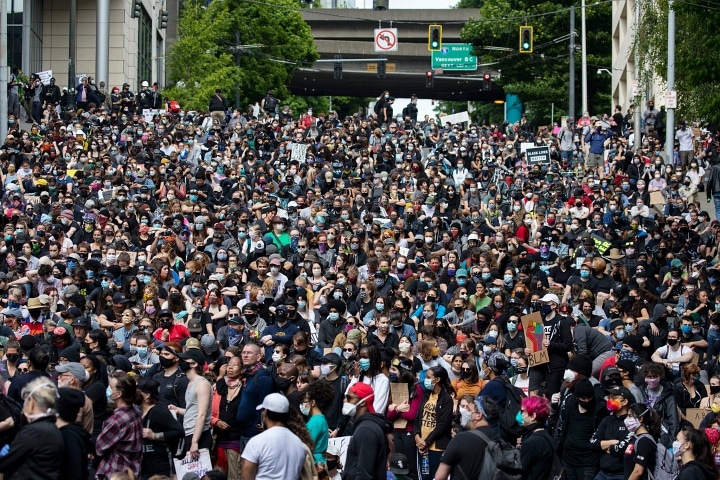
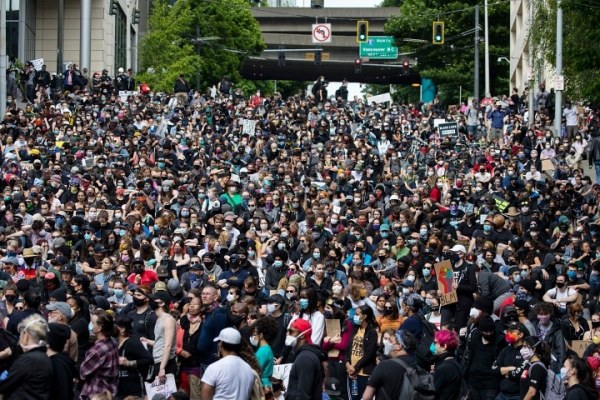
The protests that have followed the death of George Floyd (broadcast globally thanks to the alertness of a young Minneapolis citizen with a camera on her phone), are far more widespread and sustained than we have ever seen before, even in the late sixties. And the protests have remained largely peaceful, even with some police repression.
Beneath the protests we can see some fundamental shifts, like the moving plates that cause physical earthquakes.
First, the sheer gratuitous brutality of Officer Chauvin, knowing he was on camera, with a crowd around telling him to ease up, finally laid bare the reality of police brutality that many whites just didn’t want to believe. Two thirds of Americans believe that Chauvin committed murder. That includes a substantial number of conservatives who usually back the police in such cases.
The contingent who think Chauvin did nothing wrong is reduced to a minority of militant White Nationalists. Even President Trump thinks it was wrong. So the first tectonic shift is the fracture in Trump’s base: the roughly 40 percent of voters who have backed him no matter what he does or says. Now 30 or 35 percent agree with everybody else that what happened in Minneapolis was wrong. Trump must straddle the fault line, saying that he deplores what happened to Floyd, while also encouraging hostility to the protesters.
Related stories
The murder of George Floyd brought most educated whites to see the need to address the historical and structural racism that underlies police brutality.
Defenders of Chauvin include some police officers and some military personnel with White Nationalist sympathies. We don’t know how many, but general support for Trump among police and military has been strong. It seems that the higher ranks of both police and military are not implicated in this (but we don’t know: maybe they are just being discreet). It has, however, been clear in recent days that the high command of the armed forces will resist being used by Trump as shock troops to control popular protests. Thus a second tectonic shift has seen the politicization of the military troops and the ranks of police, coupled with a serious effort by commanders to resist that politicization. The “forces of order” are in play politically.
A third tectonic shift is taking place in the opposition to Trump. There has been tension between the broad African American base that has backed Biden from the beginning and put him in a commanding position in the primaries, and the educated, urban and suburban whites who backed Bernie Sanders and other candidates while having less enthusiasm for Joe Biden. But this crisis has brought those two constituencies decisively together. Both groups were profoundly affected by the coronavirus outbreak and were very supportive of the shutdown of businesses and social distancing. And both groups were extremely critical of the Trump administration’s response to the outbreak. So they were already on the same page about the virus.
The murder of George Floyd brought most educated whites to see the need to address the historical and structural racism that underlies police brutality. So that puts them shoulder-to-shoulder with African Americans, not only on responses to the virus, but now on responses to racism. And again, they are extremely critical of Trump’s response to the crisis provoked by Floyd’s murder. What was a significant cleavage in the Democratic coalition has been closed. And Joe Biden has had the wisdom to join and even lead the push to address systemic racism.
In short, forces have shifted in ways that hurt Trump and help Biden.
At the same time the presence of White Nationalism in the ranks of the police and military pose a very real threat to the integrity of our democracy. In a worst-case scenario, Trump loses the election but refuses to admit it, tries to use the military and police to stay in power, and is blocked by the commanders. He could then try to reach below the commanders to mobilize his followers in the ranks. That would touch off violent conflict within the ranks of the military and police. The outcome of that is hard to predict, but it wouldn’t be good.
Having been an analyst of Latin American politics for over fifty years, I’ve seen this sort of thing happen there. The outcome is never good.

John Peeler
Did you find this article useful? Please consider supporting our work by donating or subscribing.
Comments

Powered by RoundtableAn AI/DeFi-powered Enterprise Media Operating System. Learn more at Roundtable.io.© Roundtable 2026. By using this site you agree to the Terms of Use and Privacy Policy