


Apr 29, 2014 9:42 PM
Updated Feb 10, 2022 10:07 PM
Sharon Kyle: even in the face of the most blatant expressions of racism, those who have been caught with the proverbial smoking gun maintain that they are not racists.
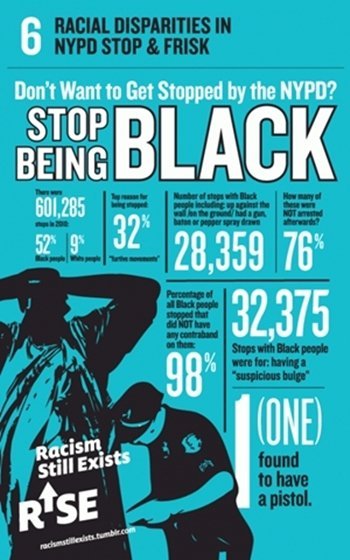
In view of the comments made by Donald Sterling, Cliven Bundy, Paula Deen and others the LA Progressive would like to point out that today's racism - the most damaging variety - is most often found in acts of implicit bias and other forms of unconscious silent racism or what is often referred to as "institutional racism". Although the acts of the Donald Sterlings, Paula Deens, and Cliven Bundys of the world do indeed cause pain, they are not as impactful as implicit bias, microaggressions and institutional racism.
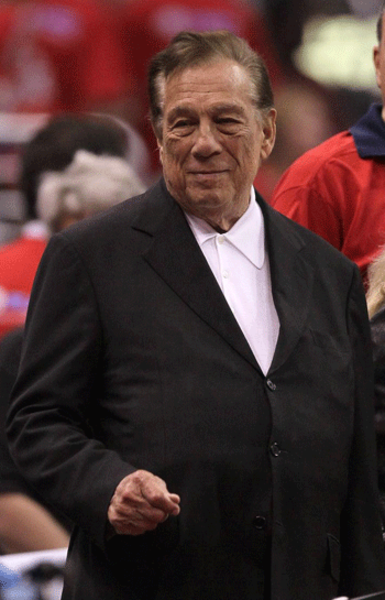
Having said that, we felt the need to address these blatant, highly publicized individual expressions of racism to counter what is sure to follow -- mainstream media's field day. Instead of using this as a teaching moment, mainstream media will play and replay the most offensive snippets knowing that that will drive traffic and ratings. But they won't discuss what Eduardo Bonilla-Silva coined "Racism without Racists" in his book of the same name. They won't discuss the systems that maintain racial inequality in this country. The lack of attention given to institutional racism helps to sustain it partly because it is ignored.
Americans are notorious for having a short attention span and looking for quick solutions. But complex problems don't usually have quick solutions and institutional racism is a complex issue. When our focus is directed exclusively to the more blatant individual acts of racism, we tend to believe that all we need to do is get rid of the culprit and all will be fine. This reinforces the notion that if racist individuals were rooted out of society then we'd have racial equaty. But academics like Dr. Eduardo Bonilla-Silva make the case that racist outcomes have more to do with systems than with individuals.
In his ground-breaking book, Privilege, Power, and Difference, author Allan G. Johnson offers insight into White denial of racism.
Related stories
Here is an excerpt from his book, Privilege, Power, and Difference:
Because U.S. Culture encourages us to use an individual-guilt model to explain just about everything that goes wrong, it's easy to confuse intentions with consequences. In other words, if something bad happens, someone's conscious bad intentions must be behind it. A corollary is that if your intentions are good, they cannot result in something bad.
White racism is usually defined as a bad attitude toward people of color, as malicious intentions buttressed by negative cultural stereotypes. When whites are confronted with matters of race, they usually react as if the issue isn't patterns of inequality and unnecessary suffering but their own personal feelings and views about race and the question of their individual guilt or innocence. They respond as if the challenge is to get themselves off the hook by showing themselves to be pure on the subject of race. They seem to think that if they don't mean it, then it didn't happen, as if their conscious intent is the only thing that connects them to the consequences of what they do or don’t do.
“I didn't mean it” can stop a conversation before people get to the reality that it doesn't matter whether it was meant or not. The consequence remains the same. Take the case of a white female professor who calls on only whites in class. Since she has no conscious animosity toward people of color, she doesn't see herself as having anything to do with the continuing pattern or racial inequality that results from the choices she makes as she does her job. In other words, she doesn't see herself as part of the problem or, therefore, as part of the solution.
Toward that end, it is generally useful to ask ourselves what we mean whenever we say, “I didn't mean it,” because on some level, it's reasonable to assume that we mean everything we do and say. At a retirement party for a black manager, for example, a white colleague arranged a slide show that included pictures of black people happily eating watermelon, an image with a long history of being used to stereotype blacks as lazy and not smart enough to care about anything more complex than having something sweet to eat. Blacks in the audience were shocked and angered, and when someone confronted the white man later on, his reaction was, “I'm not racist. I didn't mean anything by it.”
In effect, “I didn't mean it” often comes close to “I didn't say it” or “I didn't do it,” which of course isn't true. What, then, do the words signify? Most of the time, the real message is “I did it, I said it, but I didn't think about it.” In many social situations, that kind of response clearly won't work. If I steal someone's car, the judge is unlikely to go easy on me if I say, “I didn't mean anything by it. I just wanted the car and I didn't think much about it at the time.” Or, “I didn't consider whether the owner would mind” or “Getting arrested didn't cross my mind.” The judge would probably say, “You should have thought about it.” In other words, I'm held responsible to act with an ongoing awareness of the consequences of what I do and don't do.
But privilege works against such awareness in all kinds of social situations. The manager should have been mindful of racial patterns in mentoring and promotion. The white colleague should have thought about the cultural message behind demeaning stereotypes that associate blacks with watermelon. The man who sexually harassed should have been aware of what it's like to be a woman on the receiving end of such behavior. But they weren't, and such patterns are the norm, not the exception. Why?
If we use an individualistic model of the world, the answer is that people are callous or uncaring or prejudiced or too busy to bother with paying attention to their actions – especially if they're white or heterosexual or male. Sometimes, of course, this is true, but more often the larger truth is that the luxury of obliviousness makes a lack of conscious intent a path of least resistance that's easy to follow without knowing it. The sense of entitlement and superiority that underlies most forms of privilege runs so deep and is so entrenched that people don't have to think about it in order to act from it. They can always say they didn't mean it and, in a real sense, they're telling the truth. That's why “I didn't mean it” can be so disarming and such an effective way to defend privilege. They weren't thinking, they weren't mindful, they weren't aware – all the things that go into “meaning it.” But this is precisely the problem with privilege and the damage that it does.
I'm One of the Good Ones
One way to acknowledge the problem of privilege and oppression and get off the hook at the same time is to make use of an illusion we looked at earlier – that bad things happen in social life simply because of bad people. Since I can make a good case that I'm not a bad person, then the trouble couldn't have anything to do with me.
“Racism still exists,” I can say, “and it's a shame there are still bigots around like the Klan and skinheads and neo-Nazi's.” Or, “Unfortunately, some men still haven't gotten used to women in the workplace.” Or, “People who haven't worked through their homophobia make life difficult for gays and lesbians.”
“And,” I can hasten to add, if only to myself, “I don't belong to the Klan, I don't see color, I like women, and I have no “problem' with gays and lesbians as far as I know, and I never park in those handicapped spaces.”
Having set myself up as a good person with good intentions, I can feel disapproval or even compassion for all those bad, flawed, or sick people who supposedly make trouble happen all by themselves in spite of people like me. And I can sympathize with people who suffer as a result. But the issue of just where I am in all of this drops out of sight. Apparently I'm on the outside looking in as a concerned observer. I might even have moments when I count myself as a victim, since I feel bad whenever I think about it.
But the truth is that my silence, my inaction, and especially my passive acceptance of the everyday privilege that goes along with group membership are all it takes to make me just as much a part of the problem as any member of the Klan.
It's a point that's easy to miss, because we want people to see and judge us as individuals, not as members of a social category. But when we insist on that, we're being naïve if not somewhat false, for the fact is that we do want people to treat us as members of social categories whenever it works to our advantage. When I go into a store, for example, I want to be waited on right away and treated with respect even though the clerks don't know a thing about me as an individual. I want them to accept my check or credit card and not treat me with suspicion and distrust. But all they know about me is the categories they think I belong to – a customer of a certain race, age, gender, disability status, and class – and all the things they think they know about people who belong to those categories. I want that to be enough. I don't want to have to prove over and over again that I'm someone who deserves to be trusted and taken seriously. I want them to assume all that, and the only way they can do that is to perceive me as belonging to the “right” social categories.
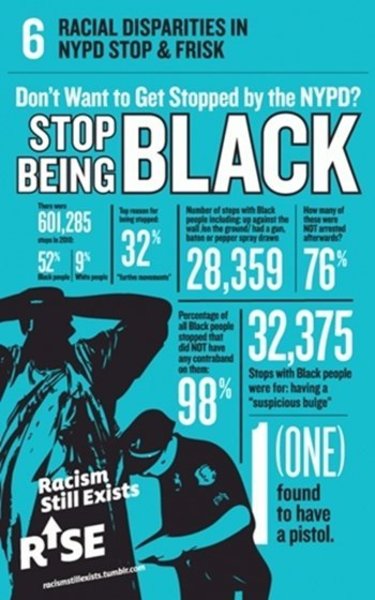
This is simply how social life works. By itself, it's not a problem. What many people resist seeing, however, is that on the other side of that same social process are all the people who get put into the “wrong” categories and ignored or followed around or treated with suspicion and disrespect regardless of who they are as individuals.
I can't have it both ways. If I'm going to welcome the way social categories work to my advantage, I also have to consider that when those same categories are used against others through no fault of their own, it then becomes my business because through that process I am being privileged a their expense.
In 1990, ABC News aired as a segment of Prime Time a documentary called True Colors that powerfully illustrates this dynamic. It focused on two men who were quite similar in every observable characteristic except race: one was black and one was white. The crew used hidden cameras and microphones to record what happened in various situations – applying for a job, accidentally locking oneself out of the car, trying to rent an apartment, shopping for shoes, buying a car and so on. Over and over again the two men were treated differently. In one instant, for example, the white man wandered into a shoe store in a shopping mall. He was barely across the threshold when the white clerk approached him with a smile and an outstretched hand. He looked at some shoes and then went on his way. Minutes later his black partner entered the store and from the outset was utterly ignored by the clerk, who stood only a few feet away. Nothing the black man did seemed to make a difference. He picked up and looked at shoes, he walked up and down the display aisles, he gazed thoughtfully at a particular style. After what seemed an eternity, he left.
When I show True Color in my race class and at diversity training sessions, I ask whites if they identify with anyone in the video. Invariably they say no, because they don't see themselves in the black man's predicament or in the racist behavior of the whites. Somehow, the white partner who is on the receiving end of the preferential treatment is invisible to them, and if I don't mention him, he rarely comes up. In other words, they don't say, “Yes, I see myself in the white guy receiving the benefits of white privilege.”
The effect of this obliviousness is for them to become invisible as white people in everyday situations and unaware of how privilege happens to them, especially in relation to other whites. They don't see themselves as being involved in situations in which privilege comes into play. They don't see, for example, that simply being white puts them in a particular relationship with someone like the shoe store clerk (whom they readily identify as racist) or that this relationship affects the way customers of color are treated and the way they are treated as whites.
The invisibility of whiteness illustrates how privilege can blind those who receive it to what's going on. As Ruth Frankenberg writes about a white woman she interviewed, “Beth was much more sharply aware of racial oppression shaping Black experience than of race privilege shaping her own life. Thus, Beth could be alert to the realities of economic discrimination against Black communities while still conceptualizing her own life as racially neutral – nonracialized, nonpolitical.”
A common form of blindness to privilege is that women and people of color are often described as being treated unequally, but men and whites are not. This, however, is logically impossible. Unequal simply means “not equal”, which should describe both those who receive less than their fair share and those who receive more than their fair share. There can't be a short end of the stick without a long end, because it's the longness of the long end that makes the short end short. To pretend otherwise makes privilege and those who receive it invisible.
So long as we participate in a society that transforms difference into privilege, there is no neutral ground on which to stand. If I'm in a meeting in which men pay more attention to what I and other men say than they do to women, for example, I'm on the receiving end of privilege. My mere acceptance of that privilege – whether conscious or not – is all that other men need from them to perpetuate it. Other men need my compliance for male privilege to work, even if my compliance is unconscious and passive. I know this because as soon as I resist that path by speaking out and merely calling attention to it, I can feel the defensive response rise up to meet me. In this sense, I don't have to be consciously hostile toward women in order to play an integral role in maintaining male privilege as a pattern in this society.
In the same way, for white privilege to work, whites need the compliance of other whites. If I look around my workplace and see no people of color, my silence on this issue sends the message to other whites that there is no issue. The shoe clerk's racist behavior depends on his being able to assume that other whites don't see a problem with preferential treatment for whites. That's what makes this path of racial preference a path of least resistance. And every white person either supports or challenges that assumption in choosing which path to follow. It is in the nature of social life that people continually look to one another to confirm or deny what they experience as reality. Given that, other people will interpret my going along with them down this path as my acceptance of that path unless I do something to make them think otherwise. Whether we know it or not, when someone discriminates by treating me better simply because I'm white, we walk down a path of white privilege together.
There is no such thing as doing nothing. There is no such thing as being neutral or uninvolved. At every moment, social life involves all of us.
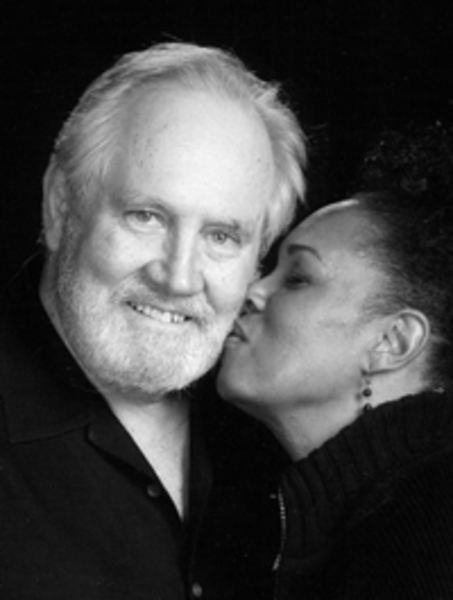
Sharon Kyle and Dick Price
Comments

Powered by RoundtableAn AI/DeFi-powered Enterprise Media Operating System. Learn more at Roundtable.io.© Roundtable 2026. By using this site you agree to the Terms of Use and Privacy Policy