


Jul 31, 2026 7:06 PM
Ancient history does not compel Washington to escalate. War would result from contemporary decisions, imperial ambitions, and the refusal to accept peaceful coexistence.
On May 14, 2026, US President Donald Trump met with China’s President Xi Jinping in Beijing. In his opening speech, President Xi mentioned the “Thucydides Trap.” This refers to an international situation in which an established power feels threatened by a rising power, leading to war between the two.
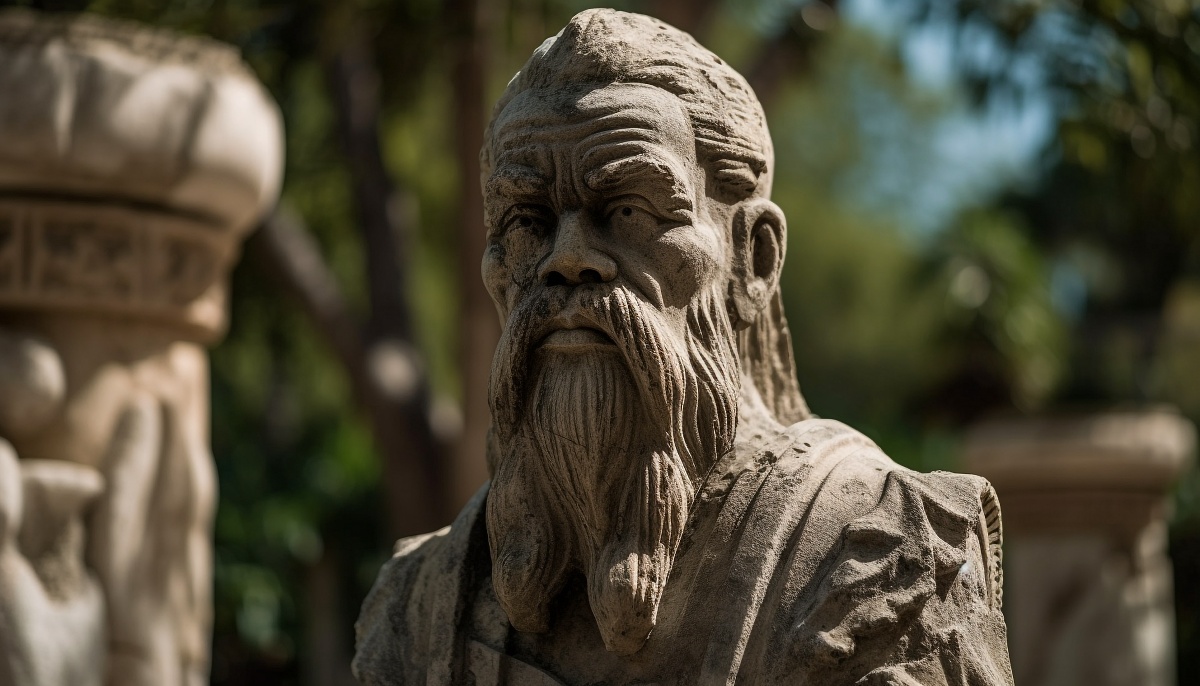
This term was made famous by former US Assistant Secretary of Defense and current Harvard Professor Graham Allison’s book, “Destined For War: Can America and China Escape Thucydides’s Trap?” Thucydides was an Athenian historian and general who chronicled the “History of the Peloponnesian War” between Sparta and Athens. Allison's book draws on a single quote from chapter 23 of the history: "What made war inevitable was the growth of Athenian power and the fear which this caused in Sparta."
In his book, Professor Allison cites sixteen historical cases in which there was an established power and a rising power, and noted that twelve of those cases led to war, only four avoided war. Allison frames the US as an established power feeling threatened by a rising China, and very accurately warns that a war between them would be catastrophic for both and would risk a total nuclear war.
But is the theory of the “Thucydides’s Trap” true?
Related stories
Dr. Richard Hanania, president of the Center for the Study of Partisanship and Ideology and a research fellow at Defense Priorities, says no, the theory of the “Thucydides’s Trap” is false. Hanania states that “unclear definitions, omitted variable bias, and selection bias” create a badly biased theory. In his view, it fails to conform to basic statistical methodology.
Asian scholar and commentator KJ Noh also debunked the theory in a recent interview. In private correspondence, he further elaborated: “The complex message of Thucydides is completely different from the simplistic way that Allison is framing it. Different chapters cover different themes and "traps". Prominent among them is the greed, violence, mission creep, and imperial overreach of Athens. These chapters contradict Allison's framing of conflict as historically inevitable. Thucydides' narration shows that the path of violence was deliberately chosen, not structurally pre-ordained. Escalating US aggression towards China is also a deliberate choice, not an inevitability. By misappropriating Thucydides, Allison is attempting to give a scholarly veneer of inevitability to unnecessary and foolish choices of aggression."
Reading Allison’s book, the aggressors in the sixteen historical cases he names are all Western Colonial Period nations plus Japan, which copied and joined Western imperialism during the Colonial Period up through WW2. But this is an extremely small, narrow, and relatively homogeneous subset of nations. There are 195 nations in the world, and many of their thousands of historical wars had quite different causes. This confirms Hanania’s reference to unclear definitions, a selection bias, and a variable bias. Colonial Period aggressor nations were, however, driven by greed and violence, as KJ Noh said of the Athenian Empire.
This brings us back to the United States and China. Professor Allison recently warned, “.... business as usual [and] diplomacy as usual will produce history as usual. And history as usual will be a catastrophic war that neither China nor the US will survive.”
Allison is obviously correct about the dangers of a catastrophic, possibly nuclear war. But are we talking about American “business as usual,” or Chinese “business as usual?” The two are not the same. China has existed for 5,000 years, and the US for only 250. The difference in experience and behavior is almost the opposite of each other. We can highlight the difference by asking one simple question: When was the last time China invaded Iraq? ANSWER: China has never invaded Iraq, not even once in 5,000 years. That is in spite of China being geographically much closer to Iraq than the US is. In 5,000 years, China has seen the comings and goings of many great empires, in Europe and elsewhere. Through the ancient Silk Roads, China was aware of many of them, but never felt any need to challenge or make war against them. China fought wars on its borders, but never pursued world conquest like the West did during the Colonial Period. China developed gunpowder during the Song dynasty, a thousand years ago, and held a monopoly on gunpowder for four hundred years before anyone else developed it. Yet with a large country, good resources, an advanced culture, and a four hundred year monopoly on gunpowder, China did not go out to conquer the world in the fashion of the West. As Chinese venture capitalist and political analyst Eric Li said, “The Chinese built its Great Wall to keep ‘barbarians’ out, not to invade them.”
Why did China never seek to conquer a global empire? China recognized early in its development that conquering and managing a huge empire was an overreach that would entangle China in endless wars, drain its people and resources - exactly where the US finds itself today - and eventually cause China’s own collapse. As numerous Western and other empires came and went over 5,000 years, China’s strategy - secure your own borders and trade rather than fight with the rest of the world - proved its wisdom time and time again.
In his speech, President Xi Jinping said, “I always believe that our two countries have more common interests than differences. Success in one is an opportunity for the other and a stable bilateral relationship is good for the world. China and the United States both stand to gain from cooperation and lose from confrontation. We should be partners, not rivals. We should help each other succeed and prosper together and find the right way for major countries to get along well with each other in the new era.”
From the Chinese point of view looking over thousands of years, Xi was simply stating the obvious. China has seen nations and empires destroy themselves with wars of conquest time and time again, and has no interest in playing that losers’ game. China’s “Belt & Road Initiative” is the New Silk Road. In ancient times both Europe and China benefited from trade and peaceful relations, and for China, this is “business as usual.” If we heed Allison’s warning of a “.... catastrophic war that neither China nor the US will survive,” this is the way to both peace and mutual profit. Our most fundamental common interest is physical survival, and we can only do that together. If ancient Europe and China could thrive together for thousands of years, so can we today.
Comments

Powered by RoundtableAn AI/DeFi-powered Enterprise Media Operating System. Learn more at Roundtable.io.© Roundtable 2026. By using this site you agree to the Terms of Use and Privacy Policy