


Jun 14, 2026 4:20 PM
Updated Jun 14, 2026 4:23 PM
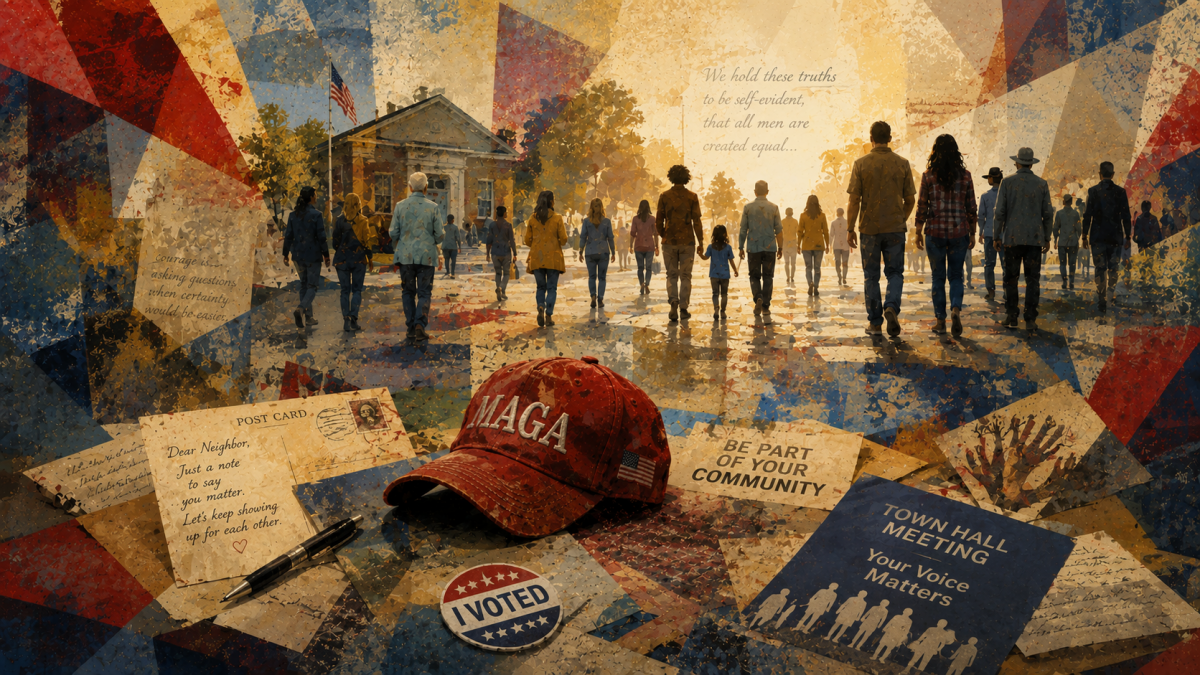
A week spent wearing a MAGA hat offers an unexpected lesson about political polarization, human nature, and the courage required to challenge our own beliefs.
I recently read an unusual essay by a man who claimed he wore a MAGA hat for a week and kept a journal of people's reactions. Whether every detail is exactly as reported, I cannot say. Social media is not known for rigorous fact-checking. But the piece stayed with me.
What struck me first was that he did it at all. In a time when most of us stay within our own political circles, he deliberately stepped into unfamiliar territory.
Second, people responded. Not just casually, but emotionally. Some welcomed him as an ally. Others treated him as an adversary. Complete strangers made assumptions about his values, his beliefs, and even his character based on a single symbol.
But what interested me most was that after a week of gathering evidence, he was still confused.
Related stories
That may be the most honest part of the story.
We live in an age that rewards certainty. Politicians are certain. Television commentators are certain. Social media is overflowing with certainty. Yet most real life is far more complicated.
The writer did not conclude that Democrats were right about everything or that Republicans were right about everything. Instead, he discovered that people often stop seeing one another the moment they see a label.
As someone who spends time writing postcards, attending rallies, observing elections, and talking with people from many walks of life, I recognize that temptation. It is easier to categorize people than to understand them.
As I reflected on the essay, I realized that what impressed me was not the hat. It was the courage.
Not bravery. Courage.
Bravery is often associated with danger, with dramatic acts performed in extraordinary moments. Courage is quieter. It is the willingness to face uncertainty, risk criticism, and question one's own assumptions.
The writer risked being misunderstood by people on both sides. More importantly, he risked discovering that the world was more complicated than he had imagined. He did not emerge with a simple answer or a triumphant conclusion. He emerged with more questions.
That takes courage.
As our nation approaches its 250th birthday, I find myself thinking often about courage. Not only the courage of soldiers and founders, but the courage of ordinary citizens. The election workers who quietly protect the vote. The volunteers who collect food for neighbors in need. The people who write postcards, attend meetings, speak up at city councils, and keep showing up even when progress seems slow.
Democracy requires more than strong opinions. It requires curiosity. It requires humility. It requires the courage to look beyond labels and see the human being standing in front of us.
I have no desire to wear a MAGA hat. But I do admire the impulse to test one's assumptions rather than simply repeat them.
Perhaps that is the lesson I carried away: not that the writer found answers, but that he was willing to remain uncertain long enough to learn something.
And in these divided times, that may be a form of courage.
Postscript: I recently heard an interview with a former Marine who has written a new book titled Courage Can Save Us. He drew an intriguing distinction between bravery and courage, a distinction that stayed with me as I read this essay. Perhaps courage is not the absence of fear or doubt. Perhaps it is the willingness to keep asking questions when certainty would be easier.
Comments

Powered by RoundtableAn AI/DeFi-powered Enterprise Media Operating System. Learn more at Roundtable.io.© Roundtable 2026. By using this site you agree to the Terms of Use and Privacy Policy