
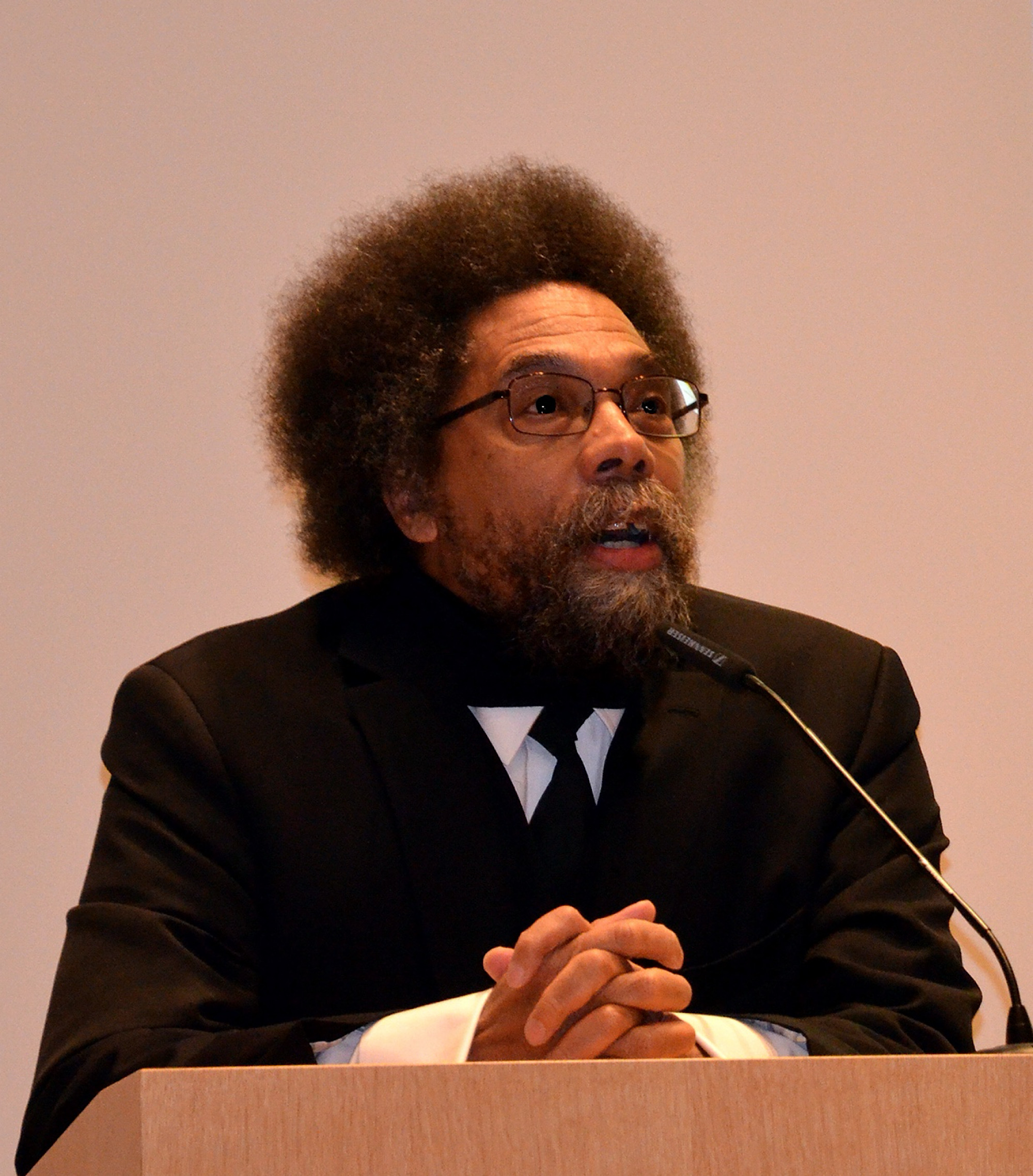
Bernd Schwabe, CC BY-SA 3.0, via Wikimedia Commons


In Truth Matters, West asks “How do you generate possibilities of dialogue in the face of dogma?” Answer: critical engagement. Truth and genuine dialogue first.
Jul 10, 2025 12:23 AM
Updated Jul 10, 2025 11:19 AM
In Truth Matters, West asks “How do you generate possibilities of dialogue in the face of dogma?” Answer: critical engagement. Truth and genuine dialogue first.
I have been intrigued by Cornel West for about fifteen years ever since I discovered that he wrote the following about the great Russian writer Anton Chekhov (1860-1904):
I find the incomparable works of Anton Chekhov—the best singular body by a modern artist—to be the wisest and deepest interpretations of what human beings confront in their daily struggles. . . . I find inspiration in his refusal to escape from the pain and misery of life by indulging in dogmas, doctrines or dreams as well as abstract systems, philosophic theodicies or political utopias.
In short, Chekhov provides exemplary tragicomic dramas, subject to multiple interpretations, for serious thinking and wise living. . . . Yet his acute sense of the incongruity in our lives is grounded in a magnificent compassion for each of us. Chekhov understands what drives the cynic without himself succumbing to cynicism. . . . Chekhov leads us through our contemporary inferno with love and sorrow, but no cheap pity or promise of ultimate happiness. (The Cornell West Reader, xv-xvi)
Although I noted back then that one writer referred to West as the“pre-eminent African American intellectual of his generation,” I have not always agreed with him. For example, his decision to run as a third-party presidential candidate in 2024 - too often such candidacies take votes away from my preferred choice. Nevertheless, anyone that values Chekhov as much as West does must have other valuable things to say.
And West’s recent co-authored article in The Washington Post (WP), “To save themselves, universities must cultivate civic friendship,” seems proper, as does his 2025 book, Truth Matters: A Dialogue on Fruitful Disagreement in an Age of Division, written with the same co-author, Robert P. George. (For more on both West and George, see here.)
Related stories
'To Save Themselves, Universities Must Cultivate Civic Friendship'
The authors, who are ideologically opposed - West to the Left, George to the Right - agree that universities need to reject any Trumpian (or other) “demands or conditions that would compromise basic principles of academic freedom and freedom of thought, inquiry and speech.” But, they also recognize that ideological polarization is a major contemporary problem.
“The troubling stories are familiar: family members estranged over political differences; friendships collapsing because of a person’s vote in a presidential election; students being socially ostracized for stating unpopular views.”
Thus, their main point is that universities need to foster at their institutions civic friendship — “the bond of mutual respect and willingness to cooperate for the sake of the common good, even across significant disagreements or divisions.” The authors argue that universities should “recognize, and act consistently with the recognition, that reasonable people of goodwill can respectfully disagree about controversial — indeed, even the most important, life-defining, and identity-forming — questions.”
As someone who recently wrote “Tolerance: In This Time of Great Polarization a Much-Needed Liberal Value,” I couldn’t agree more. And I especially like their emphasis on working “for the sake of the common good.” Too often, who we vote for depends on what a candidate can do for ME.
"Truth Matters"
To begin with, I was happy that West still loves Chekhov - “I’m a passionate lover of Anton Chekhov,” and as his co-author writes of West, “Chekhov, Cornel’s greatest hero.” (West and George alternate in presenting their views.)
In their book George states,
“Cornel is a truth seeker. He’s got opinions just as I have opinions, he has beliefs and convictions, just as I have beliefs and convictions. But he’s the kind of scholar who has not fallen so deeply in love with his opinions that he values them over truth. A truth seeker is someone who is always willing to subject his opinions, whatever they may be, no matter how deeply held, no matter how cherished, to criticism. Cornel wants to get to the truth of things.”
Truth Matters contains seven chapters with such titles as “Truth and Faith” and “Confronting Truth in History.” As a historian, I am especially concerned about the latter, and five years ago my “In This Election Year We Historians Need to Insist on Truth-telling” appeared on the History News Network (HNN) website.
More recently I have been especially troubled by the second-term Trumpian approach to history and quoted words that indicate that Trump wishes “ to misrepresent it [history] as a single story, seeks to divide populations into ‘us’ and ‘them’ by appealing to ethnic, racial, or religious differences . . . [to use] propaganda and anti-intellectualism to create a state of unreality.” And he also wishes “to justify hierarchies of race or religion . . . [to exploit] feelings of resentment and victimhood.”
Regarding truth in general what I wrote in 2020 seems more true today than even back then: “Michiko Kakutani’s The Death of Truth: Notes on Falsehood in the Age of Trump [2018] wrote of the ‘monumentally serious consequences of his [Trump’s] assault on truth.’”
Also, “Donald Trump and His Assault on Truth: The President's Falsehoods, Misleading Claims and Flat-Out Lies [2020] by several members of The Washington Post Fact Checker team declared, ‘Donald Trump, the most mendacious president in U.S. history . . . . [is] not known for one big lie — just a constant stream of exaggerated, invented, boastful, purposely outrageous, spiteful, inconsistent, dubious and false claims.’”
In many ways Truth Matters reminds me of some of the thoughts of the late Pope Francis. Take, for example, the case of ideology, which often blocks out truth. In a 2013 sermon Francis warned Christians against making their religion into an ideology: “When a Christian becomes a disciple of the ideology, he has lost the faith. . . . But it is a serious illness, this of ideological Christians. . . . His attitude is: be rigid, moralistic, ethical, but without kindness.” He urged Christians “to remain humble, and so not to become closed.”
In his 2015 “Address to the U. S. Congress” he used the word “dialogue” a dozen times. As I wrote back then, “Dialogue is undoubtedly an important concept to him. He eschews rigid dogmatism and intolerance and believes that people should reason together to advance the common good.”
In Truth Matters, West asks “How do you generate possibilities of dialogue in the face of dogma?” His (and his co-author’s) answer is “critical engagement”--by putting truth and genuine dialogue, not ego, first.
Comments

Powered by RoundtableAn AI/DeFi-powered Enterprise Media Operating System. Learn more at Roundtable.io.© Roundtable 2026. By using this site you agree to the Terms of Use and Privacy Policy