


Jul 27, 2026 10:42 PM
Updated Jul 29, 2026 1:39 AM
Zayd Ayers Dohrn discusses the Weather Underground, interracial solidarity, political risk and transforming a fugitive family history into a guide for the next generation.
Children rarely understand the lives their parents lived before they were born. For Zayd Ayers Dohrn, that gap was larger than most.
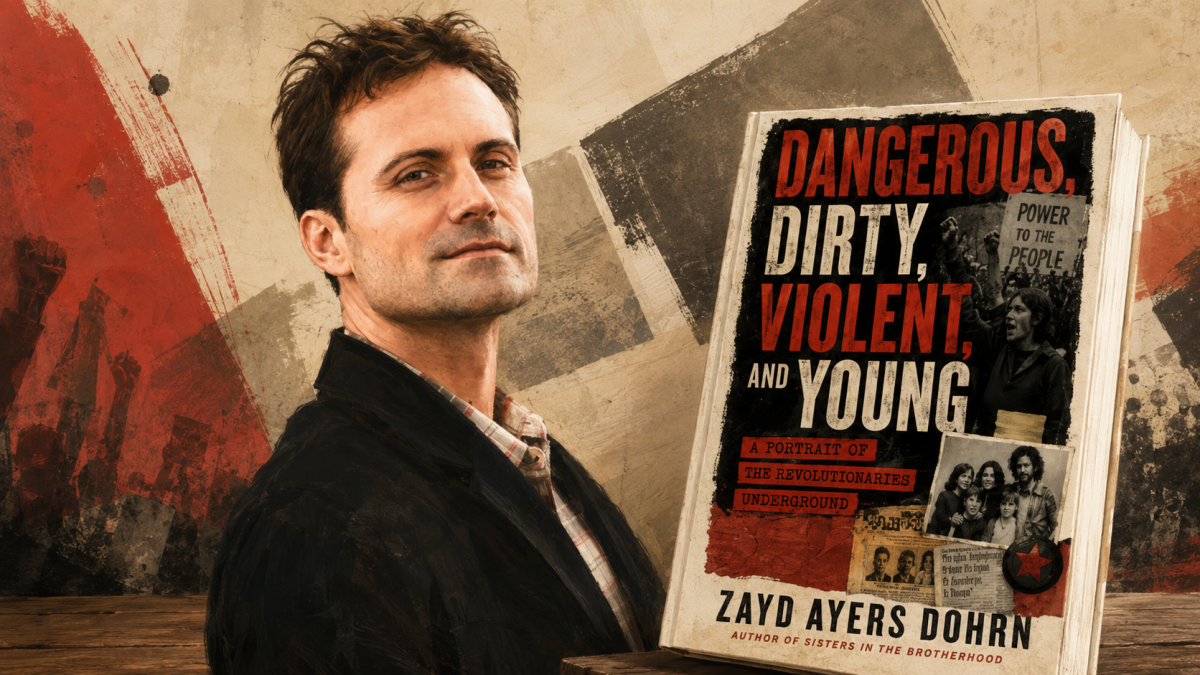
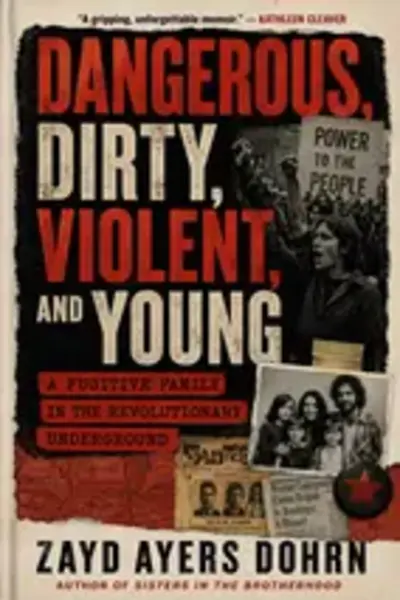
Born in San Francisco in 1977, Dohrn entered a family shaped by revolution, repression and life underground. His parents, Bernardine Dohrn and Bill Ayers, were leaders of the Weather Underground, the militant antiwar organization that emerged from Students for a Democratic Society during the Vietnam era. His memoir, Dangerous, Dirty, Violent and Young: A Fugitive Family in the Revolutionary Underground, revisits that history as an inheritance carried by a child who became a father, writer and teacher.
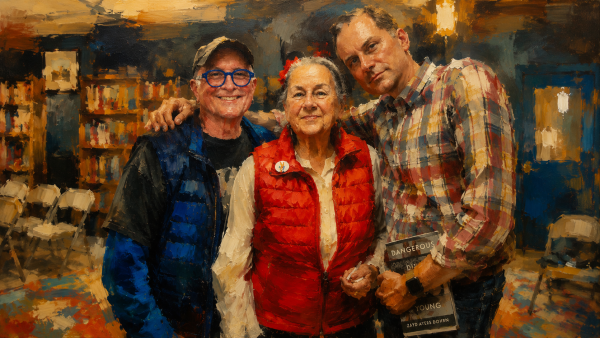
In an LA Progressive conversation with co-founders Dick Price and Sharon Kyle, Dohrn described the book as a family story and a political past that still speaks to the present.
Price began by drawing a line between the upheavals of the 1960s and today’s crises: widening inequality, resurgent racism, endless war and public despair. What, he asked, can today’s activists learn from the Weather Underground?
Related stories
Dohrn’s answer was neither romantic nor dismissive. The period offers “notes of inspiration and notes of caution,” he said. One source of inspiration was the effort to build militant, interracial solidarity despite violent state repression. He pointed to Fred Hampton’s Rainbow Coalition in Chicago and to the later alliance between the Weather Underground and the Black Liberation Army. These coalitions preserved organizational autonomy while learning how to struggle together across racial and political differences.
That history matters because interracial solidarity is often praised but rarely practiced at the level of real sacrifice. Dohrn drew an important distinction between being an ally and being a comrade. His parents did not simply offer rhetorical support to Black liberation movements. They tried to place themselves alongside those movements, accepting risk and following Black leadership.
Kyle pressed him on a question that has long animated her own work: What causes some white people to commit themselves seriously to dismantling racism when so many others do not?
Dohrn said his mother’s transformation was especially striking. Bernardine Dohrn grew up in a Republican, second-generation immigrant household in suburban Wisconsin. Her father held racist views. Nothing about her upbringing made a future as a revolutionary anti-racist appear inevitable.
But her political education came through experience. As a young law student in Chicago, she worked with Martin Luther King Jr. and participated in his housing campaign. King was assassinated. She later formed alliances with Fred Hampton and the Chicago Black Panthers. Hampton was killed by Chicago police in a raid coordinated with the FBI. Again and again, she watched Black organizers, friends and mentors face exile, imprisonment or death.
For Dohrn, his mother’s radicalization cannot be separated from her recognition of the violence protecting the American racial order. She came to see racism as embedded in national institutions and enforced by government power.
The memoir also brings that political history into the intimate space of childhood. Kyle recalled a scene in which young Zayd asked his father whether there was anything he could do that would make his father stop loving him. Bill Ayers first assured him there was not. When pressed, he finally said perhaps if his son became a racist.
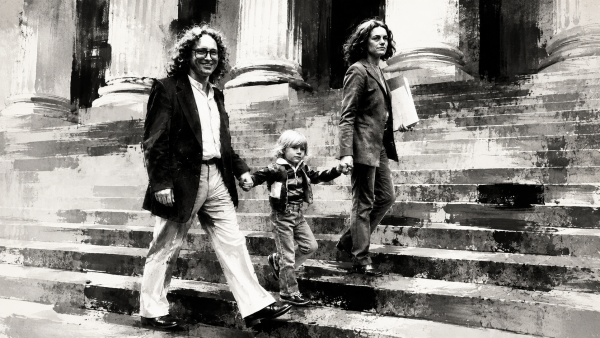
The exchange reveals the family’s unusual structure. Zayd’s parents were loving and protective, but they had also made commitments that preceded his birth and extended beyond the family. They believed that raising a child and fighting for a better world were not competing duties. In their view, refusing racism and war was part of being a responsible parent.
Writing the memoir forced Dohrn to look at that conviction from both sides. As a child, he felt the consequences of living in a family shaped by danger and secrecy. As a father, he better understands the belief that parents owe their children more than private safety. They also owe them a livable world.
That does not mean he treats risk casually. Dohrn said he hopes never to face a situation in which he must endanger his family. But he challenged the assumption that protecting one’s children must always override every public obligation. American culture accepts that soldiers, firefighters and police officers may risk their lives in the name of a larger cause. Why, then, should resistance to grave injustice automatically be treated as irresponsible?
The moral question, he suggested, is contextual. What would any of us have done during slavery, fascism or another system we now recognize as intolerable? At certain moments, history forces people to decide where they stand.
That question leads directly to the meaning of “radical,” a word Kyle said she had resisted since childhood. Growing up Black, she was called radical for refusing to straighten her hair and wearing an Afro. The label often said more about the fears of others than about her actual beliefs.
Dohrn agreed that the word is elastic and frequently used as a weapon. He returned to its Latin root, radix, meaning “root.” To be radical, in that sense, is to examine the roots of injustice rather than merely manage its symptoms.
By that definition, he considers himself a radical. He supports racial equality, reparations for the descendants of enslaved people and restitution for Indigenous people whose land was stolen. These positions are treated as extreme, he observed, though they may be straightforward responses to historical theft.
At the same time, Dohrn distinguishes his temperament from that of his parents. He is a playwright, novelist, professor and intellectual rather than a revolutionary organizer. He understands why the Weather Underground moved outside conventional politics amid FBI repression and escalating war, but he does not claim that their choices should be mechanically repeated today.
The most important lesson may be their refusal of passivity.
Dohrn noted that activists in the late 1960s did not suddenly leap into militancy. Many had spent years marching, registering voters, holding sit-ins and organizing against the war. By 1969, the war was expanding and Black freedom movements were being violently crushed. Their turn toward more confrontational politics arose from the belief that peaceful, democratic efforts had failed.
The parallel with the present is unsettling. Americans have marched against Trumpism, police violence, attacks on women’s rights and the deportation system. Some have been among the largest demonstrations in the nation’s history. Yet many people still feel that the country’s trajectory has not changed.
That failure can produce despair. It can also produce new forms of radical politics.
Dohrn sees signs of both. He rejects the idea that today’s resistance is insignificant simply because it has not yet won. History may eventually remember this period as one of vibrant activism. The unanswered question is whether that energy can become organized power.
Ultimately, Dohrn does not describe Dangerous, Dirty, Violent and Young as a reconciliation or an indictment. His relationship with his parents did not require either. He calls it an act of history and storytelling: an attempt to understand what he inherited, transform it and pass it to his own daughters.
That may be the memoir’s deepest contribution. It refuses to freeze the revolutionary underground in mythology, whether heroic or monstrous. Instead, it asks what happens when a political movement becomes a family history—and what the next generation chooses to carry forward.
Comments

Powered by RoundtableAn AI/DeFi-powered Enterprise Media Operating System. Learn more at Roundtable.io.© Roundtable 2026. By using this site you agree to the Terms of Use and Privacy Policy