
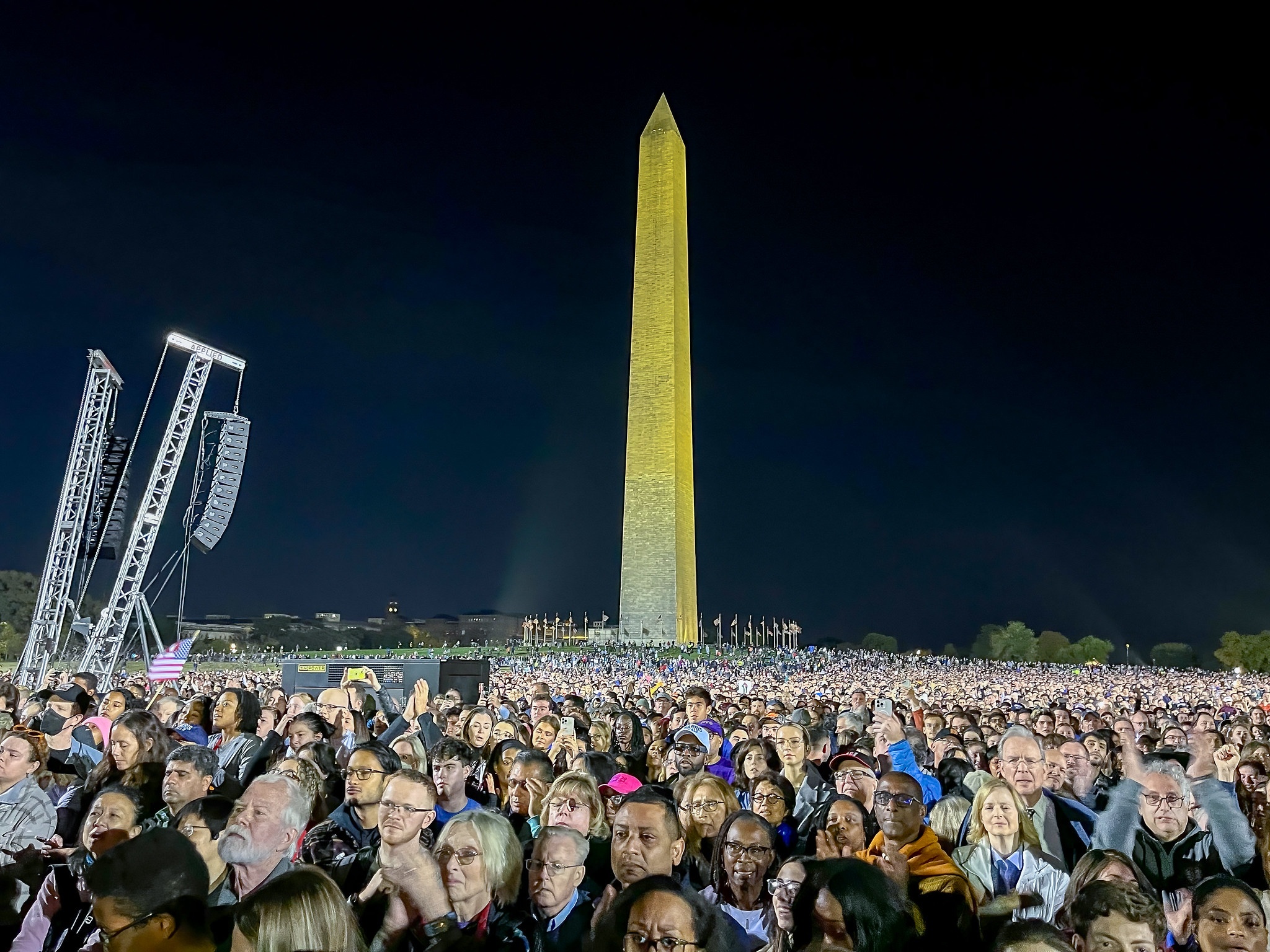
Miki Jourdan • Original License Attribution-NonCommercial-NoDerivs (CC BY-NC-ND 2.0) • Flickr


Blind Spot
Nov 12, 2024 5:09 PM
Privilege, economic disconnect, and a failure to truly champion the marginalized.
As we Democrats look back at a tough election loss, it's crucial to face an uncomfortable reality: the party has developed a blind spot. Despite its progressive stance, the Democratic Party has failed to recognize its own privilege and how that privilege shapes its priorities, its policies, and its failures to connect with the very people it claims to champion. Many of those voting Democrat, especially white, straight, and financially comfortable Americans, align themselves with social justice causes yet often remain insulated from the struggles of those marginalized groups they say they support. This failure to address the economic and social realities of working-class Americans, including those from marginalized communities, has created a disconnect that played a significant role in the party's defeat.
White Privilege in Progressive Politics: An Unspoken Contradiction
Ironically, the Democratic Party—while claiming to be the party of diversity, inclusion, and progress—often displays a kind of privilege that many Americans can see through. White, straight, and financially secure Democrats often lead the charge on social justice issues from positions of safety, able to debate pronouns and reparations from comfortable, economically stable lives. Meanwhile, marginalized communities face immediate concerns around economic survival and safety that these conversations don’t address.
Poor white Americans, in particular, feel alienated when the party emphasizes ideals like diversity, equity, and inclusion without first addressing the economic burdens so many of them share.
Poor white Americans, in particular, feel alienated when the party emphasizes ideals like diversity, equity, and inclusion without first addressing the economic burdens so many of them share. Many feel unseen when they are told they’re privileged solely based on race, while their struggles with poverty, addiction, and insecurity go overlooked. They’re told they have advantages, yet they see no signs of it in their own lives. The economic distress felt by poor and working-class Americans—regardless of race—is real, yet it feels minimized by a party that often focuses on ideological issues rather than survival.
Related stories
The Democratic Party needs to address its own privilege—its white, straight privilege that allows it to assume it understands what marginalized communities need better than they themselves do. Just because someone aligns with progressive values doesn’t mean they’re living the struggles of marginalized people. In fact, many of the white, straight, affluent voices in the party often have more resources and security than those they speak for. This gap creates a sense of frustration and even betrayal among struggling Americans who feel unheard.
Why Trump’s Message Resonates—and Democrats’ Doesn’t
It’s no surprise that Donald Trump continues to draw support from these communities. Despite his wealth, Trump’s message resonates with working-class Americans who feel abandoned by both parties. Trump doesn’t shame his supporters or lecture them on privilege; instead, he validates their struggles and frustrations, albeit in ways that are often disingenuous and based on lies. His disregard for political correctness gives people a sense of freedom from the judgment they feel from progressives. For many of his followers, he represents an escape from the constant pressure to feel guilty about systemic injustices they feel disconnected from.
Trump’s supporters are often willing to believe in his economic promises—even when those promises are empty—because they see in him someone who, at the very least, acknowledges their pain. They’re drawn to his promise of restoring jobs, protecting industries, and fighting for their livelihoods. Democrats, meanwhile, tout strong economic numbers and broad policies while often failing to recognize the localized economic suffering felt in many rural and working-class communities. Trump’s lies are compelling because, for many, they’re more comforting than a Democratic narrative that doesn’t seem to see their economic reality at all.
The Hypocrisy of Billionaires as “Champions” of the Working Class
The rise of billionaires like Elon Musk as self-styled champions of the working class only adds to the irony. Musk and others claim to be “of the people,” touting free speech and anti-establishment values, yet they are products of, and beneficiaries of, a system that thrives on inequality. Musk’s companies, for instance, have been criticized for poor working conditions, anti-union stances, and labor abuses, all while receiving significant government subsidies. He represents an irony that’s hard to ignore: billionaires claiming to uplift the working class while actively benefiting from their exploitation.
The appeal of figures like Musk, similar to Trump, lies in their ability to tap into working-class discontent without challenging the very system that keeps them in power. They offer a convenient narrative that promises economic relief and empowerment without questioning how they got their wealth in the first place. In reality, billionaires need economic inequality to maintain their status, yet they craft public personas that paint them as rebels against the very structures that empower them.
The Elephant in the Room: The Failure to Address Economic Pain
At the core of the Democratic Party’s missteps is its failure to address the economic pain shared by millions. This failure goes beyond race, gender, and identity politics. Many Americans, regardless of background, are struggling to survive, and they don’t see that struggle reflected in the Democratic platform. For poor white Americans in particular, there’s a sense of exhaustion with conversations around equity and inclusion that feel far removed from their daily struggles. These issues, while deeply important, can feel like luxuries when someone’s primary concern is survival.
The Democratic Party has failed to understand that issues of privilege and social justice must be grounded in economic reality. Before people can care about broad social issues, they need a stable foundation—a job that pays well, affordable housing, healthcare, and education. By overlooking this, the party has alienated people who desperately need economic relief but don’t see their voices reflected in the current priorities.
Moving Forward: Balancing Social Justice and Economic Justice
To reconnect with Americans, the Democratic Party must recognize that it’s not a question of either/or. Economic justice and social justice are not separate issues. Real change will only come from a balance that respects and addresses the survival needs of all Americans while continuing to fight for a just and inclusive society.
The party needs to start listening, not lecturing, and it needs to validate the struggles of those who feel left out.
The party needs to start listening, not lecturing, and it needs to validate the struggles of those who feel left out. This includes embracing policies that directly address the economic challenges facing Americans—affordable housing, healthcare, fair wages, and education. It also means acknowledging that while race, gender, and identity are critical issues, they cannot be discussed in isolation from the economic realities facing so many people.
The truth is, the Democratic Party’s progressive values are only as strong as their foundation in economic justice. Without addressing poverty, job insecurity, and healthcare access, social justice remains a distant goal. To create a more inclusive coalition, the party must open its doors to everyone—Black, white, brown, rural, urban, and working-class alike—and listen with empathy, humility, and respect.
Conclusion: Rebuilding Trust Through Empathy and Action
The Democratic Party’s path forward lies in recognizing its own privilege and using that recognition to create a truly inclusive movement. The goal isn’t to abandon social justice or environmental causes; it’s to ground them in the real, immediate needs of all Americans. If the party can address poverty, healthcare, education, and economic security as foundational issues, it can build the trust and unity it needs to move forward.
Real change starts by acknowledging the struggles of all people, regardless of background or location, and by fighting for a society where no one is left behind. In doing so, the Democratic Party can not only win back the trust of the American people but create a more just and resilient society for everyone.
DemocraticBlindSpot • EconomicJusticeNow • UnityThroughEmpathy • ListenToTheStruggling • PrivilegeInPolitics • ForAllAmericans • EconomicReality • EmpathyInAction • EconomicInequality • ProgressivePrivilege • JusticeAndSurvival • InclusiveProgress • WorkingClassStruggles • RebuildTrust • GroundedInReality
Comments

Powered by RoundtableAn AI/DeFi-powered Enterprise Media Operating System. Learn more at Roundtable.io.© Roundtable 2026. By using this site you agree to the Terms of Use and Privacy Policy