

Jun 11, 2020 3:00 PM
Updated Feb 10, 2022 10:10 PM
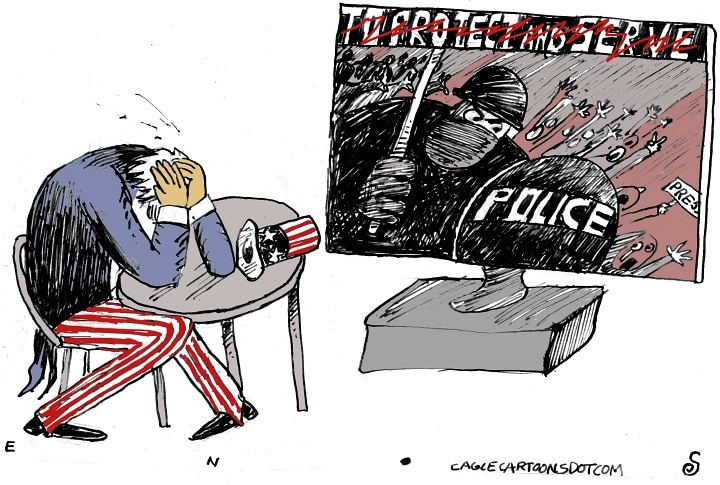
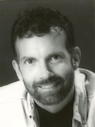
Johnny Townsend: When police officers stood up for each other no matter what, were they the Jets or the Sharks?
One of the most discouraging lessons for me as I try to become anti-racist rather than merely “non-racist” is the near constant discovery of the many biases I still harbor. Last Sunday, protesters held a Black Lives Matter rally in my Rainier Beach neighborhood, and my husband decided to meet with some elderly white friends at the start of the protest on Othello. I wasn’t up for walking the entire route from there to the Safeway just down the hill from me, so I told Gary I’d meet him at the end of the march. I’d injected extra insulin both the night before and again in the morning to decrease the chance I’d need to urinate before the rally was over. The march was supposed to begin at 2:00, and I started down the hill around 2:20, knowing even my abbreviated walk would take me twenty-five minutes. I expected to find a nice, safe place to observe everything in plenty of time.
Walking down the last part of 51st, I passed a house with a dozen balloons staked in the front yard. A young man who’d just graduated high school had been shot in his car and killed a few weeks earlier, around 10:30 at night. I remembered that upon first hearing of the shooting, my immediate thought had been that the young football player about to begin his studies at the University of Washington was probably black.
Nope. He was white, I learned. And seeing the balloons reminded me that I still made biased assumptions all the time.
Finally on Rainier, I saw food booths, voter registration booths, and music speakers set up in a cordoned off part of the Safeway parking lot, the section where two young men had been shot and killed a couple of days after the football player. Our local news reports had described the shooting as “gang related.” Was that a code word for black, I wondered? Were these Asian gang members? Latino? White gangs? The area where the rally had started on Othello was considered the most diverse zip code west of the Mississippi River, and we couldn’t be far behind.
Related stories
When police officers stood up for each other no matter what, were they the Jets or the Sharks?
When I’d first read Le Morte d’Arthur in grad school, I’d been struck that the Knights of the Round Table were nothing more than a violent gang, complete with gang colors. When they encountered knights wearing any other color, they fought, sometimes to the death, even if there was no provocation. It was all about “courage” and “honor.”
When police officers stood up for each other no matter what, were they the Jets or the Sharks?
Several protesters walked around with signs, and by the time I reached Henderson, I could see a group of about twenty-five folks chanting on the corner. Already, I’d seen a wide variety of people. There were black protesters, white, Asian, Latinx, some old but mostly young. A good many protesters wheeled their young children in strollers. A few carried infants. Eight-year-olds waved signs.
I didn’t have a sign. The art supply store where I usually bought poster board for protests was closed because of the pandemic, and the one sign I had on hand at home read, “What have you got against a stable climate?”
Metaphorically, the slogan was still appropriate, since a healthy and stable social atmosphere benefitted everyone.
“Demand Seattle PD Accountability!”
“86 Shots. Why?”
“Breathing is a right!”
Cars passing the corner honked in support. A dump truck driver blasted what sounded like a foghorn long and loud. Drivers raised their fists out car windows or sunroofs in solidarity. One was a middle-aged Asian woman. Several young Asians were in the group of two dozen protesters on the corner. One held a sign saying, “Chinese and Lao Black Lives Matter.” I couldn’t tell from this distance if the word “for” had been inserted before “Black,” and the odd grammar confused me.
Until I remembered that interracial relationships weren’t limited to white and black or white and Asian. Even at a Black Lives Matter rally, I kept thinking in white-centric terms.
Two police motorcycles pulled out into the intersection unexpectedly, causing two cars to screech to a stop. The officers stood beside their bikes and indicated that the northbound lanes of Rainier were now closed to traffic. That must mean the marchers were on their way.
The protesters on the corner began chanting, “Blue Lives Matter! Black Lives Matter!” in a round, half of them calling out the first chant and the others the second chant. “Blue Lives Matter!” “Black Lives Matter!” “Blue Lives Matter!” “Black Lives Matter!”
How nice, I thought. This was going to be a peaceful protest. Some of the worst violence had occurred over a week earlier at a demonstration downtown—Gary and I had left just before it erupted—and since then, only the protests up on Capitol Hill still got rough late in the evening.
Glued to the national news every night, we’d watched as an elderly man with a cane shuffled along a Salt Lake City street until police officers knocked him down for moving too slowly, as police in North Carolina vandalized a first aid table set up by nurses. We’d watched as police vehicles plowed into crowds, as officers slashed tires on cars they assumed belonged to protesters. We’d watched as they pulled down face masks and zapped non-violent protesters with pepper spray. We’d watched as a woman pleaded with officers not to take her insulin. We’d watched as hundreds of reporters all across the country were arrested, were beaten with clubs and shields, as they were shot with pepper balls, with rubber bullets that left one reporter permanently blinded in one eye.
A few more people began arriving from the neighborhood, others who apparently also wanted to avoid the march down Rainier and just be present for the conclusion. A young black man joined a friend, telling him he’d just gotten off work. Several young women in hijabs held signs. An elderly woman in a brilliant yellow khimar limped by and joined a few other protesters. Rainier Beach was home to several thousand African immigrants.
Probably half the protesters I’d seen so far were black, the others a mixture of everything else. Almost everyone wore face masks to help guard against COVID-19.
A black man waving an American flag drove by.
Most of the signs were in English, some in Spanish, some in unidentifiable languages using the Latin alphabet but others using Asian characters, hanzi or kanji or something else. I was woefully ignorant. At least the “Filipinos for Black Lives Matter!” was clear enough.
The protesters on the corner were chanting again. “Get your knee off my neck!”
After two or three minutes of that, the chant turned into, “No justice! No peace! Prosecute the Police!” for the next few minutes.
It was only 3:30, and I was already tired. My plantar fasciitis was almost healed, but my feet were feeling the stress from standing so long. The weight I’d gained during the stay-at-home order was putting additional strain on my lower back. I was mortified every time I looked in the bathroom mirror, knowing everyone judged me the instant they saw me. Most of my adult life, I’d been thin and made friends easily, but now as a fat man, I was aware how much effort it took for people to hide their disgust at my appearance. I couldn’t stop judging myself as well.
Earlier that morning, I’d read an essay by a trans man comparing how he’d been treated before as a woman to how he was treated now as a man.
Hadn’t Black Like Me been published in 1961? The book was as old as I was, and there were still folks in positions of power calling for a military crackdown on non-violent protesters doing no more than demanding the right to life.
I sat down at the bus stop near the corner, but only a couple of minutes later, a black man in his forties hobbled up with his suitcase and I moved off so he could sit. I headed over to the bus stop on the opposite side of the street but could only rest for ten minutes before another homeless man came over to ask for a light.
I looked at my watch. Going to protests was sure boring. I’d heard some of my friends claim the “riots”—the word they preferred—were all about people being stuck at home too long and just needing something to do. But protests weren’t fun. They weren’t thrilling and exciting. The forecast today was for rain, so I’d worn my jacket, which also made it easier to carry my cell phone and the swim goggles I might need if the police fired chemical weapons. But the sky was sunny and hot.
And the marchers were nowhere in sight.
Some of these tedious protests lasted several hours. Even during my ACT UP days in the 1980s, I hadn’t been able to last more than an hour or two at a protest.
I thought of Charles, a man I’d met at a French Quarter gay bar. He was from Shreveport, but we met in his hotel on Dauphine for all of our subsequent hook ups. He liked to give me hickeys and spit in my face during sex. Totally not my thing, but I liked knowing he was having fun.
It was a story I couldn’t even tell my gay friends. “It’s people like that who give gays a bad name.”
Charles led the first ACT UP protest I participated in at City Hall. I remembered him pulling a noose around his neck as the news team filmed.
He was dead a year later.
“Blue Lives Matter!” “Black Lives Matter!” The group on the corner was chanting again. I was a little closer now, and something seemed off about the chant. It almost sounded like they were saying, “Blues Lives Matter!” Odd.
I thought about John Belushi. But the chant must be referencing blues singers in the African American community.
I tried listening more carefully. Were they saying, “Jews Lives Matter!”? A sizeable Jewish community lived in Seward Park not too far away.
Oh my god.
They were saying, “Whose Lives Matter? Black Lives Matter!” How could I be so fucking stupid?
By 4:00, the leading edge of the march was approaching. More and more people were arriving from the neighborhood as well. A young black woman walked past wearing a shirt that said “Selma.” Another’s shirt said simply, “Melanin.”
A white woman held a sign up high. “Racism is small dick energy.”
Others walked by with still more signs. “No new youth jail!”
“Support black businesses!”
“It’s time to use our outside voices!”
With that, I heard more chanting. “Hands up! Guns down!” followed by, “The people united will never be defeated!” An oldie but a goodie.
A young woman rolled by in a wheelchair. Another woman set up a table to sell COVID masks sewn with African prints.
And now hordes of people passed along Rainier toward the Safeway. I walked ahead, not wanting to be caught in the thick of the crowd. I’d stumbled once on Bourbon Street during Mardi Gras and been carried along by a throng of revelers, my feet not even touching the ground for several seconds. Ever since, I’d had a fear of being trampled.
I’d seen on the news earlier a police officer on horseback in some other city deliberately trampling a female protester with her hands up. Who could even keep track anymore where the latest act of brutality had been committed?
As I moved ahead, looking back every few seconds to monitor the progress of the marchers, I realized I wasn’t actually part of the protest, after all, despite my intentions. I was merely a spectator. As a white man, someone not even holding a sign, how could anyone know I was there in support rather than for some other reason? I could see now that most of the protesters with signs had easily found materials without heading to the art supply store. There were signs made from pizza boxes, from Amazon boxes, from whatever people had lying about the house or in their back yard.
“Justice is a choice!”
“Don’t hope for change. MAKE change!”
“Stay woke!” The protester could probably have added a second phrase, “They shoot you when you’re asleep.”
Two black men and a black woman sat on horses on the corner of 51st and Rainier. One held up a Black Lives Matter flag. Another held the red, black, and green striped Pan-African flag. Each rider held a fist high in the air. Several protesters posed with the horses and their riders. It looked inspiring…until I saw two white women stand beside the horses, smiling broadly for their photos.
It made me question if the women were treating these other protesters as props, the photos evidence of their white goodness. I knew I’d be writing about the afternoon’s events later. Did that mean I was doing the same thing with words, using the entire rally as a prop?
A protester walked by with a sign proclaiming, “White silence is violence.” Another sign explained, “We just want to live.” Still another sign declared, “Love your black neighbor as yourself.”
Love even in a committed relationship was complicated. I hadn’t seen Gary in the crowd yet, wondered if he was disappointed I hadn’t walked the full route with him, if he’d been disappointed I hadn’t joined him in the protest he’d participated in a few days earlier. He regularly took part in more protests than I did.
Someone walked by with a Rainbow flag, traditionally used for LGBTQ pride. This one had two additional stripes, one brown and one black.
I already knew two gay friends who didn’t approve of the change.
A young black man passed with a sign. “How many weren’t filmed?”
Another young black man was on his cell. “No,” he told someone firmly, “you’ve got to get down here. You need to be here.”
A white woman held her sign high over the crowd. “All mothers were summoned when he asked for his mama.”
Two signs with apple themes passed in close succession. “Good apples don’t keep the bad apples around to spoil the whole bunch.”
“Are you a bad apple or a good apple?”
I could hear the question as asked by Glenda, the Witch of the North.
“You can look the other way but you can never say again you did not know.”
People were starting to drift off, but looking north along Rainier, I could still see hundreds of people who hadn’t arrived yet. Two or three thousand must have passed me already.
I’d seen a sign on the news earlier. “Carpe momentum.” Nothing like a dead language to talk about racism.
We just had to accomplish something meaningful now, at this moment. I had to, Gary had to. We all had to.
But I felt the same embarrassment I used to feel at church dances. If I went out on the floor and danced, I was going to look like a fool.
It was clear many more biases would keep popping up every time I tried to be an ally. I’d seen a video once: “Stupid dog tricks.” I expected I could probably compile one depicting my “Stupid white mistakes.”
I hadn’t felt like a fool dancing with a man for the first time at a gay Mardi Gras ball.
A young black woman walked by with a sign. “Pessimism is a tool of oppression.”
I knew that people in almost every major European city, people throughout Latin America, in several African countries, in Australia and the Philippines and South Korea and Japan, were protesting along with us.
I started making my way slowly back up the hill, standing aside to let other pedestrians pass. The pandemic wasn’t over yet. Twenty-five minutes later, I reached the house. I opened the recycle bin and pulled out a piece of cardboard that had previously housed a case of vanilla protein shakes. I took it inside and started making a sign.
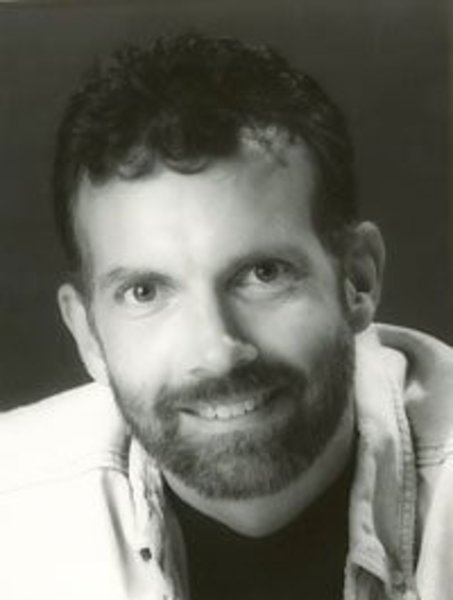
Johnny Townsend
Comments

Powered by RoundtableAn AI/DeFi-powered Enterprise Media Operating System. Learn more at Roundtable.io.© Roundtable 2026. By using this site you agree to the Terms of Use and Privacy Policy