
Attribution-NonCommercial-NoDerivs (CC BY-NC-ND 2.0)


Jan 24, 2023 2:00 PM
The Four D behaviors—irrespective of issue—share a common trait: they displace a core concern by shifting attention to other matters, often craftily.
Years ago, a student in one of my graduate-level classes asked about resistance to change. I gave her a textbook response, but the student wanted more. “I mean,” (pausing to refine her inquiry) “What has been your experience?” “The most difficult challenge,” I began, “is when the response is (in so many words) 'There’s nothing to see here. Move on!’”
The student still wanted more. “So, what do you call that?”
“The Four D’s,” I responded, Deny, Defend, Deflect, and Defer.”
- Deny anything is wrong or, at the very least, minimize negative impact.
- Defend whatever is under the microscope.
- Deflect blame.
- Defer solutions (stalling by “kicking the can down the road”).
Related stories
“Organizational/institutional leaders do it a lot,” I continued, “and everyday people do it for many reasons, including loyalty to an organization/institution and when personal identity is connected firmly to whatever is being questioned. A button gets pushed, and personal defense mechanisms kick in. ‘Attacking it means you attack me.’ There is family, of course, but there is also one’s country, city/town of residence, religious affiliation, political party, alma mater, and personal interests (e.g., gambling). The long list includes a variety of issues that people hold dear (e.g., the right to own guns).”
At that point, I no longer needed to answer questions because those around the table knew from personal experience what I was saying. Progressives rattle cages by raising questions, publicizing facts, identifying responsible parties, calling for change, and acting. Doing that makes many people uncomfortable: they would rather not see what is now in public view, and the possibility of change threatens self-serving preferences.
Moreover, Progressives can find themselves on opposite sides of an issue with other politically liberal and progressive acquaintances. For example, while everybody I know is concerned about climate change, the response is different when the topic turns to the role and value of electric vehicles. The divide is wider on other issues, such as child abuse perpetrated by Catholic priests. Many Progressive Catholics I know have lost faith in the Catholic Church as an institution, while others respond differently. They deny the scope of wrongdoing, defend the Church for all the good it does, deflect blame (e.g., it happens in other organized religions), and defer to church authorities (have faith in them) to address the matter responsibly.
“Looking the other way” is often the result of blind loyalty and wishful thinking. But, for whatever reason, extraordinarily bad things happen when leaders launch into a Four D’s routine, and situations worsen when affiliates follow their lead. How so? It gives leaders political license to stay the course. With support from your base, why change? So, either nothing happens, or there is minimal change only.
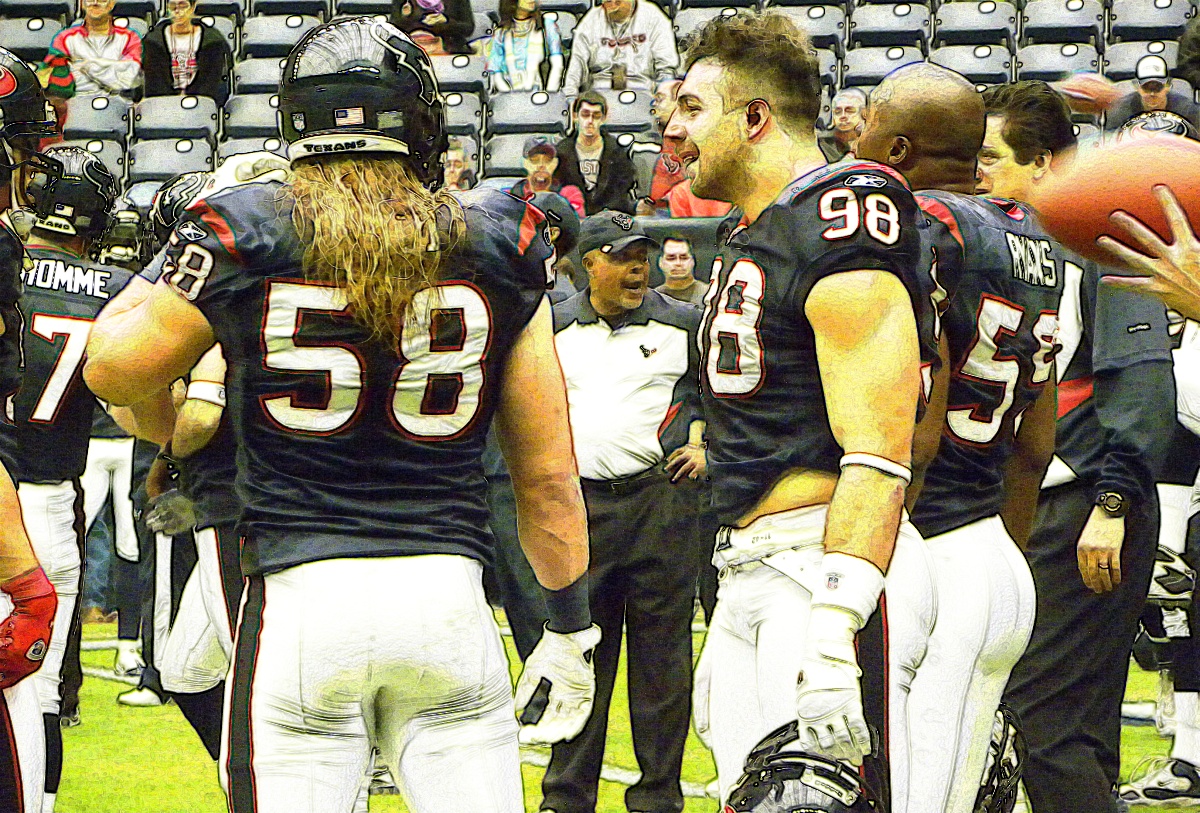
I have observed that dynamic numerous times and ways. It happened again recently regarding a personal interest, namely, the impact of playing football on players’ health. Damar Hamlin of the NFL’s Buffalo Bills suffered a cardiac-related, near-death experience on the field of play. He would have died there had it not been for the swift response of the onsite training/medical staff and his rapid transport to a nearby Level III Trauma Center. The near-death experience was viewed by millions across America and the world on ESPN Monday Night Football over New Year’s Weekend, and it should have been another wake-up call for the NFL and its fans about the dangers of contact football.
Did it have that effect? For some, yes. For others, no.
The vivid and real-time reminder of football’s dangers was noted in commentaries published soon after the event. For example, Dr. Chris Nowinski, a behavioral neuroscientist, described the health risks football players assume when they play the game, particularly concerning cerebral damage and cardiovascular impact. “The episode has focused international attention on the physical dangers of football,” Nowinski wrote, “with many parents wondering anew if they should allow their children to play and some fans questioning whether it’s ethical to support the sport at all.” In another essay, Dave Zirin, sports editor at The Nation, chided the NFL and its fans: “It should be an opportunity to debate the sport of football itself, and whether it is safe for human beings to participate. But instead, “they want us to discuss how inspirational Damar Hamlin is for his teammates and fans across the country.”
But those commentaries (and those like them) do not represent the mainstream response. I say that because I manage a sports blog, and most of the content there is what I would classify as “a mainstream view of sports.” What does that mean? It means that mainstream responses include “The Four D’s”: denying the severity of the problem (e.g., Hamlin’s cardiac-related injury was rare, a one-off), defending the NFL (e.g., it managed the situation correctly by not resuming the game), deflecting the matter (e.g., millions of dollars were raised for heart-related causes), and deferring the solution (e.g., football is safer than ever, and it will get safer in the future).
The Four D behaviors—irrespective of issue—share a common trait: they displace a core concern by shifting attention to other matters, often craftily. For example, each statement associated with a “D” in the football example is either true or a reasonable assertion. But none of the responses deals with the fundamental matter addressed by Nowinski and Zirin: What can be done to address the impact of playing football on players’ current and future health? The reason for displacement? The question either does not matter, or other things matter more.
In truth, the Four D’s are not just distracting. The behavior represents a powerful form of resistance to change. Always with political intent, it fits well in today’s world of social obfuscation with spin, “alternative facts,” bullshit, deception, and fabrication—all of which aid self-serving objectives. That reality makes progressive activism more challenging than ever, especially when institutional leaders, the public, and those with deep pockets join forces to blunt, if not defeat, progressive resolve. Sadly, that happens all the time, and it is especially onerous when institutions founded to serve the public good don’t, and private interests/preferences prevail.
The Four Ds—Deny, Defend, Deflect, and Defer. It’s what institutions do. It’s what people do. It’s what Progressives combat … and (sadly) often do themselves.
Liberals and Progressives must avoid The Four D’s in their personal lives and collective work, disingenuous as it would be to practice what they call out in others and despise. I wish I could say we do not have to worry about that possibility, but I have seen it happen too often in myself and in others to draw that conclusion. One pattern is clear: we can be less willing to hold ourselves accountable to the standards we apply to others (e.g., classified documents found in Joe Biden’s personal possession).
So, we must be forever mindful of and vigilant about that Navajo-derived saying, “When you point a finger, three fingers are pointing back at you.”
Comments

Powered by RoundtableAn AI/DeFi-powered Enterprise Media Operating System. Learn more at Roundtable.io.© Roundtable 2026. By using this site you agree to the Terms of Use and Privacy Policy