


Jan 27, 2026 4:31 PM
Resistance requires more than peaceful protest. It requires non-violent actions that obstruct, slow down, and disrupt the system.
Renee Good’s last words to her murderer were, “That’s fine, dude, I’m not mad at you.”
Alex Pretti’s last words were to a woman who’d just been pepper sprayed. “Are you okay?”
Almost 50,000 people took to the streets in a general strike in Minneapolis, in -10 degree weather. Hundreds of people picketed the airport. Thousands clogged the Target Center. We’ve seen folks blocking traffic, pouring water on streets and sidewalks to form ice, seen folks tow away ICE vehicles, heard tens of thousands of whistles blowing to alert neighbors.
What more can we do? What more must we do?
Related stories
I just received a copy of “Simple Sabotage Field Manual,” written in January 1944 by the US Office of Strategic Services, the precursor to the CIA, encouraging folks in occupied countries to perform small, everyday acts of sabotage, delay, and obstruction. My copy was published by Bluestone Books in Canada. They’re sending us tips from our past anti-fascist selves to help us resist our current fascist leaders, our own masked Gestapo agents.
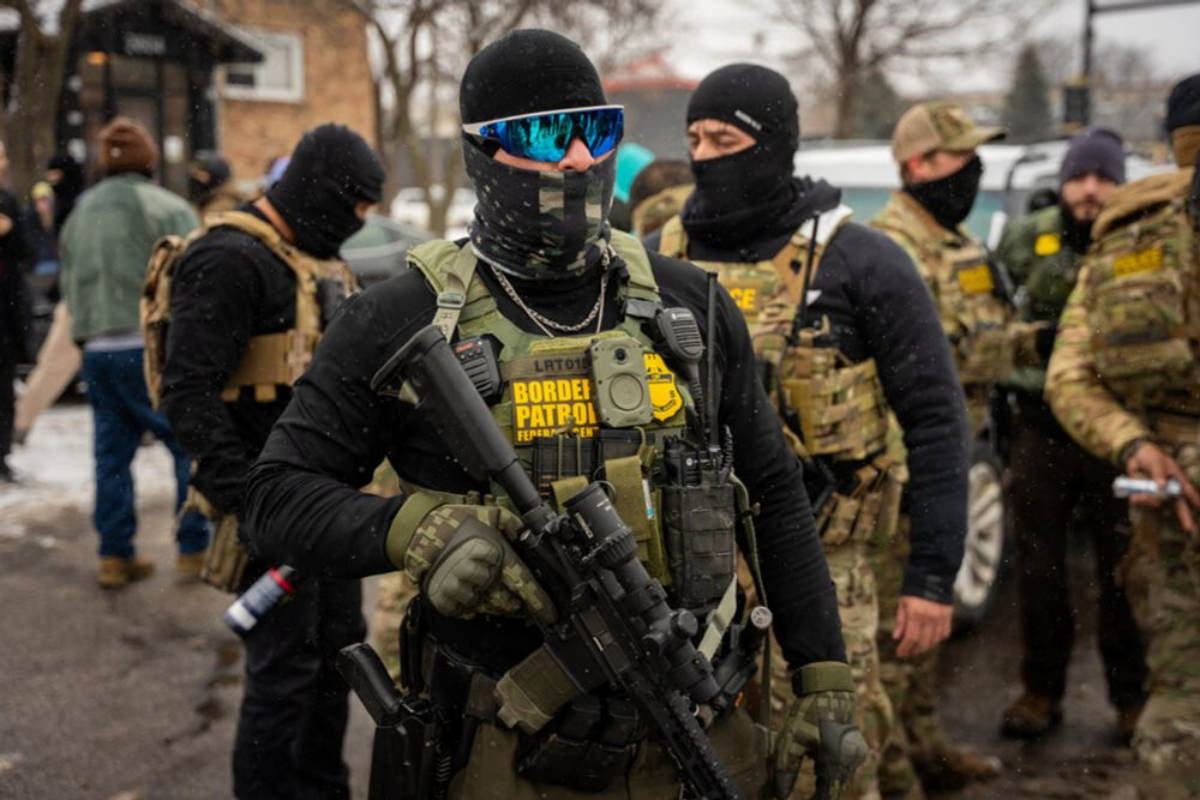
For a bunch of Islamophobes, ICE agents sure do wear a lot of burqas.
Given the changes in technology over the past 80 years, many of the suggestions in the manual aren’t especially useful. With the vast amounts of surveillance in the US today, even the applicable suggestions aren’t easily implemented. If nothing else, though, reading the short manual, little more than a long pamphlet, helps us decide if we want to do anything at all under our current circumstances, and if we do, what?
The writers encourage folks under an occupied power to gauge their risks carefully, to perform minor acts not easily traceable. The idea isn’t to stop the oppressors in their tracks, merely to impede, to slow them down, to give others time to do the more complicated work.
Suggestions include dropping a tool by “accident,” either to damage a piece of equipment or simply to slow down the day’s work by a few moments. Ask endless questions, pretend we don’t understand and need something explained again. We can bring up irrelevant issues, misunderstand orders or directions and perform something diligently but inaccurately. Work as slowly as possible without risking getting fired.
Under our current regime, Democratic officials could use procedure to slow and impede every action by the fascists in power, but they’ve proven time and again we can’t rely on them to do any such thing. It’s up to everyday folks to do the heavy lifting. We are the people we’ve been waiting for.
We can foment disagreements among coworkers or others who are supporting the regime (Nazis, for the original target audience). We can assign inefficient workers to important tasks, forget to order toilet paper, set off sprinklers in hotels or other buildings occupied by the oppressors. Put too little air pressure in tires, knock wheels slightly out of alignment so they wear more quickly.
The troublemakers writing the pamphlet suggest jamming locks with pins or other material, clogging toilets, “forgetting” where we left tools and taking our time finding them. We’re told to let our work tools get dull, even deliberately make them dull. Add impurities to oils and lubricating systems. Put grains of rice, pieces of rubber bands, or coins into systems to cause a breakdown or overheating.
Much of the information in the book is geared toward factory workers, electricians, plumbers, and others with specialized skills or access. But even when the tips aren’t what many folks today might be able to use, they do help us generate ideas for what might be effective in our own particular circumstances.
Should folks slash tires? Break side mirrors? We’ve seen folks making purchases at Target and then clogging the Returns desk by demanding refunds. People organize targeted boycotts of the most problematic corporations. Bands play loudly at night outside hotels where ICE agents try to rest after the day’s atrocities. Some people drive slowly around and around parking lots where agents rent cars.
Store owners are locking their doors, posting signs that read, “We’re open. Please wait for us to unlock the door. Thank you for your understanding,” to protect staff from the secret police surging in without warning.
Resistance requires more than peaceful protest. It requires non-violent actions that obstruct, slow down, and disrupt the system.
Unfortunately, it’s not possible to avoid repercussions, including fatal ones, even if we commit zero acts of violence. Renee Good was sitting in her car with her dog. Alex Pretti was directing traffic and then helping a woman who had been attacked with chemical weapons.
As Taylor Swift says, “Haters gonna hate.” Murderous tyrants are going to murder. There’s no going back from this point without active resistance. And the reality is that going back won’t be smooth and painless. We don’t recover from cancer without chemo or surgery. We can’t vote our way out of tyranny.
Any act of resistance, even an act of “simple sabotage,” can get the person performing it killed. But so can doing nothing. Some folks are targeted simply because they’re in the wrong place at the wrong time. While we already know that “the cruelty is the point,” so is the randomness of that cruelty. Bad guys want us to feel too scared to do anything anywhere, to believe our only option is to go along with their kidnappings and killings.
They also want us to feel alone, isolated. Let’s remember that solidarity is our superpower.
The general strike in Minneapolis was a strong response. We’ll need to expand that response in the coming weeks and months.
History doesn’t repeat, it echoes. Each iteration of authoritarianism or fascism is unique. But we can learn from history and adapt those lessons.
The message from our past Antifa government, published as “Simple Sabotage Field Manual,” tells our current anti-fascist citizens that we can indeed resist fascism, not only abroad, but right here at home as well.
Thank you, Canada, for the reminder.
Comments

Powered by RoundtableAn AI/DeFi-powered Enterprise Media Operating System. Learn more at Roundtable.io.© Roundtable 2026. By using this site you agree to the Terms of Use and Privacy Policy