


Artificial Intelligence, Real Inequality: How Big Tech Is Replacing Labor With Profit
Jul 24, 2025 11:30 PM
Updated Jul 25, 2025 3:05 PM
The trillion-dollar takeover: AI, automation, and the new robber barons remove the need for labor
Many laws of the universe appear to be about equilibrium and balance. There is a saying that “Fire cools and water seeks its own level”. Eventually, a fire has no more fuel and burns itself out. A river might flow over its banks and create an entirely new river, or it may flow into the ocean and recede back to its original level.
Nature seeks balance.
At this point in the timeline of humanity, we have far more than enough madness, conflict, war, greed, racism, misogyny, cruelty, hatred, and willful ignorance.
Our oversupply of greed has led to more vacation homes, yachts, jets, Airbnbs, offshore tax havens, and private equity. Unbridled and insatiable greed has led to more suffering, hunger, and poverty.
Related stories
The Indigenous Hopi people have a powerful word, “Koyaanisqatsi”, which means "life out of balance". (It is also the first film in an important trilogy about hyper-consumerism, conflict, and war -and how we are destroying ourselves.
And this is all on the precipice of getting worse.
There are many incredibly capable, well-educated people working to rapidly evolve Artificial Intelligence or AI.
(There are also scientists working to improve A1 Steak Sauce; it’s important not to get the vastly different efforts confused).
Aside from researchers and software engineers leading the global commercialization of AI, there are also many futurists talking about the great discoveries in medicine, mathematics, agriculture, climate action, and more that will rapidly evolve with the emergence of commercially available artificial intelligence.
Leading companies such as Google, Microsoft, Anthropic, NVIDIA, and OpenAI are pouring over $250 billion into research because they are noble and will do all they can in order to further the quality and dignity of life for all. Whoops. Ha Ha Ha Ha Ha. Just kidding. Investors and technology companies are pouring in massive amounts of money to gain a market edge for what is anticipated to grow to a $5+ trillion market capacity over the next ten years. For comparison, globally, the entire Oil & Gas industry is currently a $4.3 trillion market and has been operating commercially for 160 years.
Those who are familiar with my previous writing have insight into my thinking about wealth. The productivity of labor generally yields societal value. The value is then allocated to workers, executives, investors, and taxes. And I’ve written there is wealth that is earned (based upon productivity, risk, and innovation) and wealth that is accumulated (through corrupt lobbying for tax advantages or erosion of societal protections, externalities (a company shifting their costs to all of us), and wealth transfers -things like a windfall inheritance with little or no tax liability).
If you think of wealth in any society, think of a big delicious-looking latticed apple pie. The role of a good government is to implement economic policies that can grow the pie and fairly allocate slices to workers, executives, investors, and taxes (necessary to provide and maintain the societal infrastructure businesses need to be successful).
When a new disruptive industry is born, it can have a substantial impact on a nation’s “wealth pie”. Trains, automobiles, flight, telephones, and computers have all led to the emergence of new businesses, industries, and growth of the “wealth pie” in the United States and beyond. Companies compete for talented and experienced workers so they can capture more of an emerging industry. This has been the case from the first time Fred or Barney went around starting fire pit fires for their village in exchange for some delicious barbequed pterodactyl (hopefully plant-based, but probably not). Value is created, the wealth pie gets larger, workers, executives, and investors benefit.
AI is unique in that it destroys the convention of (human) labor driving productivity and participating in the value creation.
Too few people are talking about the economically destructive nature of Artificial Intelligence (AI). As is, a system that is closer to pure capitalism, a so-called “Free Market” system (whose advocates are often the same snake-oil con artists who talk about “Trickle-down” economics and pass egregious legislation like the Trump/GOP “Big Beautiful Bill” that eviscerates an already broken healthcare system to transfer more wealth to the already wealthy through extended tax cuts and loopholes) will be destroyed by AI.
Years ago most all labor was performed by workers. Until there were labor unions often executives and/or investors that extracted most of the economic value that was the result of workers.
Executives could grow profit by either increasing sales revenue or decreasing business costs.
- The use of machines and automation on the factory floor started with the automated loom in 1784 in England.
- Less human labor is needed for productivity and product consistency. The product yields remain the same or are increased. This results in more profit and less has to be shared with workers, and more to executives and investors.
- ATM machines replace local bank branches
- The number of tellers necessary to provide customer service is decreased, meaning the bank can maintain operations and generate more profit, which is shared with executives and investors.
- Self-service checkout
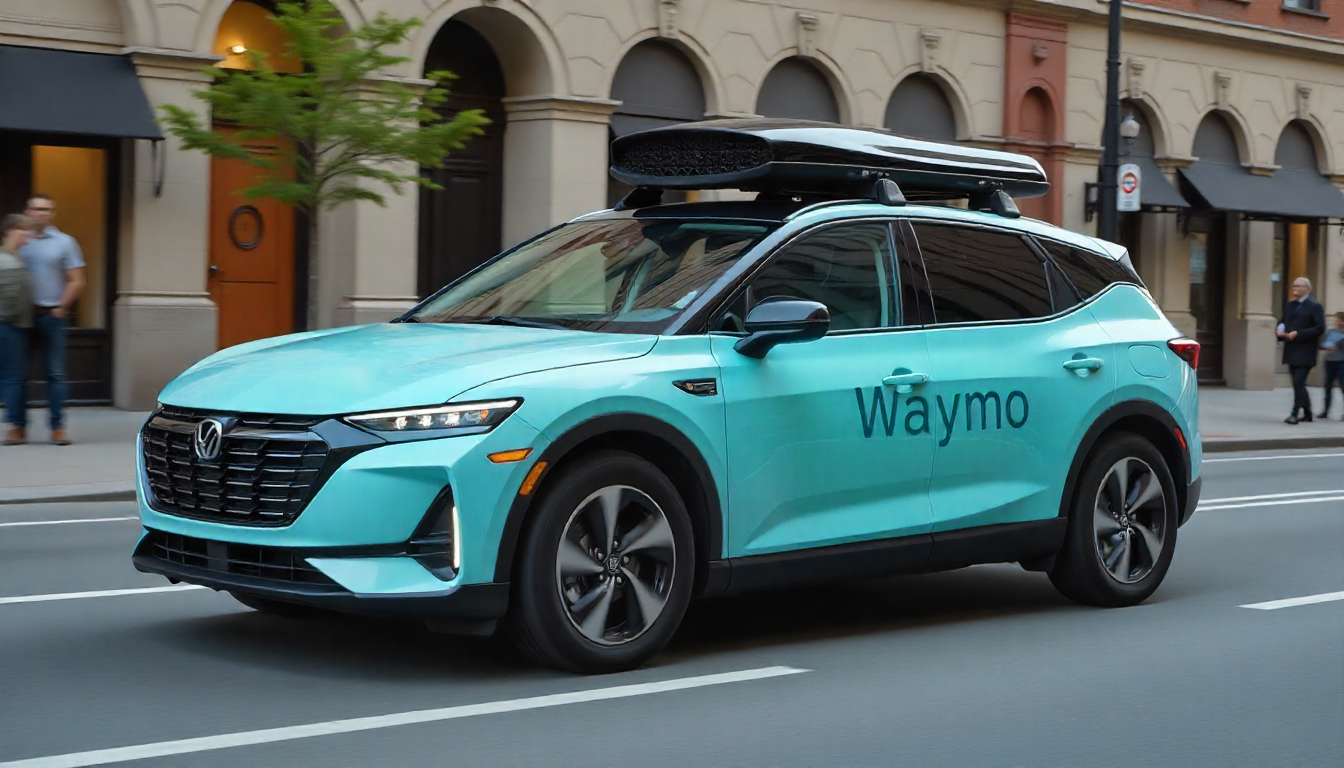
- Stores like Home Depot, Walmart led the charge in implementing self-service checkout. This displaces workers, lowering company costs, generating more profit which is then, repeat after me, shared with executives and investors.
Private equity, institutional investors, and executives recognize that ATMs don’t need healthcare and don’t ask for a raise. Self-service checkout lanes don’t require parental leave. Self-driving vehicles don’t need weekends off to be with family. Factory automation has eliminated the need for many skilled union workers in the manufacturing sector (aside from all of the work shipped outside of the U.S. by CEO’s choosing record profits over U.S.-based employees.)
The emerging general availability of AI has opened up a vast array of applications that are reducing the demand for human labor and will continue to do so. This is bad news if you were hoping for that raise or a promotion. It’s worse if you have graduated with a degree, are now saddled with student loans, and are trying to enter the workforce and begin your career (and loan repayments). There is and will be continuing reduced demand for radiologists, medical diagnosticians, financial analysts, paralegals and legal research, insurance and loan underwriters, software developers, accountants and bookkeepers, market research analysts, writers, human resource analysts, technical support, call center staff, graphic artists, and more.
The problem with the commercialization and general availability of AI and robotics is the loss of jobs. Some futurists have stated that the commercialization and growth of a brand-new industry historically has sparked new jobs, such as those writing improved prompts for various AI models.
If you are the CEO of a large enterprise, you are working to grow your revenue and reduce your costs because, simply put, your revenue minus your costs represents profit. Because the majority of your costs are related to your employees, managers and workers, (maybe you have to employ 1,000 financial analysts and 2,000 call center representatives) and you can implement an AI-based solution, producing the same amount of revenue with automation, your revenue remains constant, you eliminate most of your salaries and benefits costs, and now all that remains is profit while 3,000 people who may have had a decent paycheck and health benefits are now looking for work.
When you then project this at a national level, you have millions of people looking for work while all of the profit that has been generated now goes directly to a handful of institutional investors and those already holding extreme wealth (the less than 1%).
If we fail to reimagine economics in a society driven by profit, we will rapidly accelerate the concentration of wealth in which a handful of people hold most of the wealth, power, and control of society while everyone else is competing for a few crumbs to provide basic necessities for themselves and their family.
Does anyone with an IQ above 70 believe that the GOP, the Trump/Vance Administration, the GOP-controlled Senate, and the GOP House led by Mike “lil” Johnson, is going to proactively address this looming economic disaster?
The “tech bros” in the shadows of the GOP criminal cabal such as Peter Thiel, Elon Musk, and Mark Zuckerberg, are drooling at the newfound plutocratic wealth and power they will wield for generations.
At the end of the day when you cannot pay rent, when you are charging groceries on your credit card, your car is being loaded on a flatbed to be returned to the finance company, and you are hoping the sharp pain in your chest subsides because you can’t afford health insurance, Medicaid has been destroyed, and you know your medical bills will bankrupt you do you believe whether you are wearing a red hat or not will matter?
Make no mistake. This Administration has demonstrated time and again who they are. Their priorities are tax cuts and loopholes for their wealthy donor friends, plundering our National Parks for profit, and destroying any aspirations of justice, equality, and democracy in the United States.
By examining recorded history, we know the consequences of prolonged and extreme wealth inequality. A society succumbs to authoritarian tyranny, then there is a major uncontrollable inflection point, and then a massive disruption leading to violence, death, destruction, suffering, and a failed state. AI can offer many incredible benefits to humanity; however, we lack the infrastructure or political will to proactively prepare for the consequences of AI.
Comments

Powered by RoundtableAn AI/DeFi-powered Enterprise Media Operating System. Learn more at Roundtable.io.© Roundtable 2026. By using this site you agree to the Terms of Use and Privacy Policy