


Jan 20, 2014 3:58 PM
Updated Feb 10, 2022 10:55 PM
Equality and Democracy -- Progressives should be prepared for the long game, building critical mass to seize the national agenda.
A New New Deal
Progressives were pleased to hear President Obama declare recently that he will devote the rest of his presidency to addressing the issue of growing inequality in American society.
This is welcome news because democracy in the highly unequal society that we are becoming will be ever more problematic.
The fundamental issue is that democracy assumes the equality of all citizens, while we have an economy that is generating ever more extreme inequality.
Related stories
It’s not clear just how much Obama can actually do about this, given the current and predictable gridlock in Washington. It’s not even clear how deeply he understands the problem: he chose to couch it in terms of assuring the opportunity for social mobility, which is just the way Republicans like Congressman Paul Ryan like to define it.
A better way to think about it is the systematic disempowerment of the bottom 90 percent of the population, as those at the top acquire ever more wealth and its resultant political power.
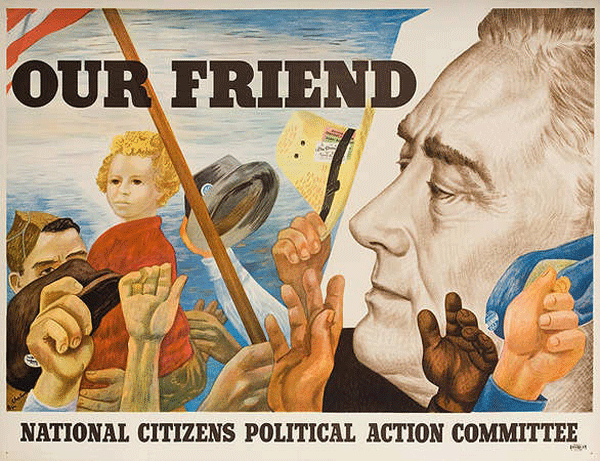
But it’s essential for progressives to look at this issue as a central part of a very long-term struggle. The historical precedents have much to teach us. Even as Big Business became hegemonic after the Civil War, the roots of resistance were being laid which ultimately produced the Populist movement, and the Progressive reforms of the early twentieth century.
Those reforms in turn laid the foundation for the deeper reforms of the New Deal era and its echo in Johnson’s Great Society programs of the sixties.
Conservatives responded to these waves of liberal reforms with their own long game: they never wholly accepted the New Deal and Great Society. Beginning in the 1950s, conservative thinkers and writers produced increasingly pointed critiques of big government liberalism.
Conservatives captured the Republican Party in 1964 with the Goldwater campaign, and established their permanent dominance of the party with the election of Reagan in 1980. Reagan was able to shift the national agenda decisively: in retrospect we can see that Johnson marked the end of the New Deal era, and our politics since Reagan follows his agenda even to this day. We are still in the Reagan era.
It was common sense in the New Deal era, before 1970, to think that government ought to progressively expand opportunities for the less advantaged in society. What is common sense now is, to use Reagan’s phrase, “Government is not the solution, it is the problem.” So we find ourselves talking, even three decades after Reagan’s election, about the need to lower taxes and cut programs for the poor. Even Clinton and Obama, however impressive their electoral victories, have not shifted the agenda the way FDR and Reagan did in their times.
Like the conservatives of the New Deal era, progressives should be prepared for the long game, with institutions and networks that can slowly build the kind of critical mass that can seize the moment when it comes to shift the national agenda once more.

John Peeler
Comments

Powered by RoundtableAn AI/DeFi-powered Enterprise Media Operating System. Learn more at Roundtable.io.© Roundtable 2026. By using this site you agree to the Terms of Use and Privacy Policy