



Jun 4, 2024 4:41 PM
Updated Jun 4, 2024 8:19 PM
Balancing tolerance and patience with a passion for peace and justice is often difficult, but we must keep trying.
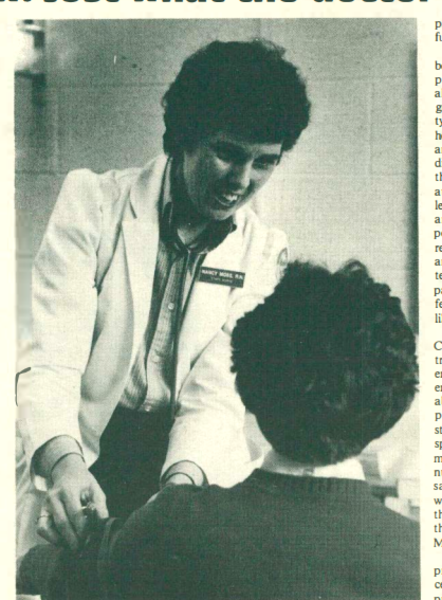
Almost a decade ago, I wrote that “true heroes are more often the people who go quietly about their lives helping others, and only occasionally are they those who receive great recognition for such caring.” Only since her death more than two years ago, have I fully realized that my wife of 58 years, Nancy, was such a person.
She was a nurse and worked as such (full or part time) most of her married life, in both emergency rooms and university health clinics. First in Washington D. C. and later in the Ann Arbor-Ypsilanti (Michigan) area. She was also the mother of two boys (Tom and Dan) and a girl (Jenny).
Soon after her death, one of her co-workers summed up how she worked and loved:
“Nancy was a very special woman, very caring, loving and kind. I watched her work with students at EMU [Eastern Michigan University] Snow Health Center and was always impressed with how dedicated she was in helping others and never judged others. She was loved by all of her coworkers. We have all missed her sweet smile. Prayers for Walt and her children, she loved you with all of her heart.”
Related stories
Nance (as I usually called her) trained to be a nurse at Cincinnati’s Good Samaritan Hospital. It was a Catholic institution, and it was typical of her that she converted to that faith because she was so impressed by the goodness of many of her fellow nursing students. But it was also typical of her to be surprised when asked to pose for a poster to hang on hospital walls urging visitors not to be loud, or when she was selected as one of the three outstanding nurses in her graduating class. As I later wrote in a poem about her, “You never wanted to stand out. You never said, ‘Look at me.’ Love, peace, and harmony was all you wanted, and to feed the squirrels and birds.”

Yes, her love extended into the animal world. At the memorial we had for her, one of her friends recalled the following incident, which occurred when they were out for a morning walk. They saw a skunk trying unsuccessfully to pull a plastic or paper cup off its mouth. Despite the danger of being sprayed, Nance aided the skunk by removing it.
She was not much of a joiner. Working and raising three children (and their various pets)—and helping a husband—kept her plenty busy. But in Wheeling, West Virginia, where I taught for three years, she did serve on the board of a Human Rights group that was formed after the assassination of Martin Luther King, Jr.
Once we moved to Michigan, where I taught at Eastern Michigan U. for four decades, the center of her existence was her family. Throughout most of the 1970s and 1980s, she was always the loving mom that Jenny, Tom, and Dan could turn to. As a young teenager, Jenny fell in love with horses, and bought one with hard-earned money she made, but it was Nance who drove her all around so that she could ride her horse and participate in horse shows.
In the 1980s, I started taking students to Russia and Eastern Europe in the summer—for five or sometimes three-week trips. On a few occasions, Nance and one of the boys accompanied us, but more often she stayed home with all three kids. And she never complained.
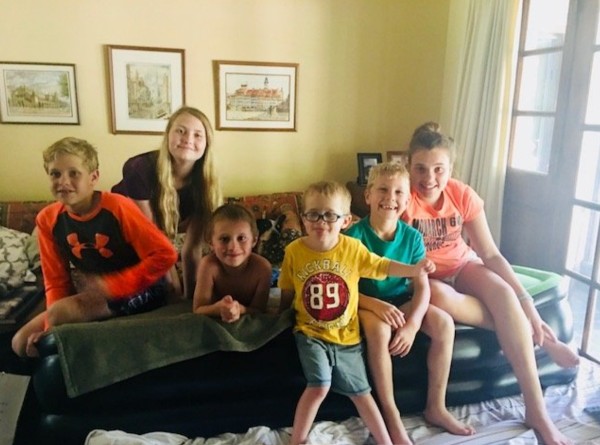
Early in the twenty-first century our grandchildren started to appear—by the time of Nance’s death we had six of them. In 2005, on Nance’s 66th birthday, in order to capture her delight at being a grandmother I wrote her the following short poem
Since your last birthday you’ve had another granddaughter (Amanda).
What a pleasure it is to watch you o doting grand mater
As you read to Alexandra
Or change the diaper of Amanda.
Countless hours have you spent
Over cross-stitching and knitting bent,
As birth mementos and blankets you turn out,
Symbols of your love continuing to spout.
And yet another child is about to come,
Only this time—a grandson.
And all of us will feel great joy
When grandma hovers over her grand boy [Andrew].
Amanda was Jenny’s daughter and our second grandchild, and by the time she was born, Jenny was the only one of our three children still living in Michigan—about 25 miles away from us. (Tom and his family lived in Florida, and Dan would go from Florida to Arizona, and finally to Colorado.) Whenever Jenny needed to leave town or have someone care for Amanda, Nance was always happy to drive up and feed her horses or look over Amanda.
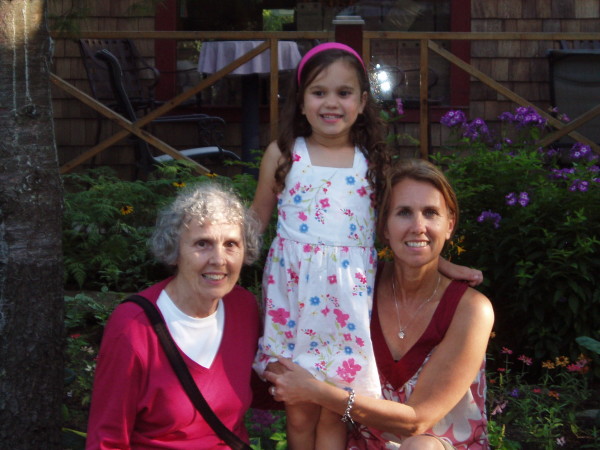
Up until 2013, we visited Tom and Dan in their distant states, and they made occasional trips back to Michigan. Moreover, Nance was always willing to help either of them or their families in any way she could. But, of course, because Jenny lived in Michigan, it was her and Amanda—and, of course, me—that were usually on the receiving end of Nance’s kindnesses.
Then, however, in 2013, Nance was hit by Alzheimer’s, and it was complications from it that eventually, nine years later, took her life. Since LA Progressive was kind enough to post my two-part essay on that nine-year journey, there is no need to repeat details of it here. I’ll only make two short points about it.
- Nance almost never complained or showed signs of feeling sorry for herself.
- Her final words to me, after I told her I loved her, were, “I love you more.”
Each Alzheimer’s story is unique, and caregivers must deal with individualized circumstances. So I’m not sure how unusual the two remembrances I just stated are. But my guess is that they are not that common and were more a reflection of Nance’s personality. The “I love you more” response seems especially amazing coming from someone in the last stage of Alzheimer’s (her neurologist’s diagnosis.) How someone whose brain has been partly destroyed could still express such love seems almost miraculous.
And speaking of miraculous, I’ve now reached the stage of confronting the mystery of mortality and immortality. In that famous novel—and one of my favorites—Doctor Zhivago, that doctor says, “You in others—this is your soul. This is what you are. This is what your consciousness has breathed and lived on and enjoyed throughout your life—your soul, your immortality, your life in others. And what now? You have always been in others and you will remain in others. And what does it matter to you if later on that is called your memory? This will be you—the you that enters the future and becomes a part of it.”
Whether our “immortality” extends beyond this, whether our souls continue to live on in some sort of heaven, no one knows for sure. We can think it does, we can hope it does, but that’s all we can have—faith.
But the two years plus since Nance’s death have taught me how real and meaningful Zhivago’s words are. In the days immediately following Nance’s death, the kids and I talked about her a lot and agreed that the best way we could honor her memory was to try to emulate her good points.
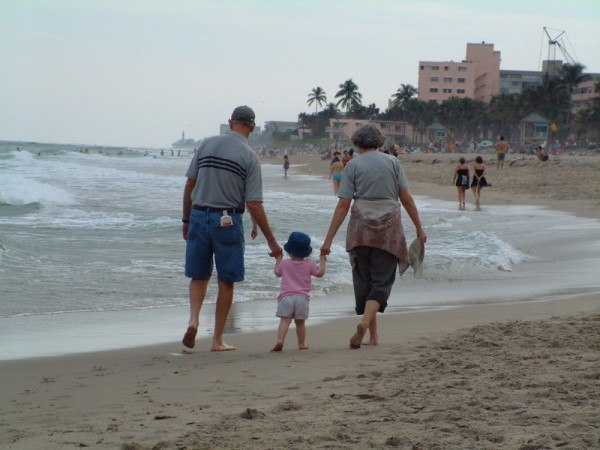
To the extent I can tell, we’ve tried to do that. I know that Jenny and I now have better relations, and I think that’s because we’re both trying harder to follow Nance’s example. As Nance’s co-worker said about her, she “never judged others.” As long as she was alive, I was always more judgmental about Jenny—and more impatient. But since, Nance’s death, I’ve tried to follow her example and be better.
Since the boys live out of state, I don’t have the chance to observe their behavior as much as Jenny’s, but it also seems that they’re trying to follow Nance’s example. In our polarized political landscape, it’s difficult to be non-judgmental, tolerant, and patient. As long as Nance was alive, I’m afraid I too often failed on all three counts. Balancing tolerance and patience with a passion for peace and justice is often difficult, but we must keep trying.
About a year ago, in an article on role models, I wrote, “Role models like Nancy and the others I have mentioned help us to hold good values, but more importantly to act as we should, to follow the promptings of the ‘better angels of our nature.’ None of them [the role models I mentioned] were faultless. Nevertheless, they often acted nobly, providing us with living examples and the psychological support we all need if we are going to act likewise.”
As mentioned above, in Zhivago the good doctor says, “The you in others. . . . the you that enters the future and becomes a part of it.” Only in the last few years have I realized how powerful, how heroic, a dead person’s “you” can continue to be.
Comments

Powered by RoundtableAn AI/DeFi-powered Enterprise Media Operating System. Learn more at Roundtable.io.© Roundtable 2026. By using this site you agree to the Terms of Use and Privacy Policy