

Photo by Carter Yocham on Unsplash


Aug 28, 2022 5:00 PM
While Schurman’s market-moored solutions fall shy of comprehensive prescriptions, The Super Age consistently presents thoughtful and realistic descriptions of demographic challenges
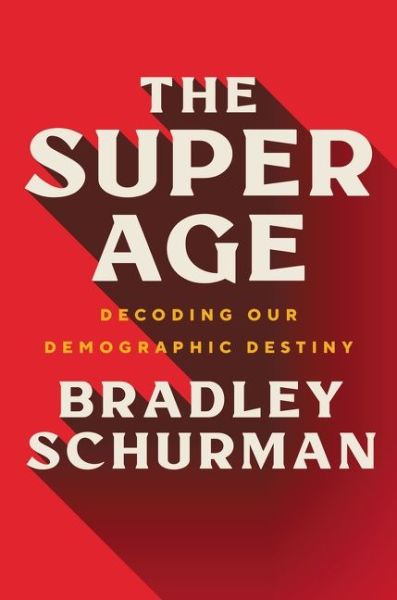
The Super Age: Decoding our Demographic Destiny, by Bradley Schurman (Harper Business 2022) buffs the longevity future to the high sheen of a supermarket apple. His well-researched account of economic, technological and demographic advances, often against the headwinds of ageism, provides readers with a substantial survey of tomorrow’s unrealized financial potential. But those who bite into his “progressive, inclusive, and deliberate” alternatives through market-oriented approaches may be disappointed at his apple’s commercially bred sweetness and bland lack of public resources and protections.
Although The Super Age is only the latest in a long succession of smart-toned books by influential corporate consultants about “our future” – pitches perhaps framed by any number of large issues, such as women’s or racial equality, technology, climate change – Schurman’s book presents a case study of such theses. Often richly informative, such authors tend to build their themes on compelling social conditions, acknowledging their hardest effects before defaulting to private-enterprise solutions with little more than lip service to public (taxable) remedies.
The fault, though, is less in their conservative recommendations, as in the salesmanship to their CEO customers. Even for those who may share their political or economic opinions, it’s their conflict inherent in catering to a client base that renders pretty much anything they say as having been parsed for a limited appeal. A cross-cutting issue like aging is a perfect foil for the kind of wide-ranging analysis of our ailing world and its profitable potential.
To be clear, there is much to recommend in this book’s extensive overview of market innovations and strategies. It will provide reporters a worthy source of story tips and angles regarding private-sector strides in meeting emerging demographic challenges. These range from examples of creative product and service design to Schurman’s critical assessment of corporate America’s slow and often ageist response to their own need to embrace age-diversity in the workplace.
Related stories
The book’s public policy analysis, though, merely wears the tasseled Oxford loafers of neoliberal economics: Spare your national budgets and apply today’s longevity gains to policies that maximize investment toward enabling the aging populations to work longer. Closing the economic-inequality gaps, such as by increasing taxes on corporations and the wealthy, or shoring up life in old age by through stronger social supports and regulations—say, to secure a decent income, affordable housing, and reliable health and long-term care—not so much.
While Schurman’s market-moored solutions fall shy of comprehensive prescriptions, The Super Age consistently presents thoughtful and realistic descriptions of demographic challenges and inventive tools that may help to solve them.
Aging Viewed from the Corner Office
Schurman is a demographic futurist, who’s research, design and consulting firm, The Super Age, serves international corporate clients., He is the former director of AARP’s Global Partnerships and Engagements program.
The book, he explains expansively, “examines the way two megatrends—declining birth rates and the radical extension of human life (longevity) are intersecting to form a super-megatrend that is creating a sharply different, vastly older and generationally diverse society than the one humanity has lived in before. This super-megatrend….is a seismic event that….is leading us into a new era that I call The Super Age.”
Schurman’s company website pitches potential clients, stating, “Bradley and his team help leading organizations harness the opportunities of increasingly older and generationally diverse populations through strategy development and execution. His insights inform national leaders and c-suite executives, as well as their teams around the world.” The “c-suites”? That’s business parlance for the occupant of the corner office: “c” is for chief. It’s worth quoting here because this subtext of his book offers reporters a CEO’s eye-view of the aging economy’s growth prospects from high in the glass tower.
His website assures his client base that Super-Agers “present one of the richest and most diverse consumer groups, but all too often the economic potential of the older population is sidelined in favor of marketing to the young, preventing many from tapping into the $20 billion global opportunity. Our team provides insights and strategies to help your business better understand the current and future market demographics.”
More Vibrant, Equitable Life Stages
Schurman’s messaging in The Super Age is appealing. He writes, “The thesis of this book: validate all people throughout all life stages in order to build a more vibrant and equitable society in which more individuals, businesses, and governments will win in the new demo- graphic reality of The Super Age.”
The book elaborates on ways of achieving that goal, such as, “ensuring that all people have digital access and digital literacy, as well as education and training throughout life.” As the aging population gains digital dexterity, especially with widespread smartphone access, commercial developments, such as online shopping, will help more older adults “feel comfortable with technology.”
Some positive changes, he expects, will derive from seniors themselves with the “growing number of entrepreneurs in the 55-to-64 age group.” Today, Schurman informs readers, “a 50-year-old founder is 1.8 times as likely as a 30-year-old founder to create one of the highest-growth firms.”
Forthrightly, he addresses challenges, such as the transfer of legacy businesses from founders to the next generation. Boosting small enterprises and entrepreneurs, for instance, would be essential for increasingly aging rural communities, whose plight Schurman discusses sympathetically. For small businesses, he recommends the enlightened approach of forming co-ops, as a way to enhance the prospects those otherwise going it alone.
Work Long With Robotics
The Super Age calls on leaders to “pivot away from the dangerous ways of measuring success that brought us to where we are today, such as [Gross Domestic Product], and look toward new, more positive social goals, such as well-being.” Astutely, Schurman observes that instead of bemoaning the budgetary strain of their aging populations, America’s business leaders could see growth upward of 20 percent of GDP, if only they will “tackle ageism head-on and support age-friendly initiatives.” For this author, the road to well-being in old age runs “through direct financing and investment, tax incentives, and the creation of innovation districts to support longevity.”
His book proposes that such tweaks in economic policy, along with technological developments, may improve the prospects of those who are financially vulnerable. Citing the 2016 study by Cherrie Bucknor and Dean Baker of the progressive Center for Economic and Policy Research (CEPR), Schurman notes their research “indicates that nearly half of workers over the age of 58 are engaged in physically demanding jobs.” He adds, “And it will be necessary to extend their working lives. Many of their jobs are in critical industries, such as delivery, construction, caregiving, and nursing, and a growing number of workers are forced to leave their good-paying jobs for lesser-paying ones simply because they are no longer physically able to do the job.”
Continuing their working lives, he says, lies with innovations, such as robotics by the company Cyberdyne, whose products “are assisting with this challenge by developing exoskeletons to ease the strain of repetitive labor and increase overall physical ‘strength.’ Another company, Innophys, has developed a backpack-like suit that can be ‘charged’ by squeezing a hand pump 30 times to fill pressurized air-powered ‘muscles.’”
Elsewhere, The Super Age, declares, “The gig economy is also proving to be fertile ground for older workers.” He quotes a 2019 survey showing that “54 percent of Uber drivers in the United States are over the age of 50, and about a quarter are 61 or older.” He adds, although these are considered jobs that are “low skilled or unremarkable, they are the ones that keep society humming along, and they are being held by a growing number of older people.”
Perhaps, he hasn’t talked to the many graying drivers we’ve spoken with in recent years about their aching backs, poor nutrition on the run, and stressful encounters as they hum along with difficult fares. Instead, Schurman sees in such work, “a preview of the new normal in the Super Age—a time when individuals such as you and me will be able to live, learn, and earn a lot longer than previous generations did.”
However important such technological and employment trends may be, Schurman cites the CEPR study to bolster his argument throughout The Super Age for private and government developments that will enable people to work longer.
Oddly, though, the book fails to note the CEPR report’s focus on the long-term strain endured by disproportionately impoverished Black, Latinx and other groups working in later life without such super prospects for retirement. In the same study, Bucknor and Baker emphasize, “A recurring theme in debates over Social Security policy is that workers should be encouraged to work later into their lives by raising the age at which they can get full benefits. Implicit in this argument is that most workers are in a situation where they would be able to work to an older age; however, many older workers stop working because they can no longer meet the physical demands of their job.”

Their study concludes, “From the standpoint of plans to increase the Social Security retirement age, these data indicate that many workers would face serious hardship by working later into their life. This is especially the case for racial and ethnic minorities, less educated workers and lower earners.”
Furthermore, a in Ageing International examined existing research demonstrating that long-term exposure to “physically taxing, relatively simple, and/or limited intellectual challenge tend to result in a cumulative decline in intellectual functioning in old age.” The authors, led by Colorado State University sociologist Eunhee Choi, found, “Older workers with more physically demanding jobs tended to have poorer cognitive function.”
Curiously, Schurman’s book only mentions Social Security and Medicare as “massive government spending programs” that many fear “may not be there” in the future. And he refers to Medicaid only as a program whose inadequate funding has contributed to rural hospital closures. Hardly explored are decades of policy debates over strengthening, not cutting Social Security, or modernizing public health programs to cover family and community caregiving, such as President Biden’s Build Back Better bill proposed to do--until social-care funding hit the US Senate wall this year.
Oddly, what evidently worries Schurman more prominently than America’s weak social supports for the wellbeing of older people? He writes, “If governments and businesses stand still, the current path presents an existential threat to economic growth and political stability.” The source of that threat—the potential for investment and national budgets to be impeded by international credit ratings agencies, such as Fitch and Standard & Poor, which can limit access to capital, such as from the World Bank, International Monetary Fund. For readers who may be confused about how government aid for its aged and poor relate Schurman’s dubious venture into existentialism, he explains, “Rating agencies look closely at debt incurred via social welfare programs, such as health care and pensions.”
Globally—and Schurman’s firm has international clients—the grip of credit-rating system has been highly controversial, particularly in imposing austerities on poor, often aging countries under pressure in hard times, such as during the Great Recession. Compelled to pay back billions in loans, nation’s like Greece strained to provide food and energy to their aging populations.
For the United States, Schurman treads lightly around policies that may not much appeal to those in those chiefs in the suites, such as taxing substantially more wealth to help close the inequality gap. And although he told one interviewer that he would favor increasing the Social Security’s full retirement age beyond the current 67, which would constitute an across-the-board cut in pensions, the book skirts that issue. While he regards such a measure “like using a sledgehammer to crack a nut,” Schurman doesn’t object to it. Instead, he recommends “better, more equitable, and more nuanced ways to approach the demographic challenge.”
He goes on, “I believe that businesses, especially large corporations, can play an oversized transformative role in making changes. Governments should financially support their citizens’ skill and career transitions throughout the life course, and businesses should work to make themselves as ergonomic and generationally friendly as possible, so that the contributions of each individual can be maximized for as long as possible.”
Yet, The Super Age doesn’t prescribe such societal measures as strengthening Social Security to protect older women, minorities and those most vulnerable in very old age. The book doesn’t address controlling overall health care costs, the real cause of excessive Medicare and Medicare budget growth. Absent is an examination of the need to increase affordable housing, funding of which has dwindled in federal spending for decades. Nor does The Super Age delve into many other gaps that cause those in developed economies to shake their heads at the United States’ failure to project its poor and middle-classes, much less apply its vast wealth toward optimizing our aging population’s confidence that one may live long and prosper.
Ostensibly, Schurman, like other business consultants in aging, champions changes enabling us to age with “dignity” and “purpose.” Yet, to be meaningful beyond the buzzwords of a corporate prospectus, those goals need to come—yes, with much of that great private-sector know-how and ingenuity he describes—but also in full partnership with the public power of a fairly taxed and equitable commonweal.
This article is adapted from a piece that appeared in GBONews.org, the online publication of the Journalists Network on Generations, which its author, Paul Kleyman, heads.
Comments

Powered by RoundtableAn AI/DeFi-powered Enterprise Media Operating System. Learn more at Roundtable.io.© Roundtable 2026. By using this site you agree to the Terms of Use and Privacy Policy