


May 14, 2023 12:00 PM
Time-honored techniques for insidiously attacking your opponents or defending yourself against charges of wrongdoing.
By toolkit here we don’t mean a box of physical tools like hammers, wrenches, and nail guns. Instead, we mean a collection of techniques and strategies for either insidiously attacking your opponents or just as importantly defending yourself against charges of wrongdoing. Here are some of the most common such tools.
I Don’t Recall
When you are being questioned under oath, and are asked a question that, if answered truthfully, could jeopardize your career or worse, but when lying runs the risk of perjury charges, there are several options.
A time-honored way out of this pickle is to decline to answer the question by asserting your Fifth Amendment rights. However, there is a definite downside to this route, namely, it creates the impression in the minds of many that you have something to hide.
Fortunately, there is another option for dealing with troublesome questions, and that is to simply say with a straight face, “I don’t recall.” Even when this professed failure of memory strains credulity, it is hardly ever directly impeached.
Related stories
Separation of Powers
Although the original purpose of Separation of Powers was to ensure that one branch of government does not encroach on another branch’s jurisdiction, it also can be used effectively to protect officials suspected of criminal activities from scrutiny.
Let’s consider a hypothetical case in which a Supreme Court Justice may have committed a crime.
For the sake of argument, let’s consider a hypothetical case in which a Supreme Court Justice may have committed a crime and for reasons of his own the Chief Justice is turning a blind eye to the matter.
Let’s further suppose that in a desire to gain clarity, the Senate Judiciary Committee wants the Chief Justice to appear before their committee to answer some questions.
Rather than acceding to this request and then having to obfuscate or fall back on “I don’t recall,” there is a much more principled way out for the Chief Justice. He can rely on his reverence for the Constitution and respectfully decline the Senate Committee’s invitation because acceding to the request would not just violate the Separation of Powers but would also create a terrible precedent.
Executive Privilege
A well-known use of Executive Privilege is for the President to attempt to block a subordinate from revealing potentially damaging information. But just as importantly, as former Vice President, Mike Pence, realized, Executive Privilege may also provide protection for a Vice President.
After the January 6 insurrection, in spite of considerable evidence that this was a coup attempt, Donald Trump still has not been held accountable for his role leading up to January 6 and on that day itself.
Clearly, Mike Pence was in a unique position to give details on Trump’s possible criminality. But this put Pence in a political bind because divulging details of the full extent of Trump’s criminality in this coup attempt would permanently alienate Trump’s base and thereby wreck Pence’s presidential ambitions. Pence needed to thread the needle in the extent to which he would criticize Trump.
In the early days after January 6, Pence leveled a very timid rebuke of Trump when he said that what happened on January 6 was just something that he and Trump would never agree on. Pence also conceded the indisputable fact that Trump had put his life in danger by how he had riled up the crowd.
But for Pence nothing was more important than keeping his presidential ambitions alive. And so, when he was asked to testify before the January 6 committee, he respectfully declined on the grounds that Congress had no right to his testimony because of the Separation of Powers.
However, in November 2022, Pence faced another peril when Merrick Garland appointed Jack Smith, as Special Counsel, to investigate January 6, and Smith was dead set on getting Pence to testify.
Executive Privilege to the rescue. Although it was Trump’s lawyers who first invoked Executive Privilege to try prevent Pence from testifying, Pence was a beneficiary of that invocation. Then with the possibility of Pence himself invoking Executive Privilege, negotiations with Special Council Smith dragged on for several months.
However, the looming possibility of Pence invoking Executive Privilege only delayed matters, and did not fully succeed. Pence ultimately agreed to testify after a court order ruled that he must.
Playing the Ethnic or Race Card
Al D’Amato used a rudimentary form of this tactic against Robert Abrams in the 1992 NY Senate race, after Abrams accused D’Amato of being a fascist. D’Amato not only asserted he was deeply offended personally, but more importantly also characterized Abram’s accusation as an ethnic slur against all Italians.
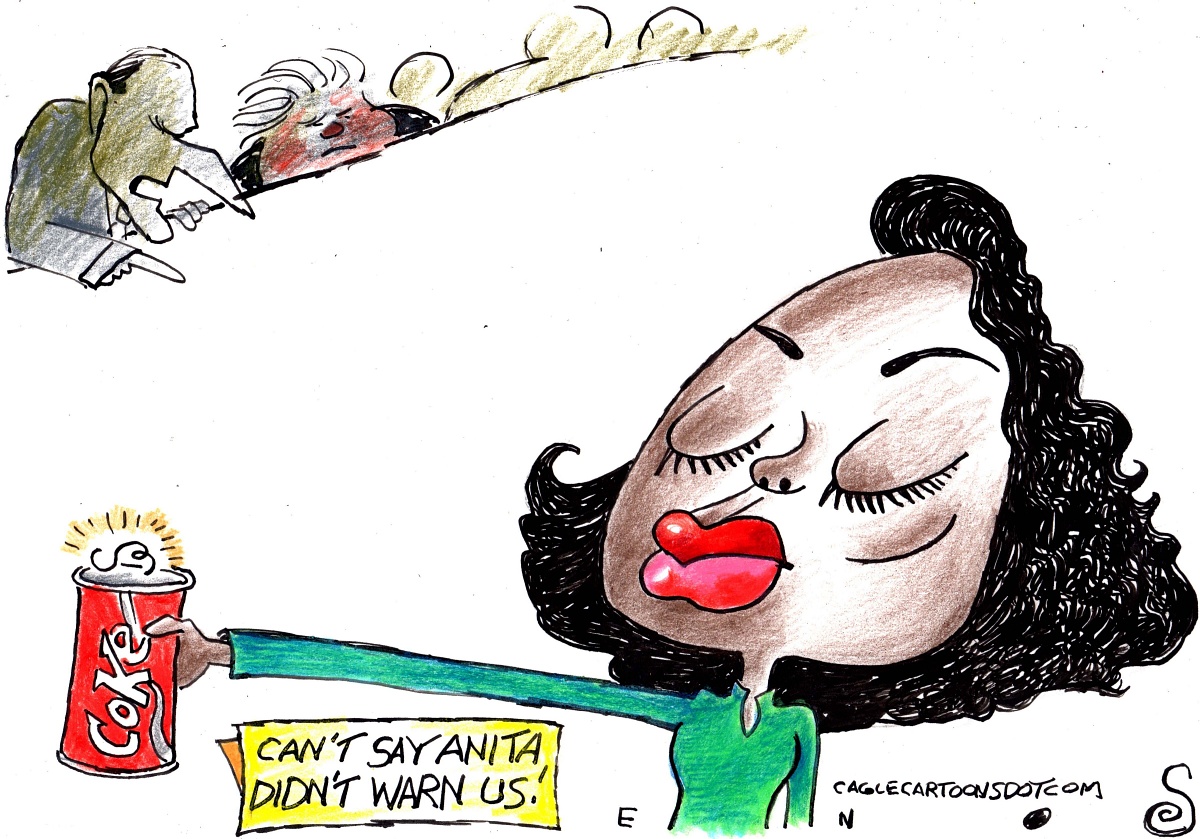
Clarence Thomas gave a Master Class on how to take this tactic to a much higher level. During hearings for his nomination to the Supreme Court, Anita Hill, a Black lawyer and Yale Law School graduate, who had worked under Thomas both in his Department of Education job and also when Thomas was head of EEOC, testified that Thomas had subjected her to various forms of sexual harassment.
According to Hill, not only had he repeatedly tried to date her and boasted about his sexual prowess, but he had also especially enjoyed regaling her with details of the finer points of scenes from pornographic movies from DVD’s he had rented.
Of course, Thomas vehemently and categorically denied these accusations. Although there was no corroborating evidence that Hill was telling the truth and Thomas was lying, it seemed to many people that Thomas had much more reason to lie than Hill did.
At his final opportunity to appear before the committee, Thomas’s chances seemed doomed, but that is where he played the race card brilliantly. He presented himself as every Black man being lynched by an angry white mob simply on the suggestion that the Black man had behaved inappropriately to a white woman. Never mind that Anita Hill is a Black woman, and the stakes for Thomas were not being lynched, but instead the possibility of being rejected for a Supreme Court nomination based on a careful examination of the evidence.
Yet Thomas equated the process of trying to determine who was telling the truth and who was lying with a lynching; the phrase he used to give his position more gravitas was a “high tech lynching.” This not only energized his support among Black men (not so much among Black women), but also gave him a rationale, (namely being so fed up with the racism of the whole process) that he would no longer make any public statements on the matter.
Furthermore, he indignantly declared that his personal life pertaining to what he did in the privacy of his own bedroom was off limits and by implication so was investigating his DVD rental history for pornography.
False Equivalence
My apologies to Clarence Thomas for citing him again, but his use of False Equivalence should not go unrecognized . Thomas used this technique to accuse liberals of being hypocrites on a person’s right to privacy.
On one hand, liberals were more than willing to allow the government to pry into Thomas’s very private personal behavior, like what goes on in his bedroom or what kind of movies he rented, in the hope they could find something untoward. So it’s clear that liberals are okay with the government invading a person’s privacy.
But what is the liberals’ position on the issue of abortion? Thomas frames the pro choice position as follows: “an abortion is a very private personal decision, and therefore the government has no right to interfere”; and so Thomas has caught liberals in a glaring inconsistency: they think it is okay for the government to pry into someone’s private personal behavior in attacking him but it is not okay for the government to pry into private behavior when it comes to abortion.
This is clearly a false equivalence. On the one hand, Anita Hill, a credible witness, had accused Thomas of repeated sexual harassment (which, if shown to be true, would make him unsuitable to be a Supreme Court Justice). Thomas vehemently and categorically denied those accusations.
Obviously, one of them is lying, and so it makes sense to do a real investigation into Hill’s accusations, and at the very least look into Thomas’s DVD rental history. Regarding the government banning abortion, this is much more than prying or gathering evidence. Not being allowed to have an abortion can have an enormous impact on a woman’s life.
Disclaimer: This article is intended solely for informational purposes, and the author takes no responsibility if what is gleaned from this article is put to nefarious uses.
Also, the author has made a comedic, YouTube AI video in which an IBN computer program, named Mother G, has been trained to be a magnificent psychotherapist. Unfortunately, Mother G gets hacked by a malicious teenager. The title of the video is Yiddish Hack.
Comments

Powered by RoundtableAn AI/DeFi-powered Enterprise Media Operating System. Learn more at Roundtable.io.© Roundtable 2026. By using this site you agree to the Terms of Use and Privacy Policy