
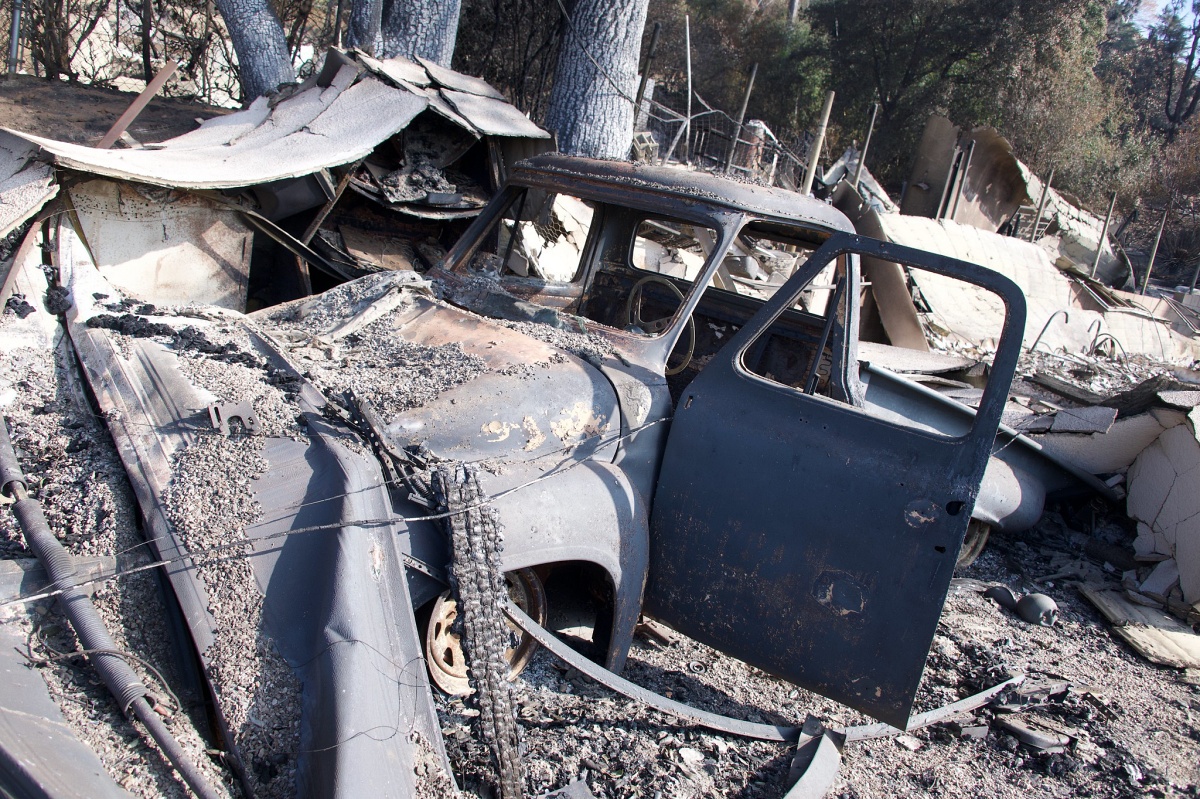
Steve Lyon • 2025 Eaton Fire • Attribution-ShareAlike (CC BY-SA 2.0) • Flickr


Public Banking Help Rebuild LA
Nov 21, 2025 3:36 PM
Updated Nov 21, 2025 3:39 PM
When you lose your home, you anticipate and maybe even expect relief. Instead, you get portals, forms, deadlines, contradictory instructions—and the message, spoken or implied, is that you are on your own.
On January 8, the Eaton Fire burned my family’s Altadena home to the ground. In one day, decades of memories and history vanished. We now face what will likely be more than a million dollars in losses and that is after insurance.
In the months since, I’ve been sustained by the generosity of friends, colleagues, strangers, and organizations who brought food, resources, and encouragement. Their support filled gaps that insurance and FEMA left wide open. Yet generosity cannot substitute for a system that works.
When you lose your home, you anticipate and maybe even expect relief. Instead, you get portals, forms, deadlines, contradictory instructions—and the message, spoken or implied, is that you are on your own. The U.S. disaster-recovery network is not designed for people who lose everything. It seems as if is built to shield institutions and diffuse accountability. January wildfires once seemed unthinkable. Climate change has erased “fire season.” Every season is now fire season.
Los Angeles County’s after-action review confirmed what we lived through: evacuation alerts that never reached many residents, confusing communication among agencies, and first responders without the staffing or tools to keep pace with a wind-driven blaze. The fire moved faster than the systems meant to protect us.
Related stories
When the flames went out, the catastrophe simply changed form. Elderly residents, disabled neighbors, renters, and families with limited English encountered new obstacles: temporary housing without ADA accommodations; aid systems that assume high-speed internet and digital literacy; and case managers so overloaded that survivors coordinated their own medical, financial, and housing needs. Recovery should be trauma-informed and centered on people. Instead, it seems opaque, adversarial, and exhausting.
A UCLA analysis found that nearly 70% of severely damaged homes show no progress toward restoration some 10 months later. Many properties are sold to outside investors before families can navigate insurance disputes or permits. If estimates are realized, two-thirds of those buyers will not live in Altadena. This is climate gentrification in real time: disaster hits, bureaucracy drags, and capital replaces community.
We, survivors ask, “Where did the money go?” After every disaster, millions of dollars are donated. Yet families see little of it. Without transparency, aid evaporates into administrative layers and overhead—none of which restores dwellings. Meanwhile, many families face a “post-insurance gap” of $300,000 to $600,000. That gap determines who returns and who disappears. Corporate accountability is equally murky. Southern California Edison’s culpability remains unresolved, leaving families to shoulder costs rooted in negligence.
The federal government must do its part. FEMA is supposed to provide swift, equitable aid covering housing, reconstruction, and essential recovery needs. In the Los Angeles fires, it failed to deliver timely assistance or adapt to local realities, leaving families waiting months for help and forcing communities to fill the gaps themselves. We must press FEMA to modernize its systems, simplify access, and recognize that recovery is not one-size-fits-all.
Altadena’s Legacy Is at Stake
Altadena has long been a refuge, especially for African-American homeowners once barred from nearby neighborhoods by discriminatory covenants. Altadena teachers, artists, and civic leaders built a culture of mutual support.Altadena’s legacy is one of resilience— longtime neighbors building a community rooted in collective care, creativity, and the determination to remain in place despite mounting pressures. When residents are priced out, we lose not only neighbors but lineage and history.
Loma Alta, a public park, has served as a stabilizing hub—offering safe gathering space, reliable services, and community-run support that strengthens connection, resilience, and recovery after disaster. Protecting this community is about more than replacing structures; it is about preserving belonging and the right to remain in place.
A Different Model: REACT
If the current system cannot respond with urgency, we need one that can. Based on lived experience, I believe a survivor-centered framework must be utilized:
Resource Materials Collectively: bulk-purchase construction materials to stabilize costs and prevent post-disaster price spikes.
Empower Local Leadership: fund trusted community groups to guide residents through insurance and permitting.
Acquire and Protect Land: use community land trusts to keep longtime residents rooted and deter speculative buyouts.
Cultivate Economic Renewal: support small, locally owned businesses with grants and low-interest loans.
Transfer Funds Directly: aid should not sit “in processing.” Direct grants should reach survivors when they need them most.
These approaches already work. Habitat for Humanity helps families repair and restore homes through community partnerships that rebuild trust as well as walls, yet its reach must be expanded so more middle class families can access the support they need.
The Work Ahead
Government must cut red tape, not multiply it. Utilities must be held responsible when their infrastructure fails. Philanthropy must collaborate rather than compete for attention. FEMA must deliver on its promise of rapid, equitable aid. And recovery must center people—not the institutions managing them.
Climate change has pushed emergency services to the breaking point. If we do not adapt, the next crisis—whether in Altadena, Texas and even for our neighbors in Jamaica—will again find our systems unprepared.
For my family, recovery will take years. It will take resources we don’t yet have and strength we sometimes question. Still, we are determined to remain in Altadena—to restore not just a house, but a legacy of hope and aspiration rooted in what scholar Cornel West calls radical hope—the conviction that even amid devastation, new life and justice can rise from the ashes.
Survival should not demand superhuman resilience. It should be supported by a shared promise: when disaster strikes, survivors should never face the wreckage alone.
The next “unprecedented” fire is coming. The real question is not only whether we’re ready for the flames—but also whether we’re ready for the recovery.
Comments

Powered by RoundtableAn AI/DeFi-powered Enterprise Media Operating System. Learn more at Roundtable.io.© Roundtable 2026. By using this site you agree to the Terms of Use and Privacy Policy