


Jul 17, 2026 4:38 PM
Updated Jul 18, 2026 12:43 AM
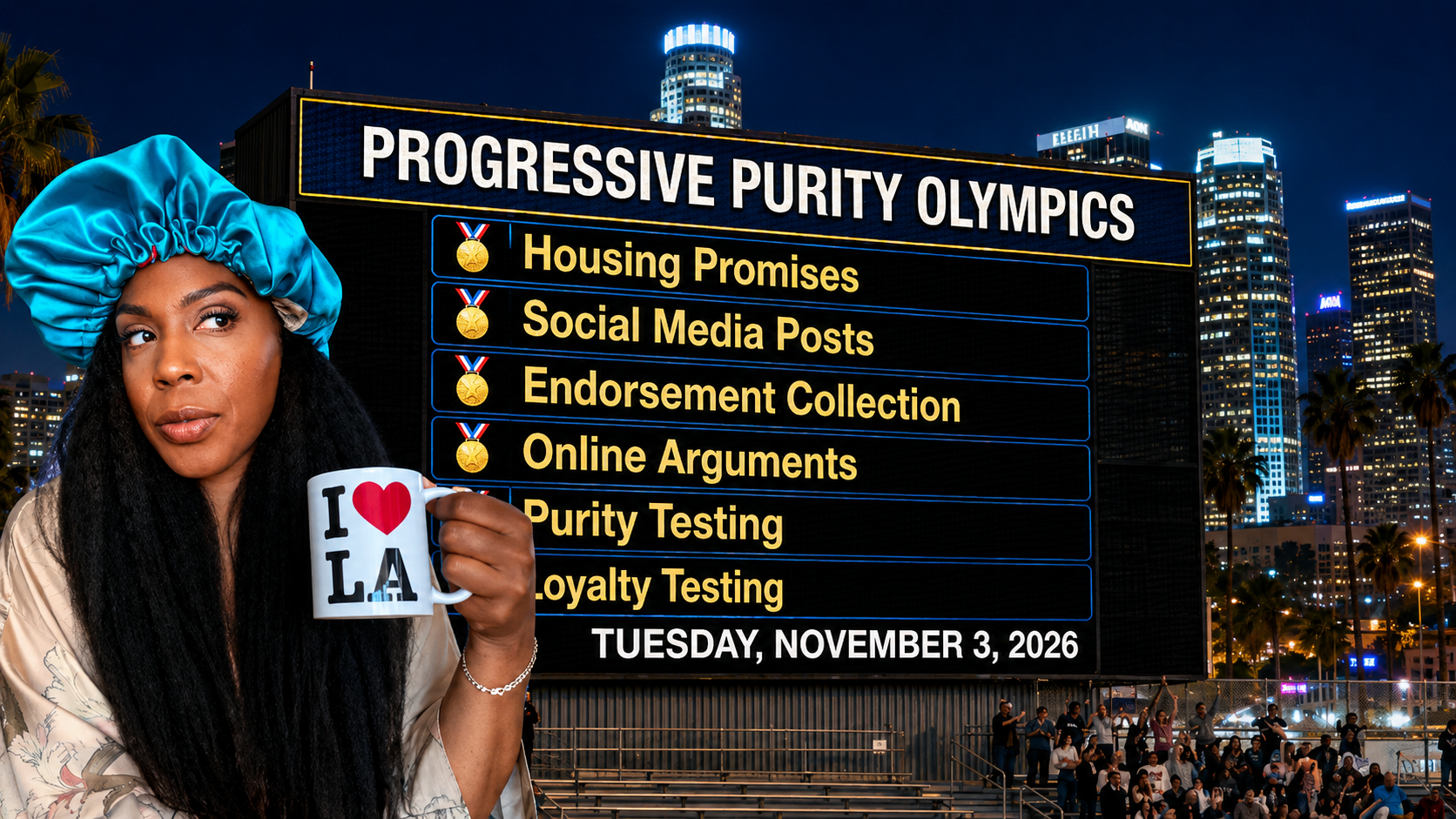
Los Angeles’ Progressive Purity Olympics Are About to Commence. In a Democrat-versus-Democrat mayoral race, don’t confuse progressive branding with progressive governing.
I was inspired to write about this following a great conversation I had with former Los Angeles City Councilmember Mike Bonin and LA Forward Deputy Director Godfrey Plata on LA Podcast. As we talked about the mayor’s race, Democratic politics, and the competing visions for Los Angeles, I couldn’t help but notice that election season has once again brought back one of the Democratic Party’s favorite pastimes: the Progressive Purity Olympics.
One of the things I keep noticing in politics is how quickly people stop talking about what candidates have actually done and start talking about how candidates make them feel.
That’s dangerous.
Because somewhere along the way we’ve started confusing branding with ideology.
We’ve started confusing presentation with progress.
And we’ve definitely started confusing vibes with governing.
Related stories
Now before somebody gets in my comments talking about “Jasmyne, who are you talking about?” if the shoe fits, lace it up.
I’m talking about a political dynamic that keeps showing up in Democratic politics.
A candidate comes along and self brands themselves as the fresh voice, the movement candidate, the real progressive, the future.
Meanwhile, the person who’s actually spent years delivering on progressive policies suddenly gets recast as something else.
Not because their values changed.
Not because their voting record changed.
Not because their priorities changed.
But because somebody newer showed up.
And that’s where I need folks to stop and think.
When did progressivism become a marketing strategy?
When did we decide that the person talking about affordable housing is automatically more progressive than the person who actually got housing built?
When did we decide that talking about getting people off the street into housing is more important than the person who actually got people off the street and into housing?
When did we decide that promising change matters more than delivering it?
Because those are two very different things.
See, campaigns are easy.
Everybody’s progressive during a campaign.
Everybody supports working families during a campaign.
Everybody supports housing during a campaign.
Everybody supports justice during a campaign.
The hard part comes after you win.
The hard part is sitting through budget meetings.
The hard part is negotiating with people who don’t agree with you.
The hard part is dealing with bureaucracy, lawsuits, competing interests, funding challenges, labor concerns, neighborhood concerns, legal requirements, and all the other unsexy stuff that comes with governing.
That’s where politics leaves social media and enters the real world.
And that’s the part voters rarely get sold.
Instead, we’re often sold a story.
The visionary versus the establishment.
The future versus the past.
The reformer versus the insider.
It’s neat.
It’s simple.
And most of the time it’s nonsense.
Because life isn’t that simple and neither is government.
Also, the “insider” attack is always funny to me because the objective of the election is, in fact, to become the insider. Nobody runs for mayor hoping to remain a concerned resident with strong opinions and a Ring camera.
I keep hearing people use the word progressive as if it’s some exclusive club with a secret membership card.
Progressive according to who?
Progressive compared to what?
If somebody spent decades fighting for civil rights, workers, women, LGBTQ people, immigrants, affordable housing, environmental justice, and economic opportunity, when exactly do they stop being progressive?
When somebody younger runs against them?
Is that how this works now?
Because if that’s the case, we’re not talking about ideology anymore.
We’re talking about branding.
And those are not the same thing.
Here’s the reality.
The person with the best slogans isn’t always the best leader.
The person with the most passionate supporters isn’t always the best executive.
The person who wins the internet isn’t always the person who can run a city.
I know that’s not as exciting as political fan fiction, but it’s true.
At some point voters have to ask a very basic question:
Who actually got something done?
Not who promised it.
Not who talked about it.
Not who posted about it.
Who delivered it?
Because at the end of the day, I don’t care how progressive a candidate says they are.
I care whether people are better off because that person held office.
I care whether housing got built.
I care whether families got help.
I care whether unhoused people got housed.
I care whether communities got resources.
I care whether promises became policy.
That’s the job.
Everything else is marketing.
And if we’re going to tell the truth and shame the devil, voters on both sides spend way too much time falling in love with marketing.
We are not electing a brand.
We are not electing a hashtag.
We are not electing a vibe.
We’re electing somebody to lead and most importantly govern.
And those are two very different things.
Now, before somebody rushes to the comments yelling “bias,” save your typing fingers. I proudly support, have endorsed, and am working to re-elect Los Angeles Mayor Karen Bass. This is neither a secret nor a revelation. I am also capable of analyzing politics, evaluating campaigns, and calling balls and strikes as I see them. The two are not mutually exclusive, no matter how many people on the internet insist otherwise. Now, if you’d like to debate the facts instead of my disclosure, I’m listening
Comments

Powered by RoundtableAn AI/DeFi-powered Enterprise Media Operating System. Learn more at Roundtable.io.© Roundtable 2026. By using this site you agree to the Terms of Use and Privacy Policy