


May 19, 2025 6:29 PM
Updated May 19, 2025 6:44 PM
Everywhere throughout the community, people are coming together to try to heal.
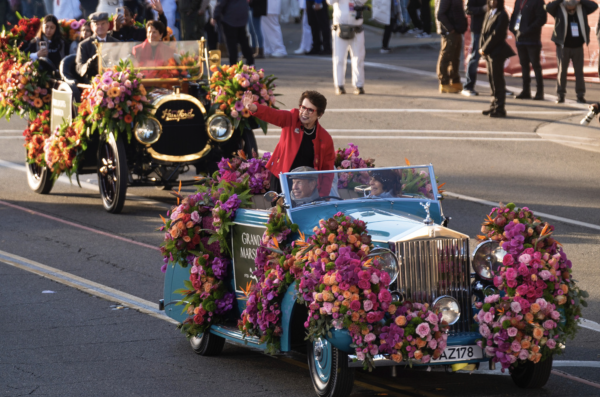
To drive around Altadena, California, the town just beyond Pasadena site of the glittering floats and pageantry of the Rose Bowl, is to see everywhere a community both in turmoil, struggling to recover from an almost unspeakable trauma, and a community attempting to heal. The devastation wrecked on and through the night of January 7 by the Eaton fire, just one week after the parade, also has a class and racial component which sheds light on the way that these problems, continually unresolved, perpetually reappear to haunt Los Angeles.
The fire, likely the result of an exposed Southern California Edison power line, swept down the west side of Lake Avenue, and parts of the east adjacent to the avenue, leaving nothing in its wake but burned-out cars and buildings, with 18 people buried under the rubble. The comparisons of this kind of complete devastation of a part of the area are to moments like the allied bombing of Dresden in World War II, the current devastation in Gaza, a land now without food, schools, and hospitals, and perhaps, with the effects of lead, soot and asbestos still lingering in the air and the soil, even a kind of mini-Hiroshima.
The fire likely from a single spark spread rapidly given the twin conditions of what were in some cases 100-mile-an-hour Santa Anna Winds and a six-month drought, plus lawns covered with highly flammable vegetation. Both the winds, which reached this level after a windy season formerly confined mostly to the fall, and the extended period of no rain can also be attributed to global warming where it is often the poor or in this case now the middle-class that finds itself victimized by the profligacy of the rich, who attempt to shelter behind impregnable communities and whose polluting factories and modes of extravagant travel are largely responsible for this effect.
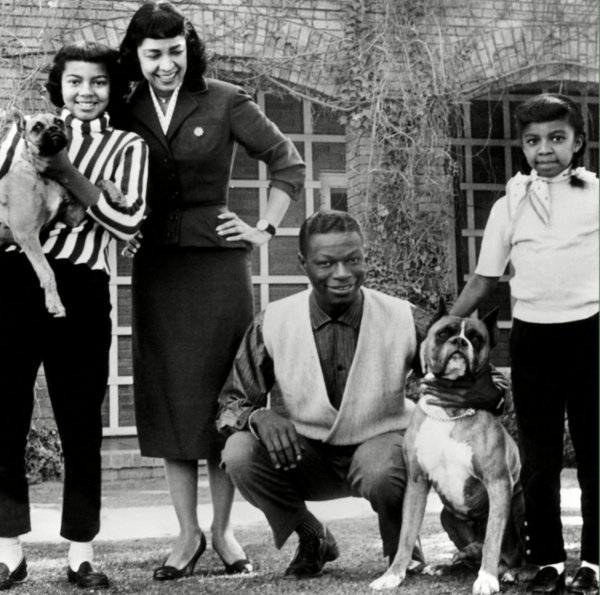
The story of the community has been told but it’s worth retelling. Altadena for years was a land that time forgot, abandoned by Anglos in the area who were looking for more settled and affluent towns, then becoming a settlement for the black middle class, a San Fernando Valley version of Inglewood with its black celebrities, including Ray Charles and Etta James and Hancock Park with Nat King Cole’s movement into that area fiercely resisted. In Altadena though, it was not celebrities but a black middle-class community who built up the area where several generations were housed within the same living quarters–now all gone–and where the idea of inherited and intergenerational wealth, something that has sometimes seemed an unattainable goal for African Americans, was being achieved. The other historical moment that what happened in Altadena cannot but recall is the erasure in Tulsa at the turn of the last century of a prosperous and middle-class black community referred to at the time as “Black Wall Street.”
Related stories
The neighborhood was already being remade and re-gentrified as wealthier Angelenos, attracted by the views of downtown and a location situated both at a slight distance and above the city moved back into the area and as African-American residents, who had begun moving to Altadena in the ‘60s and ‘70s, were forced out by the increase in property values as Hollywood celebrities, among them rumored to be John C. Reilly and Mandy Moore, moved in.
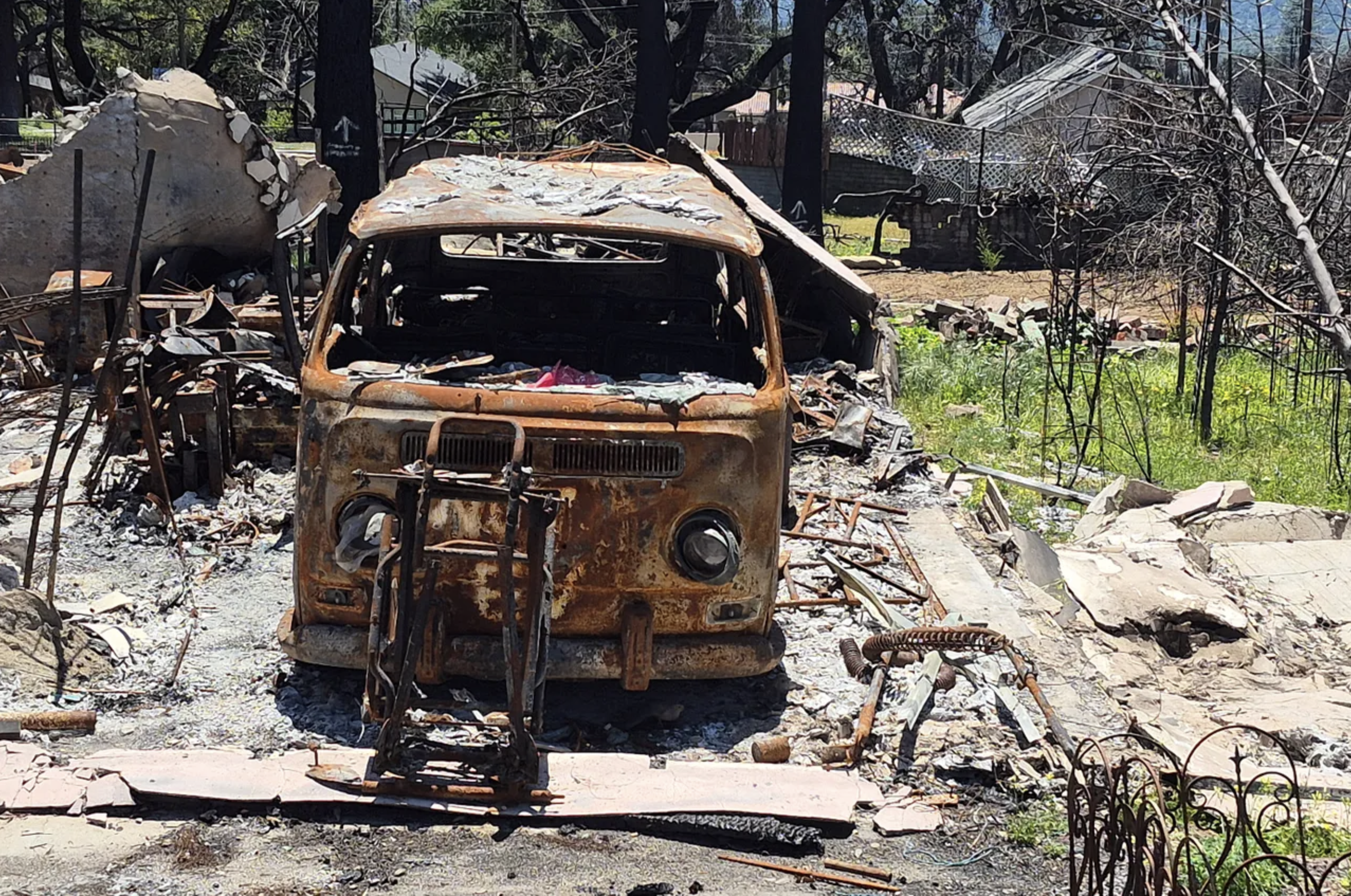
Still, African Americans made up roughly 18 percent of the town and many lived together just below the Eaton Canyon, where the fire erupted. That community is now reduced to what looks like bombed-out rubble with no people and only the hollowed-out rust of cars and the bare bones of houses remaining.
The fires themselves exposed what is perhaps still smoldering prejudicial attitudes with a recent report ascertaining that the area west of Lake Avenue did not receive evacuation warnings until early the next morning and by that time 17 of its African American residents, many elderly, were trapped and died either in their homes or in attempting to flee. On the east side, where the notifications went out much earlier, only 1 casualty.
Will these residents be able to recoup their homes and rebuild? One problem is that many had paid off their mortgages and since the houses were in effect no longer the property of the bank, homeowners were not required to buy fire insurance and so many of them did not. There have also been numerous reports of insurance companies denying claims, foremost among them State Farm which in some cases has proved themselves not to be “like a good neighbor.”
There are two types of signs present in the area. One is “Altadena Not For Sale,” in one case with a statue of a wolverine protecting the land but the other common sign is one that reads “In Escrow,” meaning the home has already been sold. Active already in purchasing cheaply homes whose owners either do not want or cannot afford to rebuild is Blackstone, the spinoff from BlackRock, the global investment company that may soon own the Panama Canal. Blackstone has been buying homes throughout the country and is along with other real estate vultures the beneficiaries of a housing crisis in California where it was recently revealed that primarily due to the cost of housing, in three counties, a yearly earning of $100,000 is now considered low-income.
Everywhere throughout the community, people are coming together to try to heal. There have been high levels of lead reported in the soil even after the cleanup and so recently there was a soil testing pavilion set up where people could bring their dirt from the ground and scientists from UCLA would test and catalogue the soil for levels of lead, arsenic, copper and mercury.
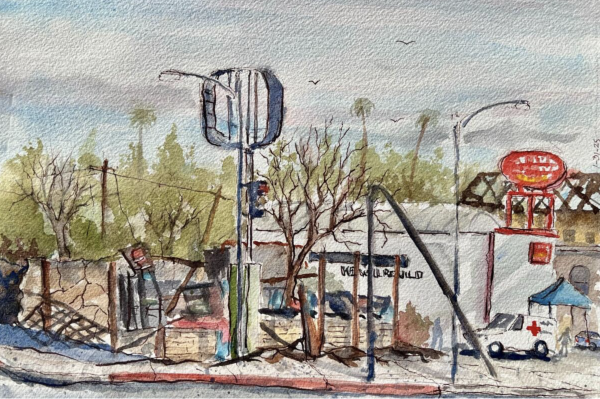
At the Altadena Public Library possibly untouched because that day the electricity had malfunctioned, there was both an exhibit of the extraordinary watercolors of local resident and former Hollywood movie background artist Keni Davis and in the same room a reciting by teenagers expressing in poems their experience of the fires. Davis’ before and after images included one of “Kenny’s Bike Shop” with the bicycles parked out front and visible from a window inside the shop while an after image of the same bikes showed them now reduced to brown rusted ruins.
There were individual images of devastation as well. Just east of Lake, sat a 65-year-old contractor staring at what was his family home and is now a vacant dirt lot. He was planning to retire but now he must resume the business with the first order being to rebuild his own home. Another woman who operated an arts center (and Los Angeles has the most art and cultural centers of any area in the world) had installed a bird feeder and was watering the plants in front of the rubble of her former center which was in a now burned-out apartment complex. Her landlord is 90 years old and unlikely to have the energy to rebuild, she related, but she felt it was important to keep up the vegetation on the property just the same in the hope that something could be done to revive the structure.
There were also stories of heroism on the night of the fire. One African American, a former fire fighter who moved from Watts to Altadena, came up the street with two fire extinguishers blazing trying to combat the flames. Did he think the community would revive? He was not certain, but he did say, with a hopeful glint in his eye, that any rebuilding this time would require an installation of less flammable plants and trees, noting that palm trees, a mainstay in Los Angeles County and a part of its heritage, in particular, burn quickly. Though wonderful to look at, given the perilous nature of the havoc wrecked by years of environmental damage, palms may no longer be practical, an ominous change that may alter what is central to the region’s landscape and imaginary.
Thanks to Ismael Parra and Carol Chacon my able researchers and guides for this report.
Comments

Powered by RoundtableAn AI/DeFi-powered Enterprise Media Operating System. Learn more at Roundtable.io.© Roundtable 2026. By using this site you agree to the Terms of Use and Privacy Policy