
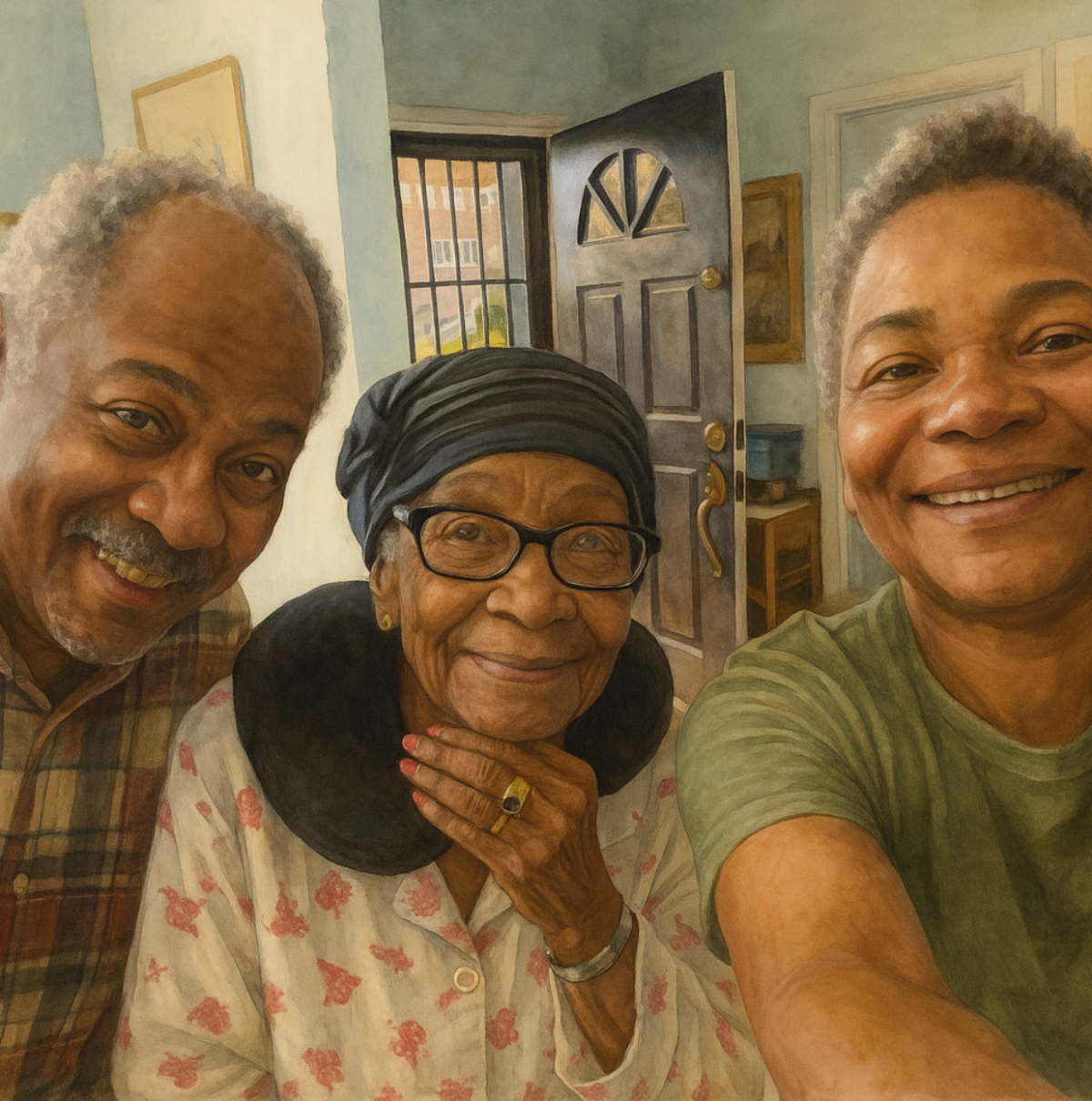
Vernon J. Humphries, II, Richetta D. Humphries, Jill M. Humphries. Baldwin Hills.


Feb 10, 2026 7:58 PM
When constituent services fail black elders: The cost of neglect amid gentrification.
For sixty-one years, my 93-year-old mother has lived in her home in Baldwin Hills—a once segregated Los Angeles neighborhood that evolved into a national symbol of Black homeownership and pride. Like many African Americans of her generation, she joined the Great Migration to the West in pursuit of economic opportunity and freedom from the racial violence and legalized inequality that defined the Jim Crow South.
My parents Vernon and Richetta Humphries purchased their home in 1964, at a time when Black families were still excluded from many Los Angeles neighborhoods by racially restrictive covenants and hostile lending practices. Their home represented more than shelter; it was a claim to dignity in a city structured to deny them access. After my father passed, my siblings and I continued helping our mother manage the property. That is why this current easement dispute—unnecessary, prolonged, and avoidable—is not simply frustrating. It is a moral affront to everything my parents fought for.
The issue began when a newly arrived neighbor planted approximately twenty spruce trees directly inside the public utility easement separating our properties. For six decades, that easement remained clear and undisturbed, aligned with city maps, tract records, and long-standing community norms. Without notice or consent, the neighbor altered the boundary in ways that now threaten the stability of my mother’s fence and impede utility access. What should have been a straightforward code-enforcement matter instead devolved into a bureaucratic maze.
What the District 8 Council Office and the City Failed to Do
For months, our family sought clarity from the District 8 Council Office and multiple city departments. We submitted documentation, historical tract maps, photographs, and written summaries. In return, we received shifting explanations, inconsistent statements, and delayed responses.
Related stories
At one point, I was forced to file a California Public Records Act (CPRA) request simply to obtain clarity on which agencies were responsible for enforcing the easement—an extraordinary step for a family seeking basic constituent support. According to District 8 staff, the Bureau of Street Services (BSS), LADWP’s Real Estate Division, and even the Department of Building and Safety all contributed information used to explain the easement determination—yet none provided a clear, consistent, written conclusion my 93-year-old mother could rely on.
The burden of navigating this bureaucratic inertia has fallen on my mother, a woman who has never had a dispute with any neighbor in more than six decades of residence. This is not merely administrative failure; it is a violation of the trust that should exist between public agencies and the residents they are sworn to serve.
Gentrification and Disregard
What is happening in Baldwin Hills reflects a troubling pattern emerging across historically Black neighborhoods in Los Angeles as gentrification accelerates. Legacy residents—especially elders— are encountering new neighbors who often lack awareness of the cultural and historical foundations of the communities they are entering. Where earlier generations maintained an unspoken code of respect, some newer residents behave as though they are discovering unclaimed territory, disregarding those who were here long before.
Too often, city agencies compound this imbalance. Instead of protecting longstanding residents and enforcing municipal codes, bureaucratic deflection effectively legitimizes the disregard shown to our elders. Their silence becomes consent.
African Americans were not granted entry into neighborhoods like Baldwin Hills—they fought their way in against racist housing systems and discriminatory real estate practices. To see my mother’s dignity eroded not by formal policy but by neglect—through unanswered emails, vague explanations, and procedural inconsistency—is heartbreaking and unacceptable.
Constituent services are not optional. They are a core function of democratic governance, signaling whose concerns warrant attention. When they fail, especially for elderly Black homeowners, the result is a quiet form of displacement—one rooted not in bulldozers but in bureaucratic indifference.
In addition to municipal action, licensed realtors operating in historically Black neighborhoods such as Baldwin Hills must be required to inform prospective homebuyers of the African American cultural, historical, and legacy significance of these communities, including the presence of longstanding elders, legacy property norms, and historically contested land-use issues such as easements—so that market entry does not reproduce harm through ignorance, entitlement, or cultural disregard.
What District 8 & Los Angeles City Agencies, and Realtors Must Do Now
To protect legacy Black homeowners and prevent similar harm to other elders, Los Angeles should implement a clear, senior-centered protocol for easement conflicts:
- Mandatory site inspections within 10 business days for disputes involving seniors or legacy homeowners.
- Written determinations grounded in municipal code, shared consistently across departments.
- Direct interdepartmental coordination, so seniors are not forced to navigate contradictory instructions.
- Annual CPRA training for all constituent services staff, emphasizing timelines, disclosure standards, and communication responsibilities.
- Professional development requirements for preparing clear, complete, and accurate constituent reports.
- Creation of an Elder Property Rights Liaison in every council district—an advocate empowered to resolve property, code enforcement, and easement disputes before they escalate.Realtor cultural-historical disclosure requirements for transactions in historically Black neighborhoods, ensuring that incoming homeowners are informed of community legacy, elder residency patterns, and long-standing land-use norms as part of ethical professional practice.
These common-sense, low-cost interventions would restore trust and ensure dignified, timely service for the elders who built these communities.
It is difficult not to wonder whether this level of delay, confusion, and indifference would be tolerated in other parts of Los Angeles—particularly on the Westside, where constituent matters are often handled with urgency, clarity, and precision.
After sixty-one years of peaceful residence, my mother should not have to fight for clarity around her own property rights.
That responsibility lies with the office that claims to serve her.
Comments

Powered by RoundtableAn AI/DeFi-powered Enterprise Media Operating System. Learn more at Roundtable.io.© Roundtable 2026. By using this site you agree to the Terms of Use and Privacy Policy