
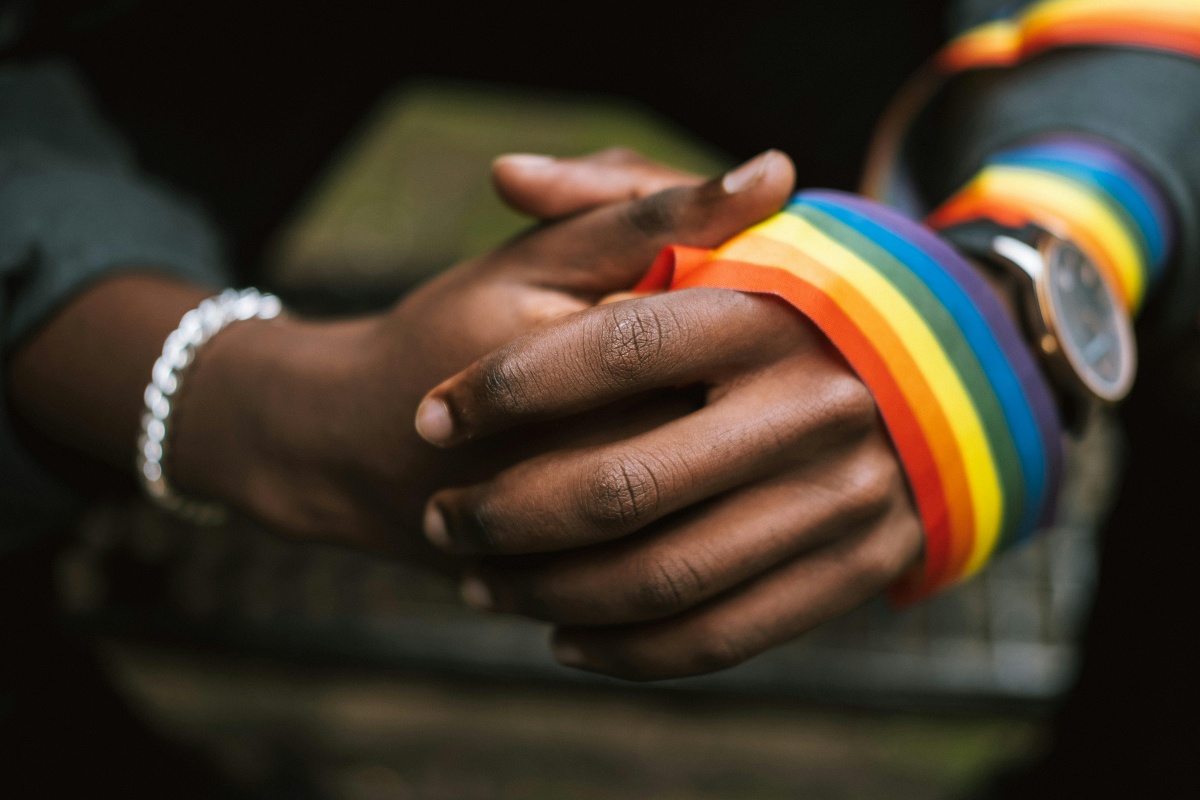
Photo by Anete Lusina


Unapologetic Characters
May 14, 2024 10:33 PM
I never quite felt like I could really relate to my male peers, despite taking on some of the same stereotypically boyish activities they did.
When I was 21, I came out as pansexual on social media via a Facebook status update. That was about 12 years ago now. Up until then, I had been dating women exclusively since the tender age of 15. However, all of that was upended the year before my 21st birthday. That’s when I kissed a guy for the very first time.
I had already been having trouble with my parents that had nothing to do with my sexual orientation. We held vastly different world views. They’re boomers and first-generation Americans, who started with nothing after leaving behind their respective home islands in the Caribbean. To them, I was a spoiled child of the West. Dad and I couldn’t manage to see eye to eye on anything, and I viewed Mom as an overbearing presence. In hindsight, I can see that they were just trying to guide me along on the right path the best way they knew how. But I was determined to experience life in a way I never had during my sheltered upbringing.
My parents divorced early in my childhood and my mom was our primary caretaker. I have two older sisters and would later gain two younger half-brothers via Mom’s tumultuous second marriage. By 20, Mom and I had firmly fallen out over a plethora of issues, from my staying out late to the bitter resentment I felt towards her for having to endure a dysfunctional life with her second husband for nearly a decade. Leaving Mom’s house meant moving in with Dad at first. I was drinking and partying heavily then, but I saw nothing wrong with it, as so were most of my peers. I would eventually discover that my hard partying was a classic trauma response.
It was at a party in some sweaty motel in Glendale, California, that I had my first same-sex kiss. The kiss happened on a dare. It was brief and he was just a friend, yet from that moment on, everything changed. It was as if something long dormant in me had finally awoken. Although we weren’t interested in each other romantically, the ease in which I was able to hold his face in my hands, gaze into his eyes, and let my lips meet his was not lost on me.
Related stories
A couple months passed, and I took a step further, initiating my first hook-up with a guy that I knew from school. It wasn’t special or magical, but it confirmed what I had already known. I was interested in more than one gender; I was firmly and utterly attracted to not just women, but also people of my own gender. I felt I had to come out, because Glendale is a small town, and secrets don’t stay secrets for very long in a small town. Though this was a personal discovery, my coming out wasn’t a huge shock to anyone who knew me. Suspicions about my sexuality had surrounded me for as long as I could remember. Fortunately for me, I was born and predominantly reared in Hollywood until my preteen years, so I quite literally grew up at the epicenter of unconventional lifestyles.
However, as I grew older, I found myself extremely uncomfortable in hypermasculine settings. I never quite felt like I could really relate to my male peers, despite taking on some of the same stereotypically boyish activities they did (climbing trees, skateboarding, moshing at punk shows, etc.). Anytime I would begin to remotely question my sexual identity, I would also find a million and one justifications for why I was straight. I was, after all, enjoying every second of my relationship with my high school girlfriend. I was excited by kissing her, touching her, just being with her. I also fantasized about other girls my age on a regular basis. Research on the topic of bisexuality, especially in Black men, was sparse at the time.
Within the Black community, it felt like whenever there was mention of a Black man having sex with another man, it automatically made him gay. That compounded with the fact that Caribbean culture, my very own culture, is laden with homophobia, left me feeling like I only had two choices. I could either lead a life of “normal” heterosexuality or be condemned to live as a homosexual–a “batty man” in Caribbean slang.
I knew of the word “bisexual,’ but I hadn’t ever met anyone who identified as bi as a kid. The only portrayals I saw of bi men in media, whether it was Will & Grace, Sex and the City, or Nip/Tuck, depicted them as either confused, downright liars, or some mythic embodiment of the masculine ideal that somehow managed to perfectly balance this with their attraction to the same sex. These problematic bi+ characters also were almost always white men. Of course, I did not see myself in these characters in the slightest.
Without positive bi+ representation on or off screen in my life, it was hard to give voice to my authentic self. I tried to compare myself to stereotypes of what it meant to be gay or straight. I had always stood out in a crowd. I was enamored with the arts, impeccably dressed, and fixated on cleanliness. None of those qualities served as definite signs that I was bi. I had grown up around mostly women, and I was a bit more effeminate, stylish, and intuitive than other boys my age. There was general speculation about my sexuality throughout school, no doubt. But until that kiss and the subsequent hook-up, I had no substantiating evidence that I wasn’t just a sensitive straight kid.
A year or so after coming out, I brought home my first boyfriend. It was a complete disaster. He was a closeted seminary drop-out and I had just dropped out of college. I had never dated a guy before and neither had he. It was the blind leading the blind. Although my family was much more accepting of my sexuality than I had initially expected, no one cared much for my then-boyfriend, especially my mom. She was still hoping I’d marry a woman someday and would not stop asking what happened with my high school girlfriend, whom she adored. I’m not entirely certain whether the rest of the family was coming to terms with me being bi, or whether they could sense the incompatibility between us. Either way, the relationship with my first boyfriend was short-lived.
Eventually, my mother did fully come around to my being out. With the aid of time and therapy, I learned to let go of my resentment towards her. I continued dating multiple genders after my first same-sex relationship ended. By the time I brought home the man that would become my husband, Mom’s only concern was whether we would be adopting or utilizing a surrogate, so she could have grandkids. I must have disappointed her once more by declaring that I didn’t want kids, but she healed from that upset a lot faster.
Today, there is undoubtedly an increased social awareness of biphobia and bi-erasure. I see a much wider scope of representation available to young bi men with the rise of films like Challengers and the, albeit controversial, Netflix show, Baby Reindeer. Still, those opportunities are few and far between and the stories being told are overwhelming that of white men. According to the American Medical Association, about 40 percent of LGBTQ+ adults in the United States are people of color, including 12 percent who identify as Black. While that figure seems small, we’re talking about more than 1.2 million Black LGBTQ+ Americans, who regularly do not see their experiences reflected in the media they consume.
I think it’s beyond time we change that. It’s time to saturate film and television with more perspectives that are bi, Black, and unapologetic.
Comments

Powered by RoundtableAn AI/DeFi-powered Enterprise Media Operating System. Learn more at Roundtable.io.© Roundtable 2026. By using this site you agree to the Terms of Use and Privacy Policy