


Jul 12, 2020 8:46 AM
Updated May 6, 2024 6:33 PM
Sharon Kyle: He rests his head on my lap as I treat his wounds. He’s been beaten and attacked with a pair of scissors. The blade has slashed his forehead. Blood is everywhere, but thankfully the wound wasn’t deep.
The late 1970s were my coming-of-age era. Mine was the first generation to benefit from Roe v. Wade and the 26th Amendment. I was a teenager, ushering in the nation’s bicentennial while nursing my firstborn. I danced to the Bee Gees' “Staying Alive” and the Jacksons' “Living Off the Wall.” Mine was the “Me generation,” a backlash generation—no draft for my generation. We were supposed to be the beneficiaries of the Civil Rights Movement, the Anti-War Movement, and the Women’s Movement.
Why, then, do I not feel like a beneficiary?
That was not a rhetorical question. Although I don't expect you to answer it, I do live with a persistent, nagging need to know. What did we gain during the turbulent 1960s? The turbulence of those times found its way into my childhood home. Here is one such account:
We were in the throes of the 1960s. I’m an 8-year-old child. The activism and civil unrest of that era barely register on my radar. But here’s a memory from that era that does. This scene is real. It’s always been with me, even to this day, more than 50 years later.
Related stories
In the middle of the night, I’m awakened to the sounds of distress, sounds that tell me something is wrong. I throw off the covers, get up, and leave my bedroom. In the darkness, I walk down the hallway towards the single bathroom in our small Bronx apartment.
He rests his head on my lap as I treat his wounds. He’s been beaten and attacked with a pair of scissors. The blade has slashed his forehead. Blood is everywhere, but thankfully the wound wasn’t deep.
I hear my uncle stirring in the bathroom. I hesitantly knock on the door.
Before I go further, I want to convey to you a smidgeon of the love that I, a little 8-year-old girl, have for my uncle. The person on the other side of the bathroom door that night is the person who makes my world sing. I wait for him to come home every night, sometimes falling asleep before he arrives. But, even when he’s late, he’s always asleep on the couch in the living room, where he sleeps when I awake in the morning.
He hears me at the door. He opens it.
I take one look at his face. My heart skips. Trying to control my response, I utter a barely perceptible gasp, walk in, and take a seat on the toilet’s closed lid. He rests his head on my lap as I treat his wounds. He’s been beaten and attacked. Someone stabbed him with a pair of scissors. The blade has slashed his forehead. Blood is everywhere, but thankfully the wound isn’t deep. I notice his smeared eye make-up as I clean the blood from his face with hydrogen peroxide.
This was in the 1960s. That night, I’m pretty sure he had been at the Stonewall Inn in Greenwich Village. I wish I could say that that was the only time my uncle experienced violence simply because of who he was. It was not. Not by a long shot.
My uncle was a gender-nonconforming gay man who sometimes appeared as a woman. This was before people declared their pronouns, before the letters LGBTQI+ meant anything to the masses.
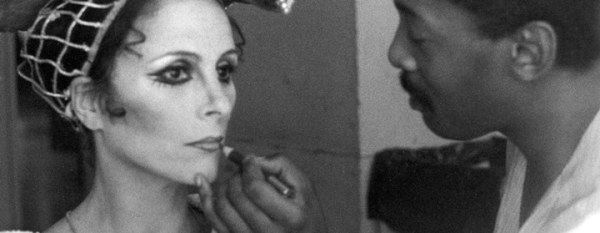
My uncle, Leopold Allen, was a long-time makeup artist for the American Ballet Theatre and was admired for the wonderful job he did on the dancers’ eyes. The job he did on his own eyes when he was going out was pretty special, too. I remember his glorious eyes even now.
Decades have passed. He is no longer with us. In the years since his passing, there have been some positive changes but we’ve still got a long way to go.
A few years ago, the LA Progressive was introduced to Carl Matthes, founder and president of the Uptown Gay and Lesbian Alliance (UGLA), an organization that was founded after the murder of Bobby Brown, a locally well-known young gay man, who was twice assaulted and finally killed as he was leaving a local gay bar, The Bon Mot in Los Angeles.
I began this piece wondering aloud -- have we made progress? I'm still wondering.
Comments

Powered by RoundtableAn AI/DeFi-powered Enterprise Media Operating System. Learn more at Roundtable.io.© Roundtable 2026. By using this site you agree to the Terms of Use and Privacy Policy