


Parallel Journeys
Aug 10, 2024 2:59 PM
Bisexuality, like art, reflects our complexity, our beauty, and our perception
How do we feel safe enough to reveal a piece of art we've labored over for years? How do we feel safe enough to disclose our bisexuality in a world chained to binary logic? We are here whether they love, hate, desire, or ignore us.
Who am I as an artist if I remove my sensitivity and heightened awareness of my environment? Who am I as a bisexual man if I delete my curiosity and imagination? I'm no one.
Revolutionary art, born from the darkest times in history, parallels life paths forged in societal resistance. Marcel Duchamp famously challenged artistic norms by submitting an upside-down urinal to an art exhibition, sparking an outrage that criticized conservative values and expanded the boundaries of what could be considered art, later opening doors for future conceptual artists.
Harlem Renaissance luminaries, such as Langston Hughes and Zora Neale Hurston, used their literary talents to confront racial injustices while celebrating Black cultural heritage. Hurston preserved the vibrant narratives of Black folklore joy, dance, and music as a protest.
Related stories
In a vein of defiance and the refusal to be ignored, we can also challenge the rigid binary norms of society that often constrain and oppress us. Through resistance, a desire to be recognized as we are, and the refusal to ignore that little voice that demands our attention, our identities—as artists or as Bi+ individuals—are illuminated. We uncover truths within us, revealing our perceptions and experiences to claim our space and give air to our most concealed thoughts and feelings about the world (and people) around us.
Art & Bisexuality
As an author, songwriter, music artist, and Bi+ man, I have found that sharing my inner world, artistically or socially, is both daunting and exhilarating. My personality and interests are as symbiotic as my sexuality.
Isolated creative periods are punctuated by hopes that my work will resonate and be understood and celebrated. Yet, recognition of my writing, even from those closest to me, is not guaranteed. Often, the most enthusiastic acknowledgments have come from strangers from far away.
"Hey, I saw your article about biphobia,"
"Hey, I read your book and just wanted to let you know it resonated and it matters," are words from strangers that have jolted me awake when my effort has felt futile.
Revealing my bisexuality evokes similar anxieties and hopes for acceptance, mirroring the complexities of sharing creative work.
Some folks won't appreciate our art; they won't "get it." They might deem it terrible or declare it "trash," and they may fight to censor it and diminish our perspective. Similarly, some might reject our fluidity, labeling us as confused, profane, or doubting its existence. Rejection, in any form, feels personal and violent when it's targeted at the core of who we are.
Artists are advised to cultivate a 'thick skin' and ignore the opinions of others. This is pragmatic advice but overlooks the heightened sensitivity central to artistic and Bi+ worldviews. Sensitivity to emotions and our environment is the root of our urge to express ourselves. Who am I as an artist if I remove my sensitivity and heightened awareness of my environment? Who am I as a bisexual man if I delete my curiosity and imagination? I'm no one.
Resistance & Misunderstanding
Artists have historically existed at the forefront of societal critique, expressing personal truths perceived as inconvenient but demanding attention. This is also true for those of us navigating the intricacies of fluidity, where neither hiding our true selves nor compromising our integrity offers emotional or societal comfort.
In 2008, British recording artist M.I.A. sent the world into an uproar with her song Paper Planes, in which she leaned into the narratives projected on immigrants being labeled as violent thieves.
In pure defiance, M.I.A. chose not to fight criticism but to use it to create music and open professional doors for herself. She hired children to sing on her chorus and used gunshots and cash register sounds to drive home her point and demand the world pay attention to the lives it critiques so freely.
Vulnerability & Resilience
How do we feel safe enough to reveal a piece of art we've labored over for years? How do we feel secure enough to disclose our bisexuality in a world chained to binary logic and, in many ways, rejects worldviews outside of their own?
Without warning, life's unpredictability can sever the most cherished, irreplaceable connections. The loss of my father in 2017 was a catalyst for exploring new ways of expressing grief and identity. This harsh reality underscored a paradoxical freedom to express myself by revealing that safety and permanence are elusive.
By accepting the fundamental risks of living and being a mortal human with limited time, we permit our art and identities to be open to interpretation. We can give others permission to perceive and judge us. We become safe because we know our place. We establish dialogues with our resilience, and we know where to find community support.
We understand that our dreams, hopes, fears, and desires exist independently of the external world—they are alive and occupy space with or without others' participation or approval. When we set ourselves free from what they mean and why they exist, we also set our audience free to experience their lives. We are here whether they love, hate, desire, or ignore us!
Faith in Works Unseen
Understanding the gift to "exist" has led me to embrace 'faith'— Not in a religious sense, but as a sense of trust in my voice, even when it doesn't neatly align with the expectations of others. Frida Kahlo's practice of self-portraiture exemplifies the power of self-affirmation that is critical for anyone forging their path in the world. Frida often said that she paints images of herself because she knows herself the best. We thrive by recognizing acts of self-expression as being fundamental to self-love. Self-expression is not limited to the gorgeous, profound, and insightful; it includes the cringe, the explicit, and the grief.
The art we create and the bisexuality we embody are solely for us. "Your commitment to your work judges the measure of excellence," Phylicia Rashad famously said—a commitment to your inner and outer creative work.
Art and fluidity are alive within us. They serve as tools to explore our minds, emotions, and bodies in hopes of connecting with ourselves and others. When we are "excellent" in this way, we light the way for others. In many ways, we call back that "the coast is clear," "it's safe!" and we offer up the chance to discover our own hidden gems.
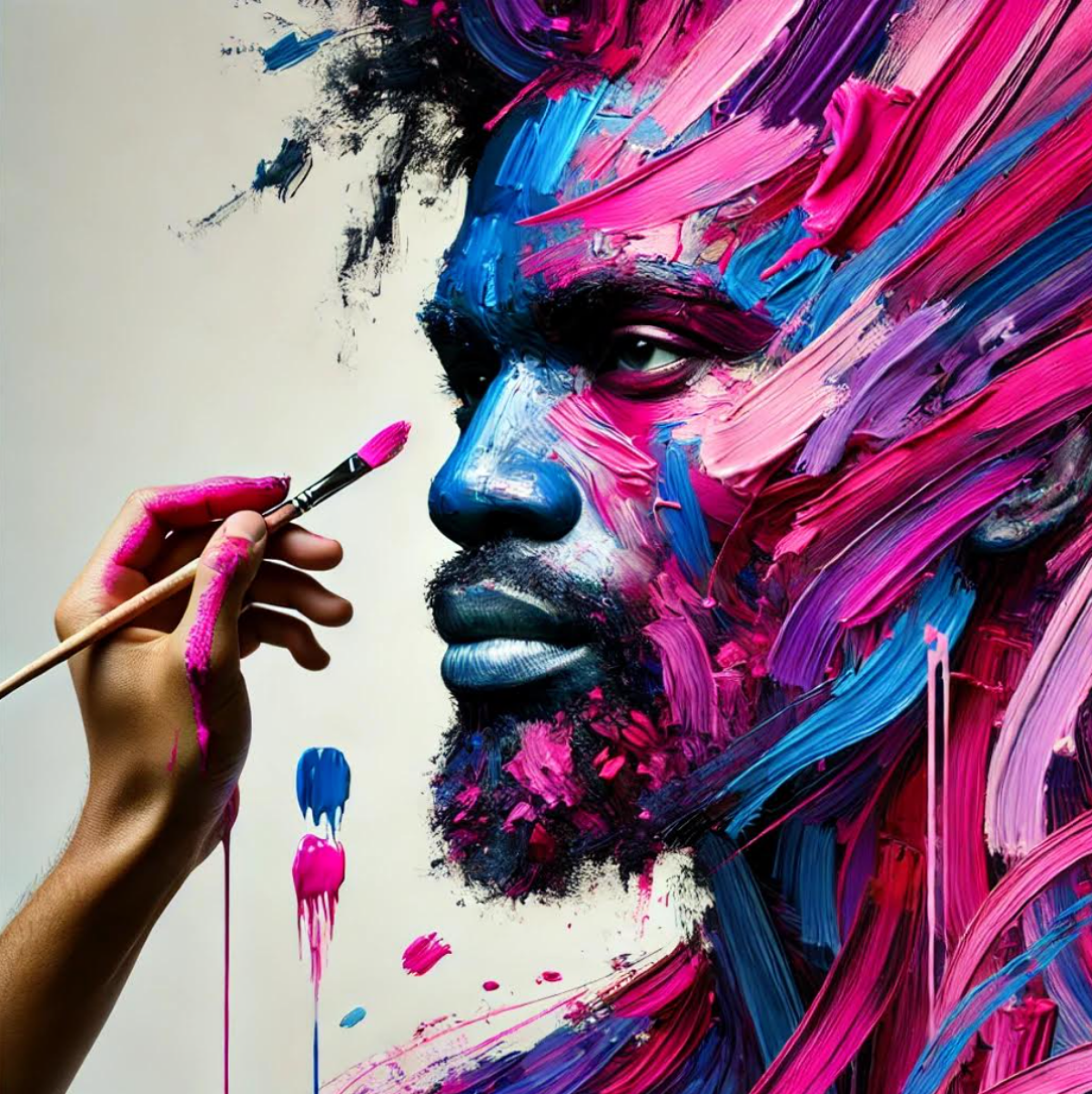
Stella Adler poignantly stated, "Life beats down and crushes the soul, and art reminds you that you have one." Stella's words encapsulate art's critical role and the parallel journey of Bi+ people as reminders of our resilience, sensitivity, and capacity for renewal. Our lives and art are canvases—a masterpiece crafted from the essence of our being. Bisexuality, like art, reflects our complexity, our beauty, and our perception as it enriches and colors the world. And it's yours to keep, whether you shout it from the rooftops or hold it close, just for you.
To learn more and submit, visit www.rewritethebiline.com.
Comments

Powered by RoundtableAn AI/DeFi-powered Enterprise Media Operating System. Learn more at Roundtable.io.© Roundtable 2026. By using this site you agree to the Terms of Use and Privacy Policy