


Mar 1, 2026 8:52 PM
Updated Mar 17, 2026 2:44 AM
The answer is, It is Not.
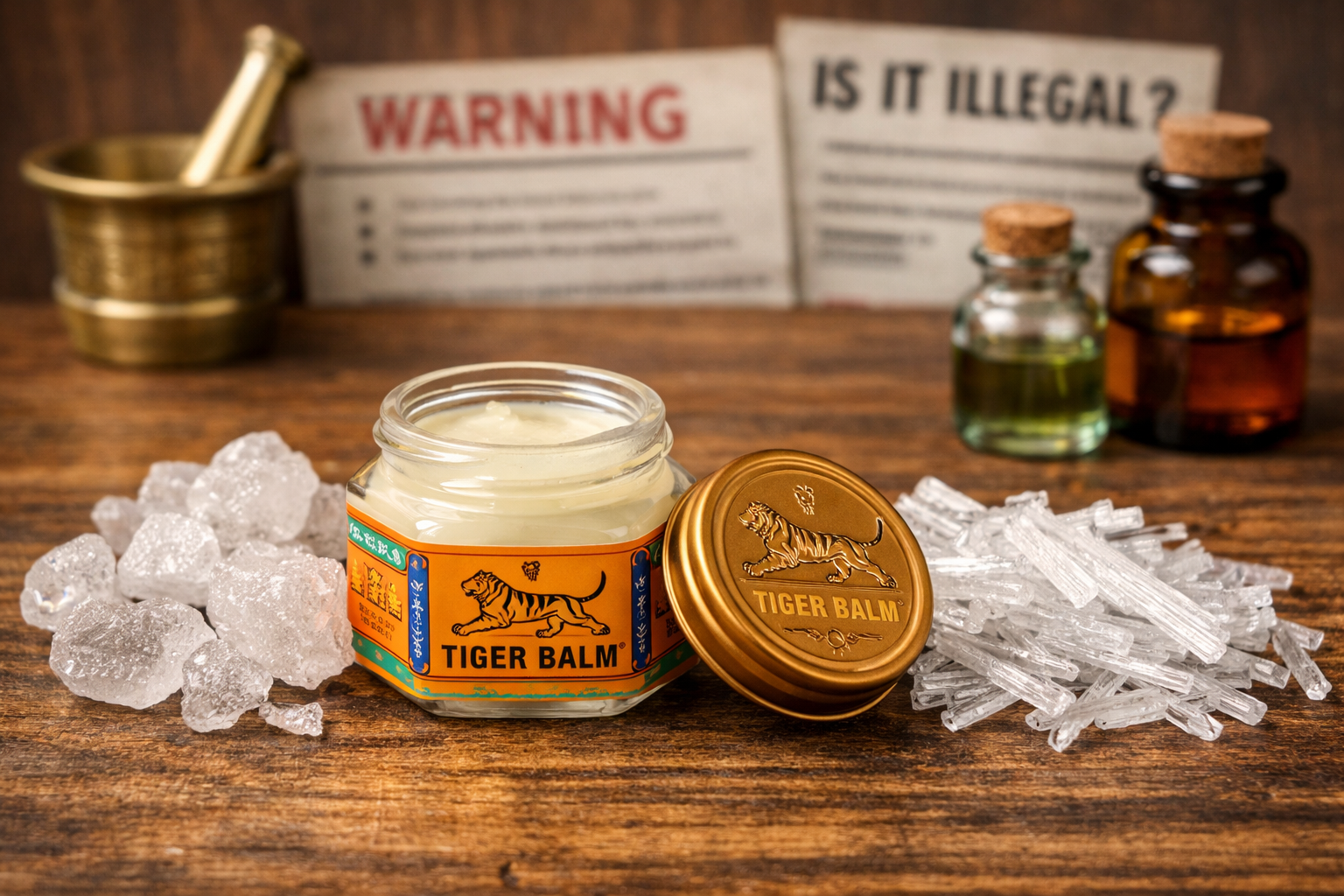
Walk into almost any pharmacy in America and you’ll find a small red-and-gold jar of Tiger Balm sitting quietly on the shelf. It’s been there for decades. It’s sold over the counter. No prescription required.
And yet, every so often, someone asks: Isn’t Tiger Balm illegal?
No. It isn’t.
So where does that rumor come from?
Related stories
Regulation Is Not Prohibition
Tiger Balm is classified in the United States as an over-the-counter topical analgesic — a pain-relief product applied to the skin. Its primary active ingredients are camphor and menthol, both long-used compounds in muscle rubs and cold remedies.
Camphor can be toxic if swallowed in significant quantities. Because of that, the FDA limits the concentration allowed in consumer products (generally up to 11% in OTC topical medications). Modern versions of Tiger Balm sold in the U.S. comply with those limits.
That’s called regulation. Not illegality.
But in an age where nuance disappears online, safety limits morph into “banned,” and compliance becomes “outlawed.”
The Global Confusion Factor
In some countries, products containing higher levels of camphor have faced restrictions. Older imported formulations may not have met U.S. labeling or concentration standards. That can create temporary import issues.
But that’s about cross-border regulation. It’s not a criminal ban.
The same logic applies to countless products: what’s sold in one country may require reformulation in another. That’s how international consumer safety works.
Why This Matters
The Tiger Balm rumor is trivial on its face. It’s a muscle rub. But it reveals something larger about how information circulates.
In today’s environment, three things happen fast:
- A kernel of truth exists (camphor can be toxic in large amounts).
- Regulation steps in (limits are imposed).
- Social media flattens the story into “It’s illegal.”
This is how misinformation spreads — not through grand conspiracies, but through oversimplification.
We’ve seen the same pattern play out in discussions about vaccines, zoning laws, school curricula, and public health guidance. A regulatory adjustment becomes tyranny. A labeling requirement becomes censorship. A safety limit becomes prohibition.
The leap is emotional, not factual.
The Real Safety Issue
Tiger Balm, like any topical analgesic, should be used responsibly:
- Don’t ingest it.
- Don’t apply to broken skin.
- Keep away from small children.
- Wash hands after use.
That’s not evidence of illegality. It’s basic consumer guidance — the same kind printed on everything from aspirin to Vicks VapoRub.
The Bigger Lesson
The question isn’t really about Tiger Balm.
It’s about how easily regulatory language gets weaponized into rumor. In a political culture already primed to distrust institutions, even a muscle rub can become a symbol of imagined overreach.
Facts matter. But so does how we process them.
Tiger Balm isn’t illegal. It never was.
The jar on the shelf is proof.
And the next time a rumor sounds urgent, before passing it along, pause long enough to ask a simpler question:
Is this actually true?
Comments

Powered by RoundtableAn AI/DeFi-powered Enterprise Media Operating System. Learn more at Roundtable.io.© Roundtable 2026. By using this site you agree to the Terms of Use and Privacy Policy