


Feb 25, 2021 1:00 PM
Updated Feb 10, 2022 11:06 PM
Trump lawyers William S. Consovoy and Jay Alan Sekulow had argued that their client had a right to keep his "private financial records,"
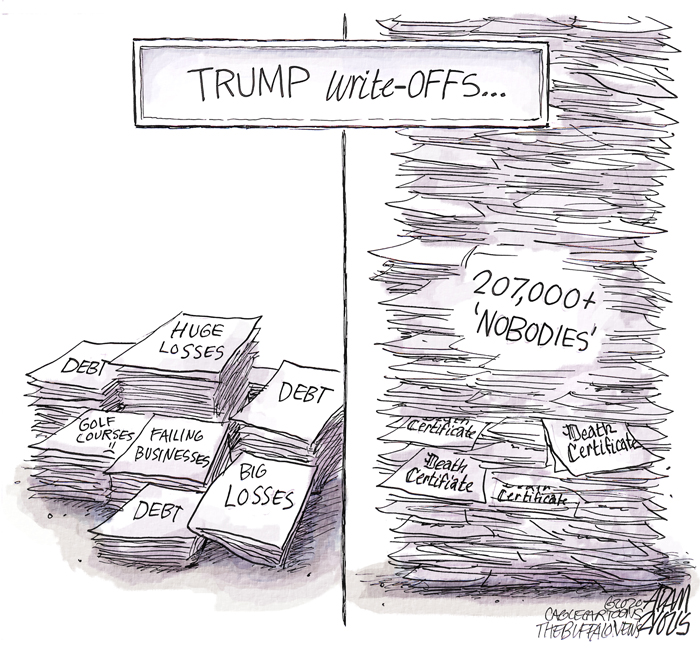
Monday morning, the US Supreme Court -- including its Trump appointees -- rejected Benedict Donald's latest, and hopefully last-chance, effort to hide his taxes from prosecutorial scrutiny. It ended a long and drawn-out legal battle.
To be clear, we're still not looking at actual transparency, because this is not about "we, the people," being able to see the man behind the curtain pulling the levers that release clouds of steam vapor and booming reverbs of ersatz thunder. It's only about the New York D.A. and Grand Jury being able to see the records he's repeatedly lied about disclosing, as far back as the 2016 campaign.
Still, for all who value that the rule-of-law can make no exceptions for the rich and/or powerful and/or bullying, it's time for a huge sigh of relief, if not actual celebration.
Prominent Republicans, including Mitch McConnell, should be pleased. After all, they were calling last week for the courts to investigate and prosecute Trump, instead of the impeachment that Mitch McConnell held-up until the man who lost the election was out of office. Curious, of course, since those who always voted for "whatever Trump wants" -- their Party having no platform in lieu of its issuance of a blank check to a cult-of-personality until close-of-business January 6th.
Related stories
Trump lawyers William S. Consovoy and Jay Alan Sekulow had argued that their client had a right to keep his "private financial records,"
But wait. There's more. Trump is known as a showman. Of dubious substance, at best, but nevertheless a showman. So we can't overlook the rimshot moment of best unintentional hilarity. Because a funny thing happened on the way to the way to the Supreme Court. This is even better than the lawyer with the cat filter.
It came in the reason why the Supremes got the case, when the appeals court panel shot-down Trump's case. His claim being that the investigation by District Attorney Cyrus R. Vance Jr. had to be limited only to some specified (and until the courts could admit the evidence, still alleged) payments made by Michael Cohen to specific individuals.
Cohen, before his criminal conviction brought his come-to-Jesus moment, was Trump’s supernumerary, dispenser of payola, collections agent, chief intimidator, and former lawyer. Subsequent Trump lawyers William S. Consovoy and Jay Alan Sekulow had argued that their client had a right to keep his "private financial records," both in and out of Cohen's files, as his personally privileged secret, off-limits to the Manhattan district attorney.
Sort of a modern-day Al Capone defense, since the Roaring Twenties' best-known organized crime mogul and consummate silencer of those-who-knew-too-much wasn't convicted of anything except income tax evasion.
As Cohen's testimony has established, Trump's "private financial records" include myriad cases of insurance fraud, collecting money in a fiduciary capacity and spending it on whatever he wanted, and a plethora of expenditures, payoffs, handouts, and grifts illegally listed as legitimate deductions. Among those, Cohen detailed his own role in Trump's secret hush-money payments to adult-film actress Stormy Daniels and former Playboy model Karen McDougal, which, Cohen testified, Trump declared as other expenses that were deductible.
When you can't argue substance, you argue process. When you can't do that, you argue undue apocalyptic harm if the truth comes out.
Trump's lawyers tried to claim a vast variety of horrible fates would befall their client if disclosure of his payoff-riddled, tax-evading records came home to roost. In rejecting that weird premise for Trump immunity, the appeals court ruling said that the “bare assertion … amounts to nothing more than implausible speculation.”
Wait. Did you catch that? "Bare assertion" -- involving hush payments to a porno actress and a Playboy bunny?
And you thought the law was a dry read.
Larry Wines
Comments

Powered by RoundtableAn AI/DeFi-powered Enterprise Media Operating System. Learn more at Roundtable.io.© Roundtable 2026. By using this site you agree to the Terms of Use and Privacy Policy