
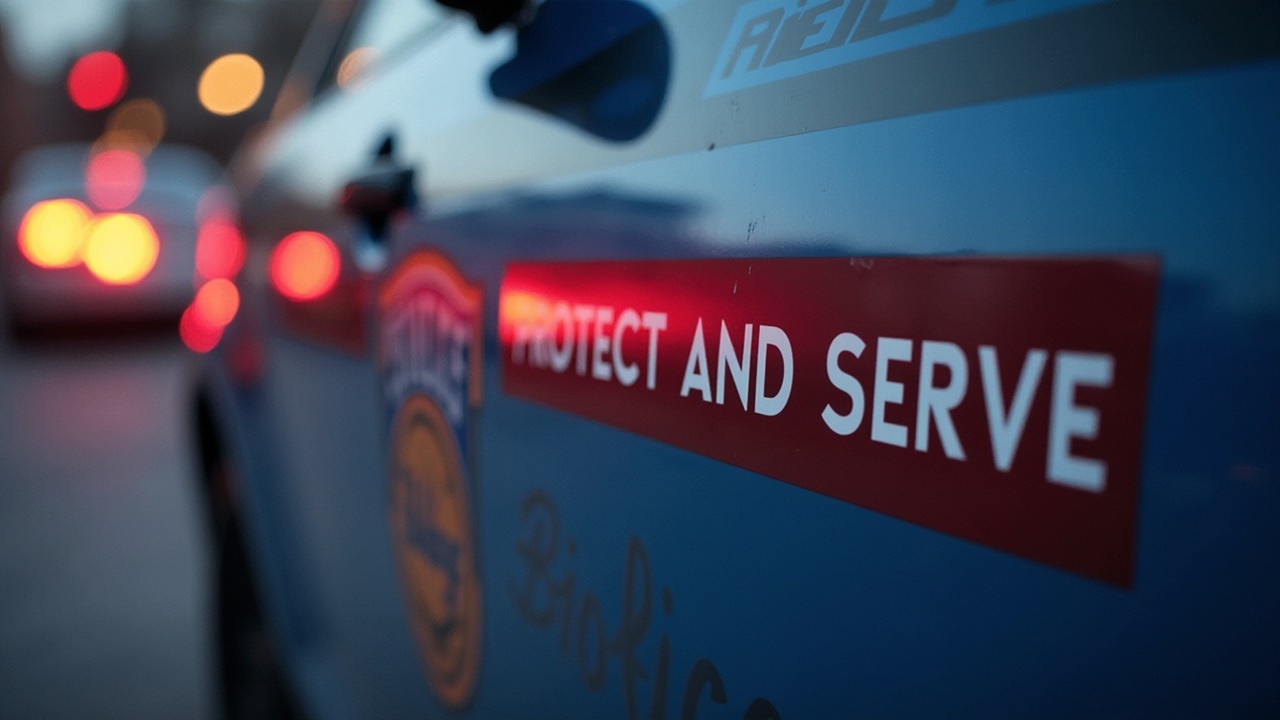


To Protect and Serve, Really?
May 7, 2025 3:41 PM
Updated Oct 30, 2025 9:37 PM
The Supreme Court has held that police do not have a constitutional duty to protect individual citizens - why, then, is their motto "to protect and serve"?
Most of us know the slogan. When it comes to mind, many think it is the police officers' credo and duty -- they would be wrong on the second part. While law enforcement agencies across this country use the slogan, "to protect and serve", it turns out that the police in the United States don't actually have a constitutional duty to protect individual citizens from harm, nor do they have a duty to prevent crime. This may come as a surprise and seem unbelievable, but it's true and has been upheld repeatedly by the courts. The words "to protect and serve" are nothing more than an empty slogan -- there is nothing binding behind the words.
The motto "To Protect and Serve," while widely used by police departments across the United States, was first adopted in 1955 by the Los Angeles Police Department in a motto contest run to improve the department's image. The slogan was eventually adopted by many of the 18,000 agencies across the U.S. But, according to Georgetown Law Review, through a series of decisions, affirmed by the courts, the police have no legal obligation to prevent harm or prevent crime (except under specific circumstances).
I'll shed some light on what those "specific circumstances" are in a moment, but first let's look at the two main precedent-setting Supreme Court cases that Georgetown Law Review is referring to.
Key Legal Precedents:
- DeShaney v. Winnebago County (1989) In the tragic events that led to the DeShaney v. Winnebago County (1989) case, four-year-old Joshua DeShaney was severely beaten and permanently brain damaged by his father, Randy DeShaney, after repeated reports of abuse. Winnebago County Department of Social Services in Wisconsin had been alerted multiple times by medical professionals and others about signs of abuse, and the agency had even temporarily removed Joshua from his father’s custody — but ultimately returned him and took no further protective action. Despite clear warnings and evidence, the agency failed to intervene effectively, and Joshua was left in the custody of his abusive father, who later inflicted injuries that left the child with profound disabilities. The Supreme Court ruled that the government (and by extension, police) is not liable for failing to protect a child from abuse by his father, even though social services had been involved. Quote: “The Due Process Clause... does not impose a duty on the state to protect the life, liberty, and property of its citizens against invasion by private actors.”
- Castle Rock v. Gonzales (2005) In Castle Rock v. Gonzales (2005), Jessica Gonzales repeatedly pleaded with police in Castle Rock, Colorado, to enforce a restraining order against her estranged husband, Simon Gonzales, after he abducted their three young daughters in violation of the court order. Despite her urgent calls and clear evidence of the violation, the police refused to take immediate action. Hours later, Simon Gonzales arrived at the police station and opened fire, prompting officers to shoot and kill him — only to discover the bodies of the three girls in his vehicle. Jessica Gonzales sued, arguing that the police had a duty to enforce the restraining order, but the Supreme Court ultimately ruled that she had no constitutional right to police enforcement of the order. This tragic case is often cited in discussions about protective orders defense, as it highlights the complexities surrounding the enforcement of restraining orders and the limits of police responsibility. A woman sued the police for failing to enforce a restraining order against her ex-husband, who later killed her three daughters. The Supreme Court ruled that it was not mandatory for police to enforce restraining orders, and thus the mother had no constitutional right to police protection for herself or her children.
Related stories
These deeply tragic cases have helped establish legal precedent that often blocks plaintiffs from prevailing in lawsuits against the police, even after suffering severe harm. Courts have repeatedly ruled that, even in critical emergencies like school shootings, police in the U.S. generally do not have a constitutional obligation to protect specific individuals — including children — even after the police are called to the scene. This legal reality, affirmed in multiple court decisions, continues to surprise and disturb the public.
An Example of a School Shooting Case
Case in point: In 2018, one of the most deadly school shootings in U.S. history played out in Parkland, Florida, resulting in 17 fatalities and 18 injuries. On the day of the attack, police officers were present at the scene while the shooter was actively killing students at Marjory Stoneman Douglas High School —but law enforcement did not enter the building until the shooting stopped and the shooter had exited, blending in with fleeing students.
Following the shooting, in several different civil actions, victims sued the school district, law enforcement, including the armed school resource officer who was deputized by the Broward County Sheriff, the gun manufacturer, the FBI, and others.
Here's a little background gleaned from the post-shooting commissioned investigation:
- Law enforcement agencies — including the Broward County Sheriff’s Office and the FBI — had received multiple warnings and reports about the shooter well before the Parkland school shooting. These warnings spanned several years and clearly indicated that he was a potential threat, yet no effective preventive action was taken.
- The shooter had a lengthy, years-long record of engaging in threatening behavior, including threatening to shoot up the school.
- Between 2008 and 2017, the police were called out to the home of the shooter more than 30 times for issues including domestic violence, assault, and threats.
- An investigation by a commission appointed by the governor condemned the police for their inaction both before and during the tragedy.
The commissioned investigation determined that there were at least four major system failures:
- Law enforcement failed to act on clear and credible warnings
- The FBI admitted they did not follow protocol with one of the tips
- Florida's weak gun laws at the time allowed the shooter to legally acquire deadly weapons
- Mental health interventions and family services failed to track or monitor him meaningfully
Several lawsuits were filed, but what was the outcome of the civil lawsuit filed specifically against the Broward County Sheriff?
U.S. District Judge Beth Bloom dismissed the lawsuit filed on behalf of 15 students who survived the massacre. The defendants included the Broward County Sheriff's Office, the Broward School District, and the school deputy.
The court's rationale in dismissing this case was that the Constitution protects against government abuses, not government inaction.
Note: There were several multimillion-dollar settlements that were reached in other Parkland shooting civil suits.
Special Relationships: When Police Are Obligated to Protect and Serve
As mentioned, under certain conditions, police might be obligated to provide protection and could possibly be held liable if they neglect to do so. These “special relationships” exist when law enforcement is holding someone in custody. State-level laws create specific duties to protect those held in custody. These duties are rare and are often limited in scope.
What This Means Practically:
- Police departments have general responsibilities to uphold public safety, but they are not legally required to protect specific individuals in real time.
- This has major implications in civil suits (as evidenced by the dismissed case in the Parkland shooting): victims often cannot sue police for failing to prevent crimes or failing to respond to threats.
Another Equally Troubling Case
As we've seen, there have been numerous cases where injured plaintiffs have filed lawsuits, believing that police were negligent and had a responsibility to either prevent harm or to protect them from harm—only to learn that the Constitution does not impose these duties on law enforcement.
But here's a case that indelibly etched that reality into my mind. It is the case of Lozito v. City of New York.
Lozito v. City of New York - Summary
In Lozito v. City of New York, Joseph Lozito was riding a Manhattan subway in 2011 when he was brutally attacked by Maksim Gelman, a fugitive who had killed four people during a 28-hour rampage across New York City. As Gelman boarded the subway armed with an 8-inch knife, two NYPD officers were stationed inside the motorman’s booth, allegedly there to apprehend him. Gelman then attacked Lozito, stabbing him multiple in the face and head. Despite witnessing the violent assault, the officers did not intervene while Lozito was being stabbed. Lozito managed to subdue Gelman by himself, after which police exited the booth and took Gelman into custody. Lozito later sued the city, claiming the officers had failed to protect him and simply watched the attack just feet away, but the court dismissed the case, ruling that the police had no constitutional duty to protect individual citizens, even in such circumstances. So, back to the "protect and serve" motto
So, back to the "protect and serve" motto
Police budgets have increased across major metropolitan areas throughout the United States for decades. Now that we know law enforcement officers are not obligated to protect and serve individuals, what are these budget increases paying for?
Key Trends:
- Police Budget Growth: Many cities allocate over one-third of their discretionary budgets to police departments. Cities like Los Angeles, New York, and Chicago have steadily increased their policing budgets, even during times of broader municipal austerity.
- Declining or Underfunded Social Services: Affordable housing, mental health services, addiction treatment, and homelessness support have often faced cuts or insufficient growth. During economic downturns (like the 2008 financial crisis and early pandemic years), social service departments were often the first to face budget reductions, while police budgets were preserved or even increased.
- Substitution Effect: Many experts argue that cities have increasingly used police to respond to non-criminal social issues (mental illness, homelessness, addiction), which might otherwise be addressed by social workers, healthcare, or housing professionals.
- Academic & Policy Analysis: Reports from think tanks (e.g. Urban Institute, Vera Institute) and universities have highlighted that increased policing hasn't resolved core social problems, and often diverts resources away from more effective long-term solutions.
Side Note:
- New York City: Between 2001 and 2020, the New York Police Dept. budget increased significantly, while the city reduced spending on youth services and housing support.
- Los Angeles: In recent years, the Los Angeles Police Dept budget remained over $3 billion annually, while services for homelessness, the fire department and other social services remained underfunded despite severe needs.
This article does not delve into qualified immunity, the legal doctrine that protects government officials — including police officers — from personal liability for monetary damages in civil lawsuits. Importantly, none of the cases discussed here involved efforts to recover damages from the personal assets of individual officers. Rather, this piece aims to highlight the stark contrast between the public motto “to protect and serve” and the legal reality of police obligations. I hope it provided meaningful insight.
Comments

Powered by RoundtableAn AI/DeFi-powered Enterprise Media Operating System. Learn more at Roundtable.io.© Roundtable 2026. By using this site you agree to the Terms of Use and Privacy Policy