


Apr 1, 2023 10:00 AM
Updated Apr 1, 2023 4:45 PM
How important is it for you to feel safe in your neighborhood? This is a rhetorical but existentially important question.
How important is it for you to feel safe in your neighborhood? This is a rhetorical but existentially important question. Ever since we witnessed the murder of George Floyd on television, there have been manic efforts, coast to coast, to reform policing, yet most police departments have missed the point of reform by a country mile.
I have been focused on this subject for more than half a century. In the 1960s, after a four-year hitch in the Marines, I joined the police department in Dallas, Texas. I began the job with over-the-top enthusiasm only to suffer what is commonly called burnout in a little over four years. I quit the department and wound up working for Atlantic Richfield on Alaska’s North Slope. I became fascinated with the behavioral sciences, and I became determined to discover why, after having been so excited about police work, I became too jaded to continue.
After years of writing books about the value of self-education while studying history, anthropology, evolutionary psychology, human biology, sociology, police literature, and neuroscience, I published Blue Bias: An Ex-Cop Turned Philosopher Examines the Learning and Resolve Necessary to End Hidden Prejudice in Policing in 2020. My objective was to help prevent officer burnout, reduce the incidents of excessive force, help officers adopt a perspective that prevents cynicism, and to increase mutual respect between officers and citizens.
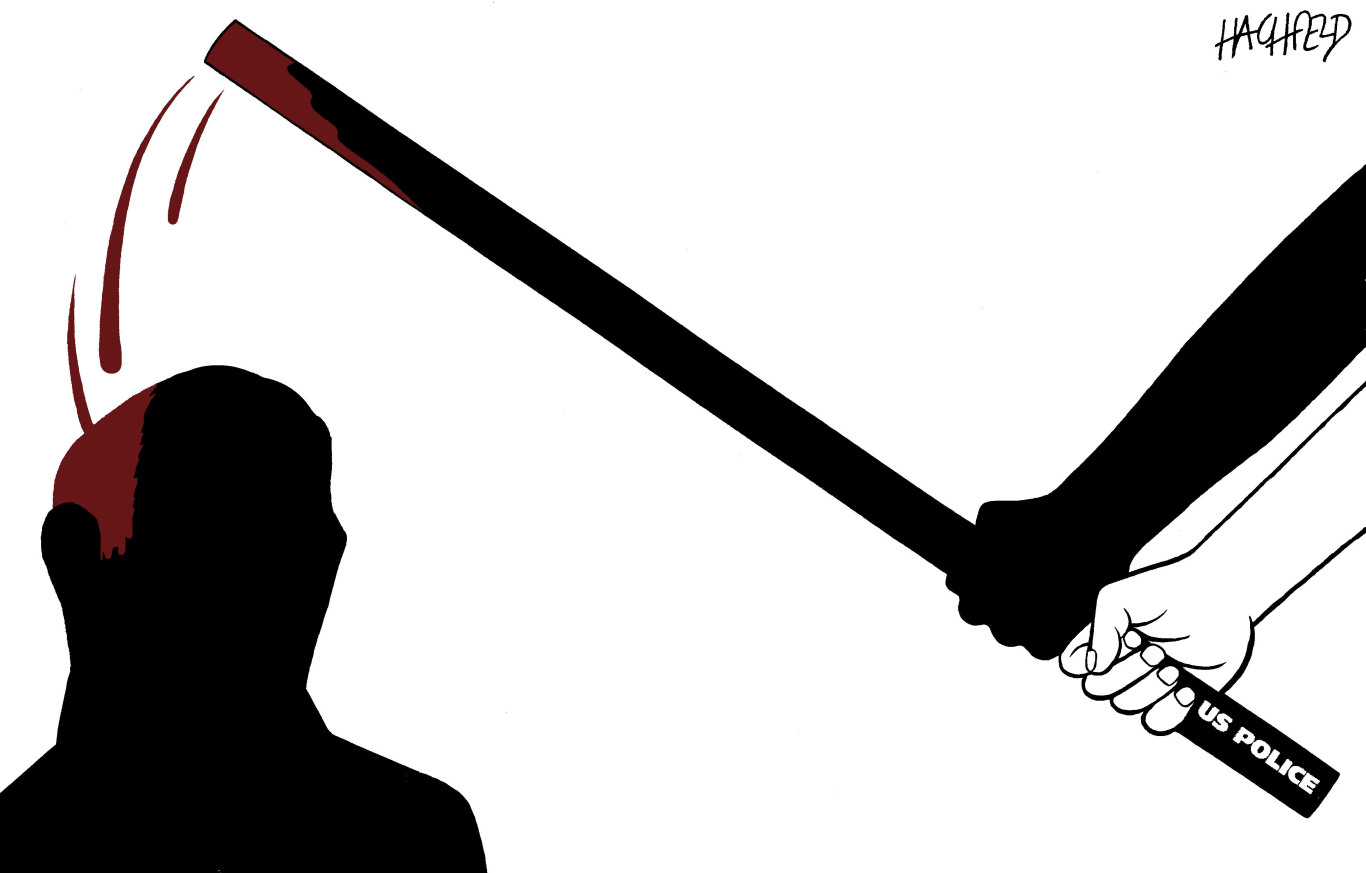
Shortly after the publication of Blue Bias, the George Floyd incident occurred in Minnesota and police reform became a blistering topic. But one doesn’t need to be a scholar to understand why police reform fails miserably time and again. The problem must be understood in terms of why we have police officers in the first place. The fundamental reason why we have police is public safety but in predominantly Black neighborhoods this objective has nearly always been subordinate to overly aggressive policing for the sake of racking up arrest numbers.
Related stories
If the oath to protect and serve is the true objective, then public safety must be the lifeblood of policing. But at the bedrock level, policing is governed by politics. In police departments across this country, police sergeants in the detail room before shifts instruct officers to fill their activity sheets with traffic tickets, arrests, and court summons, etc. The whole process becomes a numbers game while judgements are made about success by measuring statistics. The desk sergeant is pressured by the lieutenant, who is pressured by the captain, who takes heat from deputy chiefs to the chief of police who takes direction from the mayor or city manager.
The result of this political coercion is that the goal of keeping the community safe is overlooked because of a numbers game, driven mostly by the need for revenue. The numbers go up and down while the citizens of neighborhoods considered high-crime areas must not only deal with being the victims of crimes but must also contend with being harangued by police officers as the need for local government revenue makes them a target in far too many cases due to the color of their skin. In so many situations, it’s not overt racial prejudice that is the culprit here—it is instead the timeless tradition of overly aggressive policing that has been going on for so long that it just seems to be normal or business as usual. Overly aggressive policing in poor neighborhoods has been a tradition since the days of colonialism. [i] Every Black person racially profiled, every traffic stop made not for public safety but for revenue enhancement, and every person arrested on trumped-up charges for the sake of embellishing the numbers to impress politicians is a betrayal to oath to protect and serve. A retired chief of police who is a friend of mine says the law enforcement oath needs to be changed to read “to serve and protect.” [ii] It makes perfect sense if public safety is the rightful objective.
In my view, the Broken Windows Theory, the notion that if you take care of small problems, it will help eliminate big problems contains a grain of truth. For example, in areas where there is lots of graffiti, the chances of attracting more graffiti are much more likely than if there were none. [iii] But the reality of overly aggressive policing is a broken faith with the public. Everyone takes on the persona of a being a suspect, and any excuse to accost average citizens is an opportunity for officers to add money to government coffers.
Make no mistake: citizens who live in high-crime areas desperately want criminals arrested. What they don’t want is to be stopped incessantly because of their looks
Make no mistake: citizens who live in high-crime areas desperately want criminals arrested. What they don’t want is to be stopped incessantly because of their looks and where they live. The way things are now, a significant number of the statistics that drive police activities are anathema to a safe community. Too many people who should have never been accosted by police officers in the first place are irreparably harmed. In other words, focusing solely on numbers creates numbers that should have never occurred. That a broken taillight or a defective turn signal can result in citizens being killed by police officers is a bridge too far in any moral context.
The following is a quote from the US Department of Justice’s Executive Summary Report of March 8th, 2023, about the Louisville/Jefferson County Metro Government (Louisville Metro) and the Louisville Metro Police Department (LMPD) into the investigation of the death of Breonna Taylor at the hands of Louisville police officers in March of 2020: [iv]
“For years, LMPD has practiced an aggressive style of policing that it deploys selectively, especially against Black people, but also against vulnerable people throughout the city. LMPD cites people for minor offenses, like wide turns and broken taillights, while serious crimes like sexual assault and homicide go unsolved. Some officers demonstrate disrespect for the people they are sworn to protect. Some officers have videotaped themselves throwing drinks at pedestrians from their cars; insulting people with disabilities; and have called Black people ‘monkeys,’ ‘animal,’ and ‘boy.’ This conduct erodes community trust, and the unlawful practices of LMPD and Louisville Metro undermine public safety.”
The report also found LMPD officers guilty of using excessive force, the unreasonable use of police dogs and tasers, conducting searches based on invalid warrants, unlawfully executing search warrants without knocking,, unlawful stops, unlawful searches, unlawfully detaining and arresting people during street enforcement activities, including traffic and pedestrian stops, unlawfully discriminating against Black people, and violating the rights of people engaged in protected speech critical of policing. They also found that the LMPD discriminates against people with behavioral health disabilities when responding to them in crisis.
Read this DOJ Report, then read the Ferguson Missouri DOJ Report in March of 2015 that was conducted because of the shooting of Michael Brown. Then compare it to this one in Louisville and the question about the effectiveness of police reform will help answer itself. [v]
Why does community safety play second fiddle to arrest numbers? If the goal of community safety were achieved, would breaking the law be a big risk? Imagine living in a neighborhood where the omnipresence of stress is apparent 24/7. A place where at night the number of squad cars cruising down dark streets, one after another, ready to stop anything that moves, feels to residents like predators stalking prey.
In Blue Bias, I refer to these neighborhoods as “cortisol canyons.” [vi] In such communities, expecting citizens to trust the police is hysterically absurd. Think about major crimes going unsolved while officers are out of service chasing petty fines to please politicians. Politics seriously impedes real police reform, and the solution is simple: Find other sources of government revenue, rather than on the backs of people who can least afford the fines, people who are themselves too often the victims of crime.
Defunding the police is self-defeating. Instead, fund local governments by other means. Having police officers stop chasing petty offenses for revenue doesn’t mean communities will need fewer officers; the reverse is more likely. Keeping neighborhoods safe means having enough officers to be ready to swoop in when major crimes occur. Cutting the response time to calls for help is critical to achieve the level of public safety that makes neighborhoods feel safe to the degree that anyone would want to live there. The existential reward for achieving a safe community is that it becomes a place where it is unsafe to commit a crime.
Now, efforts to alleviate implicit racial bias is another subject altogether. The number one means of resolving the problem is hiring officers who care deeply about doing just that. We are a tribalistic species—we are endowed with a biological makeup that makes us exceptionally wary of too much otherness. We are chemically cocktailed to bond and to ostracize when familiarity gives way to doubt and suspicion. [vii] From a very early age, we categorize and stereotype automatically, having virtually no self-control over the process as we absorb our respective cultures as they appear—not as we wish they would be. [viii]
In both Blue Bias and Evolving in a Dangerous World, I examine how implicit biases work and how best to alleviate them. This latter work, I wrote specifically to deal with the political backlash against the Black Lives Matter Movement, which in my view is a profoundly dramatic plea to right centuries-old wrongs.
The old-fashioned kind of explicit racial hatred has exploded during the past decade, but it is my thesis that most of the incidents of implicit biases that occur in policing are those that can be eliminated by officers who care deeply about doing so. In neighborhoods that are considered safe places to live, trusting the police is much easier than in locations where the police are viewed with suspicion or are reviled as the enemy.
Simply put, the oath to protect and serve must be believable based on glaring evidence. If the claim is made without proof, everyone will know it is just politics as usual and despite all the rhetoric, nothing has changed.
[i] Charles D. Hayes, Blue Bias: An-Ex-Cop Turned Philosopher Examines the Learning and Resolve Necessary to End Hidden Prejudice in Policing (Wasilla, AK: Autodidactic Press), 61-64.
[ii] Steve Rhodes, retired police chief, Cedar Hill, Texas.
[iii] Hayes, Blue Bias, 217, 328n26, 328n31.
[iv] Department of Justice Office of Public Affairs, “Justice Department Finds Civil Rights Violations by the Louisville Metro Police Department and Louisville/Jefferson County Metro Government,” The United States Department of Justice, March 8, 2023, https://www.justice.gov/opa/pr/justice-department-finds-civil-rights-violations-louisville-metro-police-department-and.
[v] Department of Justice, “Justice Department Finds Civil Rights Violations,” https://www.justice.gov/opa/pr/justice-department-finds-civil-rights-violations-louisville-metro-police-department-and.
[vi] Hayes, Blue Bias, 209-215, 244-245, 275.
[vii] Charles D. Hayes, Evolving in a Dangerous World Made Racism Inevitable: Concerned Citizens, Police Officers, and Teachers Can Help Change This (Wasilla, AK: Autodidactic Press, 2022), 33-36.
[viii] Hayes, Evolving in a Dangerous World Made Racism Inevitable, 46, 111.
Comments

Powered by RoundtableAn AI/DeFi-powered Enterprise Media Operating System. Learn more at Roundtable.io.© Roundtable 2026. By using this site you agree to the Terms of Use and Privacy Policy