


Jul 5, 2022 4:00 PM
Originalists are like other constitutional theorists: perfectly capable of inventing authority not provided by the text.
The late Supreme Court Justice Antonin Scalia, current Justices Clarence Thomas, Samuel Alito, and several other justices, subscribe to the constitutional interpretation known as “originalism,” which “asserts that all statements in the constitution must be interpreted based on the original understanding ‘at the time it was adopted’.” (wickipedia.org) This theory underpinned last month’s majority decision, written by Justice Alito (Dobbs v. Jackson Women’s Health Organization) overruling Roe v. Wade (1973) and withdrawing the federal right to abortion.
Alito argued the since abortion is not mentioned in the Constitution or any of its amendments, there can be no basis for a federal constitutional right to abortion. He thereby kicked the issue to the individual states.
The majority did not choose flatly to outlaw abortion nation-wide. But as originalists, they could have taken the latter path under the authority of the Fifth Amendment’s provision that “No person shall … be deprived of life, liberty or property, without due process of law.” If you believe that a fetus is a person from conception, there’s your ticket.
On the other hand, advocates for the right to abortion may just as well cite the Ninth Amendment: “The enumeration, in the Constitution, of certain rights, shall not be construed to deny or disparage others retained by the people.” Roe v. Wade based the right to abortion on a right to privacy that previous precedents found to be implied, though not specified, in the Constitution. Indeed, while women had found ways to terminate pregnancies for millennia, allowing or prohibiting it by law would not have occurred to the Founders.
Related stories
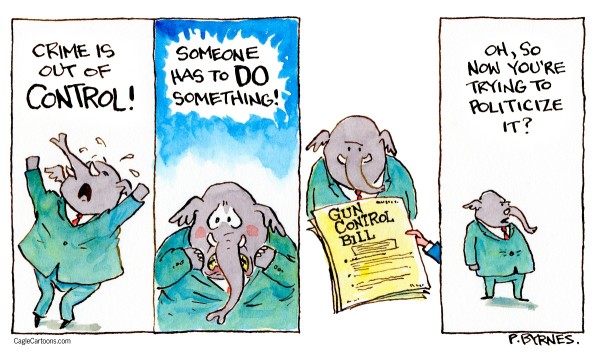
Originalists have bent the meaning of the texts to fit their current preferences. A prime example is the 2008 decision (Justice Scalia writing for a 5-4 majority), affirming the individual right, under the Second Amendment, of an individual right to “keep and bear arms,” contrary to the plain meaning of the Amendment, which reads: “A well-regulated Militia, being necessary to the security of a free State, the right of the the people to keep and bear arms shall not be infringed.” Scalia simply chose to disregard the initial clause because it was inconvenient to his purpose.
Similarly, Chief Justice John Roberts’ majority opinion in Citizens United v. Federal Election Commission (2010) ignored the plain meaning of the First Amendment’s protection of freedom of speech to construe corporate spending as a form of free speech that could not be restricted. The authors of the First Amendment could not have conceived how wealthy corporations distort the “free market of ideas," but Roberts nonetheless found that such corporations have the same rights as individuals, and that money spent is protected speech.
Even before the origijnalists, the existence of a constitutional text has not guaranteed its enforcement. The Fourteenth Amendment was manifestly intended to establish the citizenship of freed slaves and to guarantee their equal treatment by the states, but it was routinely disregarded by the courts and political authorities for a century, except to be perverted to protect corporations from state regulation. And the Fifteenth Amendment, affirming the right to vote for the freedmen, was flouted with impunity across all Southern and Border states, until the passage of the Voting Rights Act of 1965. Originalists are like other constitutional theorists: perfectly capable of inventing authority not provided by the text.
If the originalists succeed, their constitutional interpretation could not only end the federal right to abortion, but fundamentally limit the federal government’s authority to establish a wide range of programs not mentioned in the Constitution, such as Social Security, Medicare, regulation of business, protection of the environment, and restrict rights established in recent decades, such as the right to same-sex marriage or even contraception. We have only to read Justice Thomas’ concurring opinion in Dobbs. He presumably would not agree to outlawing interracial marriages, since he has one.
They want to send us back to the 1880s—or the 1850s.
Comments

Powered by RoundtableAn AI/DeFi-powered Enterprise Media Operating System. Learn more at Roundtable.io.© Roundtable 2026. By using this site you agree to the Terms of Use and Privacy Policy