


XPOTUS
Dec 31, 2023 9:12 PM
I suppose the Framers thought that impeachment and removal from office was enough of a check on the President.
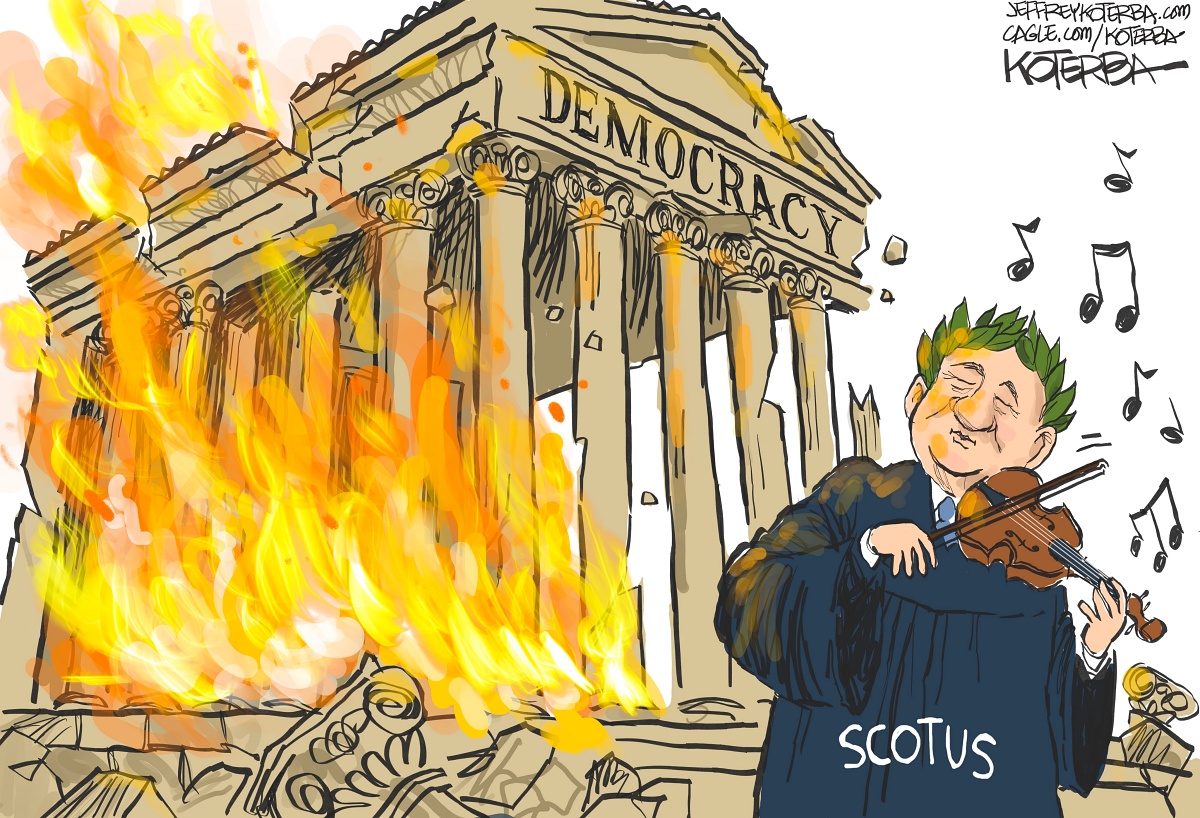
The Supreme Court (SCOTUS) cannot duck two major constitutional issues involving former President Donald Trump (XPOTUS).
The first is whether, in light of Trump's manifest and public encouragement of the assault on the Capitol on January 6, 2021, he should be barred from holding office under the 14th Amendment. The relevant language from Section 3 of that Amendment is:
No person shall...hold any office, civil or military, under the United States...who, having previously taken an oath...as an officer of the United States...to support the Constitution of the United States, shall have engaged in insurrection or rebellion against the same,or given aid or comfort to the enemies thereof.
This was intended to block the election or appointment of former members of the US House or Senate, or former military officers, who had defected to the Confederacy. Nobody at that time (1868) would have imagined that a former President could be accused of such disloyalty.
Related stories
But the language has been argued to apply to the events of January 6, snd to Trump's role. The Colorado Supreme Court and the Maine Secretary of State have ruled that Trump should be barred from the ballot because of his action and inaction on that date.
SCOTUS will take this case. The 6-3 conservative majority will probably hold that the framers of the 14th Amendment intended this provision to apply only to former Confederates, and that to apply it to Trump is inappropriate. The plain language of the provision notwithstanding, this is not an unreasonable interpretation, politically safer: Trump's backers will see his removal from the ballot in some states as blatantly partisan.
However, if SCOTUS rules that this provision of the 14th Amendment does apply to Trump, and that he is therefore barred from holding office, then a thoroughly conservative Court would have ruled against Trump.
However, if SCOTUS rules (no doubt a split vote, Roberts and Kavanaugh the most likely defectors) that this provision of the 14th Amendment does apply to Trump, and that he is therefore barred from holding office, then a thoroughly conservative Court would have ruled against Trump, and its ruling would apply to the whole country. Trump and his supporters would have no leg to stand on.
The other issue is Trump’s claim that he has immunity from prosecution for anything he did while still President. SCOTUS could duck this by refusing to take an appeal from whatever decision is rendered by the Circuit Court for the District of Columbia. The trial judge ruled that he does not have such immunity. The DC Circuit tends to be liberal, so I would bet that it will support the trial judge’s decision. If so, and if the majority of SCOTUS agrees, they could refuse the appeal.
It would be astonishing if SCOTUS favored such a sweeping claim. The Constitution itself makes no mention of presidential immunity, while it does provide restricted immunity to members of the House and Senate. They are not immune from arrest for “Treason, Felony and Breach of the Peace.” Otherwise, members are to be “privileged from Arrest” during their sessions, and in going to and from such sessions. They are not to be questioned in any other place for speeches and debates in Congress.
I suppose the Framers thought that impeachment and removal from office was enough of a check on the President. And of course, once out of office, XPOTUS is as subject to arrest as any other citizen, as Senator McConnell noted in explaining his vote against conviction in Trump’s second impeachment.
The courts never have found anything close to Trump’s claim of absolute criminal immunity. Indeed, in 2020 (Trump v. Vance) SCOTUS ruled that the President is not immune from state criminal proceedings. The flimsy foundation of Trump’s claim seems to be an opinion of the Department of Justice in the Nixon era that prosecuting an incumbent President would be too disruptive.
That a President would be immune from prosecution for any actions while he was President thus has no foundation in recent US jurisprudence. You have to go back to English Common Law that protected the Monarch from such prosecution. But even then, the English found they could legally hang Charles I in 1649, and legally remove James II in 1688.
I will not be surprised if SCOTUS rejects this extravagant claim—maybe unanimously.
Comments

Powered by RoundtableAn AI/DeFi-powered Enterprise Media Operating System. Learn more at Roundtable.io.© Roundtable 2026. By using this site you agree to the Terms of Use and Privacy Policy