


Jun 22, 2024 3:42 PM
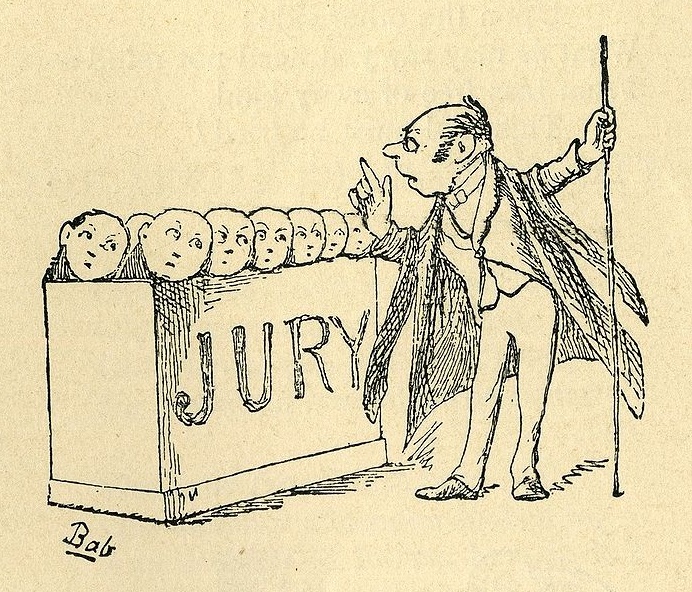
Trial by jury has been around for a long time, but it wasn't always available. It was developed to protect people from abusive prosecution by officials.
Donald Trump complains repeatedly about how unfair his criminal prosecutions are, maintaining they were brought for political purposes.
On the other end of the political spectrum, a number of people worry about abuse of governmental power if the former president is re-elected. Trump amplifies these fears by threatening revenge against his political enemies
Both Mr. Trump and those who quake in their boots at the possibility of his re-election are overlooking the role of juries here.
Although some English juries existed before King John was forced to sign the Magna Carta in 1215, the right to trial by a jury was an important part of that famous document. Article 39 read: "No freeman shall be seized, or imprisoned, or dispossessed, or outlawed, or in any way destroyed; nor will we condemn him, nor will we commit him to prison, excepting by the legal judgment of his peers, or by the law of the land."
Related stories
Trial by jury protects people from abusive prosecution by officials because jurors have to be unanimously convinced by evidence that a legal violation has occurred.
England's government did not always live up to King John's pledge, and abuses of government power ultimately crept into the proceedings of the infamous "Star Chamber." The Star Chamber did not have juries.
As noted by Edgar Lee Masters:
"In the Star Chamber the council could inflict any punishment short of death, and frequently sentenced objects of its wrath to the pillory, to whipping and to the cutting off of ears. ... With each embarrassment to arbitrary power the Star Chamber became emboldened to undertake further usurpation. ... The Star Chamber finally summoned juries before it for verdicts disagreeable to the government, and fined and imprisoned them."
The Star Chamber no longer exists.
Under American law, lawyers for both sides of a case participate in selecting jurors, enabling them to exclude jurors they think would be biased against their side of the case. The jurors can only convict if they are convinced "beyond any reasonable doubt" that guilt has been proved, and if even one juror holds out, there is no conviction.
The right to trial by jury is embedded in the U.S. Constitution, and it is a vital protection against the abuses of political power claimed by the former president and feared by those who dread his re-election in 2024.
Government officials must have power. But power is morally ambiguous: it can be employed for good purposes or for bad purposes.
In fact, it is precisely because government officials may abuse their vast powers that jury trials have been correctly regarded as a fundamental protection against arbitrary government.
Of course, even being tried can injure a defendant with hassle and the cost of a lawyer. But the Fifth Amendment requires indictment by a grand jury---which determines whether there is evidence of "probable cause" of guilt---before a trial can take place in federal felony cases.
No actual deprivation of life, liberty, or property can be inflicted on defendants unless a trial jury finds them guilty.
Those who fear a second-term dictatorship by Mr. Trump might therefore do well to calm down a bit. He could proclaim "lock her up" until he is blue in the face, but would have to convince a jury before actually locking anyone up.
Politicians who have echoed Mr. Trump's claim of unfairness in his recent trial should also calm down. Even if his prosecutors actually had bad motives---as he alleges--- for bringing him to trial, they did convince a jury to rule unanimously that he had broken the law.
Of course, presidents can do a lot of damage aside from prosecuting political enemies, but this damage would not be focused on selected individuals. We must rely on the separation of powers and elections, not juries, to protect us from damage to the general public.
Comments

Powered by RoundtableAn AI/DeFi-powered Enterprise Media Operating System. Learn more at Roundtable.io.© Roundtable 2026. By using this site you agree to the Terms of Use and Privacy Policy