


Dec 16, 2022 6:24 PM
Updated Jun 12, 2023 9:48 PM
Can you imagine living as a married same-sex or interracial couple in a state that bans such marriages?
How Does the Respect for Marriage Act Fall Short? Same-sex or interracially married couples may still face descrimination.More Videos
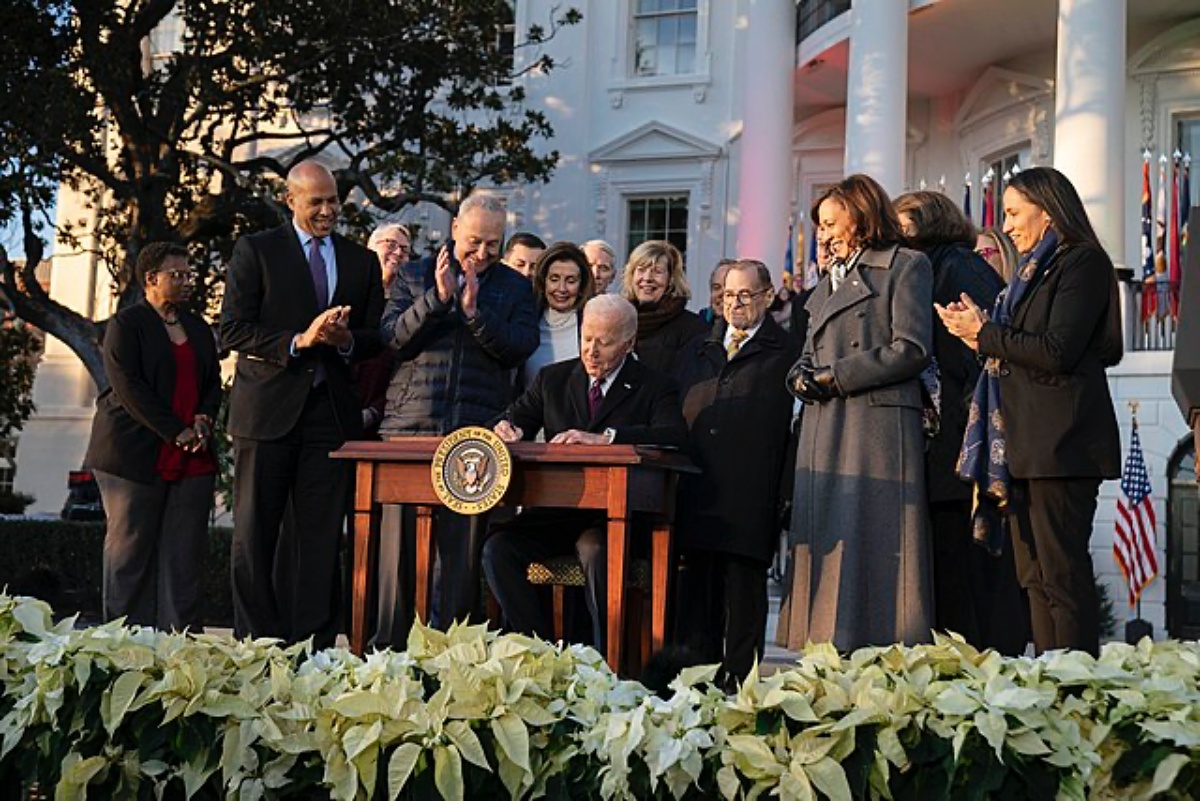
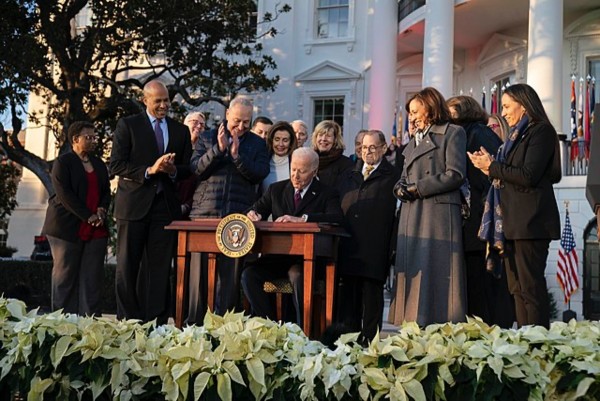
At a heart-warming ceremony on the White House lawn Tuesday, President Joe Biden signed the landmark Respect for Marriage Act that protects same-sex and interracial marriages.
Just before Joe put pen to parchment, Vice President Kamala Harris related her own deep commitment to the cause. In 2013, when the Supreme Court ruled that the defenders of California’s Proposition 8, then state attorney general Harris married two women who had successfully challenged Prop 8. She said then that she felt she was watching history being made.
After today’s Supreme Court overturned Roe v. Wade last June with Dobbs v. Jackson Women’s Health Organization, allowing individual states to ban abortion rights in whole or in part, the still Democratic Party-controlled Congress sprang into action to prevent the same wrong-headed reversal to jeopardize same-sex and interracial marriages, which have similar legal footing as had Roe v. Wade.
After all, as the Dobbs decision was handed down, Justice Clarence Thomas indicated that Obergefell v. Hodges, which recognized same-sex marriage, could find itself next in the crosshairs of increasingly right-leaning court. And Loving v. Virginia, the hallmark defense of interracial marriages, could conceivably follow suit—though Justice Thomas didn’t mention that.
Related stories
So big congratulations go to Congress and the President and Vice President for their hard work enacting this law.
But that’s not quite all. The Supreme Court has thrown the ball back to the individual states.
The new Act requires that interracial or same-sex marriages be considered valid, provided their marriage is valid in the state where it was performed.
Consequently, individual states are free to ban same-sex or interracial marriages—and you can imagine that there’s more than a few Republican-held state legislatures considering doing just that.
Furthermore, the Act says religious institutions “shall not be required to provide such marriages”—and, again, you can imagine more than a few churches jumping on that.
As Alaska Senator Dan Sullivan said, the Act “is much more about promoting and expanding religious liberty protections than same-sex marriage.”
Can you imagine living as a married same-sex or interracial couple in a state that bans such marriages, but is required to “respect” them because of some Supreme Court ruling. Clearly, that would only encourage homophobia and racism.
Maybe someday we’ll have a Congress strong enough to pass a federal law supporting interracial and same-sex marriages.
Please comment on our conversations.
Comments

Powered by RoundtableAn AI/DeFi-powered Enterprise Media Operating System. Learn more at Roundtable.io.© Roundtable 2026. By using this site you agree to the Terms of Use and Privacy Policy