


Mar 13, 2015 11:47 PM
Updated Feb 10, 2022 10:47 PM
M.E. Vigil: When my father passed away in 2004, I had already been locked up in Pelican Bay for almost 14 years straight. I was never given the chance to say good-bye to him.
My paternal grandfather was Atanacio Vigil Tobias. He was born around the year 1902 in the state of San Luis Potosi, Mexico—the home of most of my family.
Though I cannot say he grew up in the same pueblo which I came to know as our village, it is the place where years ago I came to know my abuelo (grandfather). The name of our pueblo is Paso Blanco which is a small, rural community made up of people who live off the land—primarily farmers and craftsmen.
My grandfather was a corn farmer who had three small patches of land known as ejidos, land given to him after the Mexican Revolution. He was not an educated man (that I know of) though he was a man who knew many things about the world he inhabited.
To me, he was wise and caring. In the little time I spent with my grandfather, I learned of our family’s history and of their struggles to survive off the few things they had.
Related stories
He was a mixture of Huastec Indian and Spanish blood--though that may be disputed as this region of Mexico has always been a corridor for people migrating through its arid lands on their way to more fertile lands and dreams elsewhere. For whatever reason, he remained anchored there until his death in the year 1995.
When I first visited my grandfather back between 1972 and ‘73, our village had no running water nor the luxury of electricity to light our nights. The modern elements of life (usually taken for granted in America) had not quite reached our village yet. But the richness and warmth of my family was evident in the way I was embraced by its members and by my grandfather in particular.
My relatives seemed not the least bit bothered by the absence of these creature comforts that somehow have marginalized so many people back home in America.
My grandfather was stern and sincere with me. He expected me to work and help with the planting of our crops and to tend to the few animals they kept—things I never got to do at home.
Because of this, I was able to explore the fields of my father’s youth. My grandfather told me stories of my father--stories I had never known before, such as why he came to America. As with most families in our pueblo, necessity made it so that he had to leave his home at a young age so as to forge a new life on the American side of the border in order to help support his family back home. My grandfather provided bits and pieces of our family’s history that I would never have known otherwise. Because of my abuelo, I continue to feel connected to the two halves of my roots.
I was born in America, but my roots were cultivated in the hard clay and soil of Paso Blanco.
My father was Auscencio Mata Vigil. He was born around the year 1939 in the state of San Luis Potosi, Mexico. He was my grandfather’s oldest son and came to America in search of the ever-elusive American dream. He was a complicated man who struggled to understand the way of life on the north side of the border. He arrived here in America—broke and penniless—and went to work in the fields of California.
When my father passed away in 2004, I had already been locked up in Pelican Bay for almost 14 years straight. I was never given the chance to say good-bye to him.
Having no formal education other than the skills as a horseman and farmer (like his father), he followed the crops, much like most other braceros (as Mexican laborers were known back then). They were the “arms” doing the labor in the fields of strawberries and grapes, the back-breaking work no one else in this country seemed willing to do.
My father loved to work—it was how he defined and measured his life. He always stressed the importance of being a responsible man—un hombre responsable.
From Mexico, he migrated down through Texas and eventually settled in Wilmington, California, where he met and married my mother, Mary Vasquez Vigil. Together they would have five children, I being the youngest of our family.
The earliest recollection of my father was the manner in which he struggled to understand the many differences between life in this country and that in his native Mexico. The food seemed bland; the language, unrecognizable; and the people, strange!
Culturally speaking, it was night and day for him. The notion of machismo was also very much in play. At times, during his moments of conflict, it was “Do as I say—not as I do! This attitude caused much division within our home.
In the early years, he used to drink a lot, spending his time working during the days and at night going out to drink with his cousins from back home. I recall seeing him return home in a drunken stupor--falling over himself and us kids in the process. He and my mother argued and fought long and hard over his stubborn inability to be a worthy husband and a good father to his children. These are just some of the things my father found difficult to grasp during those darker moments of my family’s time together.
When he stopped working the fields, he took a job in the tuna canneries off Terminal Island in San Pedro, California. This move enabled him to earn more money and eventually to afford to purchase a home of our own. The house was an old, rickety 1920s wooden house located in a part of Wilmington known then as “Ghost Town” because it was in the poorest area of our barrio where the people of color lived.
Surrounded by junk yards and the City dumps that were adjacent to numerous factories and oil refineries, the conditions made for the perfect blend of toxic communal blight.
Despite my mother’s objections to this move, my father saw it as a step up in his pursuit of a better life for his family. He came from the poverty-stricken fields of San Luis Potosi, Mexico, to the impoverished streets of “Wilmas,” where owning something meant everything to a man who came from so little. To us, however, the move was a gamble—not a logical progression.
It wasn’t until I visited Mexico that I was able to understand my father’s roots. It was then that I was able to understand how big this move was for him—as a man. To him, his decision was huge! As a child, he lived in a one-room shed with a thatched roof and earthen floor next to the corral where they kept their few animals.
Thus, for my father, his new home must have seemed like a king’s castle. Yet owning this home also meant acquiring the added burden of being in debt and having to balance a budget.
This was always a major struggle for my parents to manage, as there were few nickels and dimes to go around in order to meet everyone’s needs. As a result, there was not always food to eat nor the best clothes to wear, but my father always seemed to find a way for us to get by (but only with the added support of my mother).
My father always attempted to instill in me the lessons of hard work and the value of the dollar. He wanted me to be better than the man he was. Most of all, he wanted for me to take full advantage of the things this country had to offer—to educate and strive to build a better future for myself.
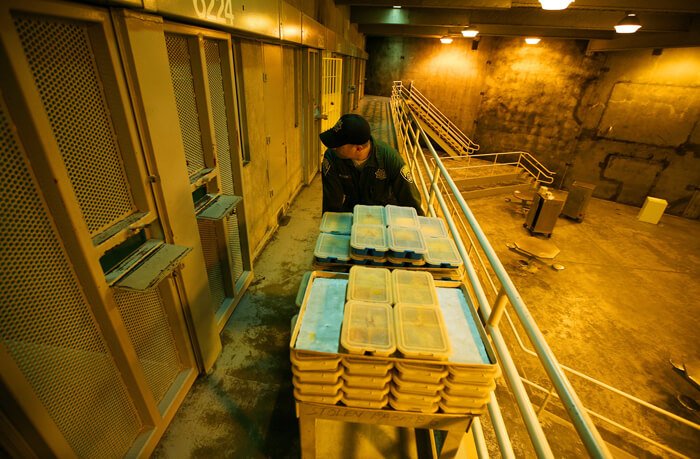
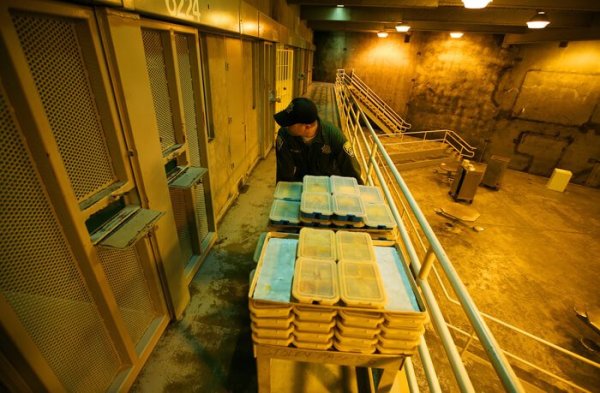
When he passed away in 2004, I had already been locked up in the SHU [Security Housing Unit] of Pelican Bay for almost 14 years straight. I was never given the chance to say good-bye to him. He had gone back to Mexico for a wedding of a cousin where he died in his sleep. His body was frail and battered from all the struggles and hard-fought battles he had won and lost in his lifetime.
Some say his heart gave out, but I believe he died from a broken heart, partly because of my mother’s passing but also from my life spent in prison.
During his life, he tried to give me all he could and since his death, he continues to be the reason I now strive to be a better man.
Yet, something happened to me despite all those good principles shared. I have spent the better part of my life in and out of prison (I am now 50 but initially became incarcerated when I was 16). I had not valued the lessons my family tried to instill in me and threw away the principles they had tried to impart. Ironically, I embrace as a man all those lessons that I ignored as a child.
So what brought me in both body and mind to the place where I now reside.
Who am I? I am my father’s son. I was born in the year of 1963 in the city of Wilmington, California. My name is Mark Edward Vigil. When I was a child, my father gave me the nickname, Pino, which has stuck with me my entire life. I have lived every waking hour of my adulthood locked up in prison since.
I have lived my life inside places barely habitable for human existence and still remain alive. I have managed to survive, not because of how I tried to protect myself here but because of the lessons I was given as a child.
So many things I did not value, such as my beloved family who always tried to teach me right from wrong. But these were lessons I failed to accept as a kid but now hold dear as a man.
I have committed countless crimes in my life—in and out of prison. On street corners and prison yards, I staked my ignorant claim of dominance—like a pugilist fighting for the prize money that turned out to be only the crumbs life—but lost at every turn!
I have died and been resurrected each time like Lazurus, only to repeat the same foolish acts of stupidity that has kept me stuck inside this maze called prison.
I am the son of my father who came from the arid lands of his forefathers--so that I might have a better life. . . .
So that I might have a better life. . . .
So that I might realize that I am better than the colorless, constricted walls I had built for myself—better than the flaws and weaknesses, the shortcomings and imperfections, the mindless and selfish and mean-spirited failings of my youth.
M.E. Vigil
Comments

Powered by RoundtableAn AI/DeFi-powered Enterprise Media Operating System. Learn more at Roundtable.io.© Roundtable 2026. By using this site you agree to the Terms of Use and Privacy Policy